The tea kettle is usually the first thing to whistle in a Yemeni morning.
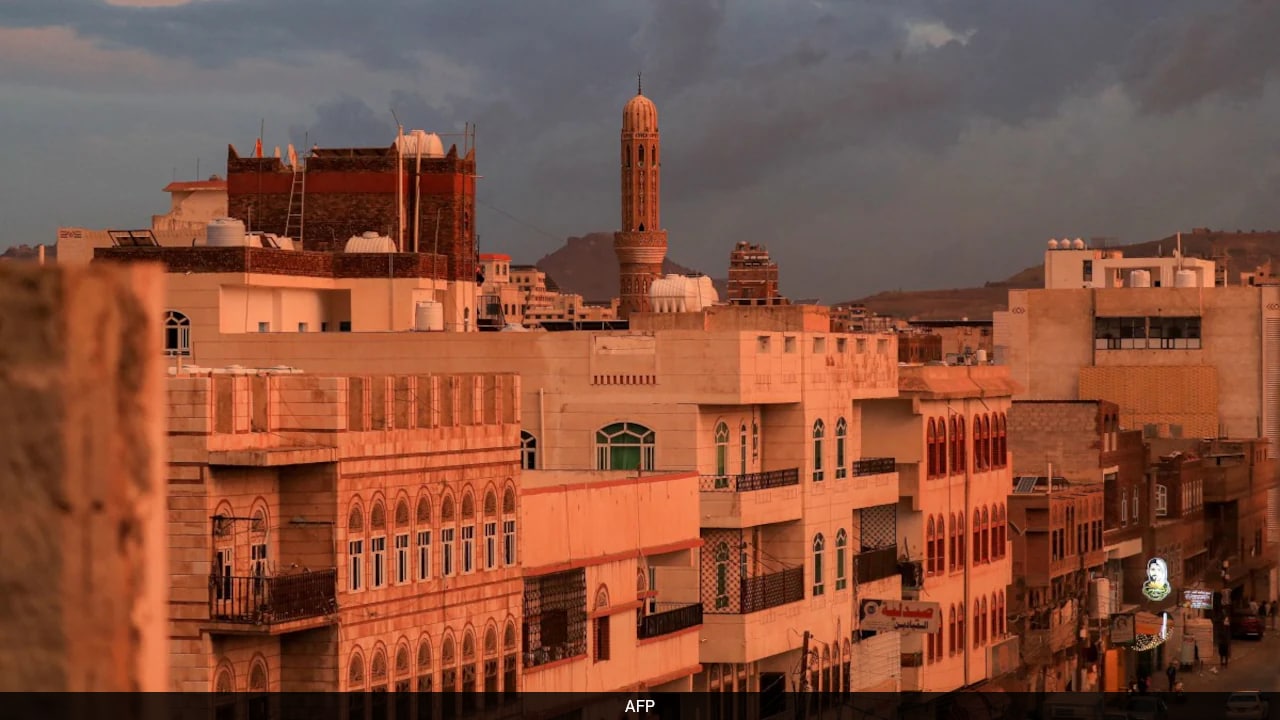
In the old city of Sanaa, where tower houses built of baked mud brick and white gypsum lean toward each other like conspirators across narrow alleys, mornings carry a specific rhythm. You hear the scrape of wooden shutters swinging open against ancient stone. You smell cardamom crushed by hand, mingling with diesel exhaust from passing motorbikes and the dusty, dry chill that drops down from the Sarawat Mountains before sunrise.
Then comes the sound that erases every other sound.
It is not a bang. Anyone who has stood beneath a modern airstrike knows that the explosion comes second. First comes the whistle—a high, tearing shriek as a precision-guided munition slices through the thin mountain air at supersonic speed. It sounds like the sky itself is being ripped open like a bedsheet.
Silence.
Then the earth heaves upward, turning glass into mist and stone into blinding white powder.
When reports broke that Saudi-led coalition forces had launched fresh, deadly strikes on Houthi-controlled cities across Yemen—hitting targets in Sanaa, the vital Red Sea port of Hodeidah, and northern strongholds—the global news cycle processed the event with practiced efficiency. Headlines tallied the casualties. Pundits debated regional deterrence, Red Sea shipping lanes, and the fragile arithmetic of Middle Eastern proxy wars. Within hours, the story had slipped below the fold, filed away under a conflict the world long ago decided was too complicated, too intractable, and too exhausting to watch closely.
We have gotten the story of Yemen completely backward.
When we reduce renewed airstrikes in Houthi-controlled territory to a cold chess match between Riyadh and Tehran, or a tactical response to drone launches and maritime blockades, we miss the real story unfolding on the ground. The true cost of these strikes is not measured solely in craters or military hardware. It is measured in the slow, systematic dismantling of human resilience in a country already pushed past the edge of survival—and in the dangerous illusion that bombs can ever buy stability in the Arabian Peninsula.
The Architecture of a False Peace
To understand why these strikes feel like a slap across an open wound, you have to understand the exhausting limbo Yemen has inhabited over the last few years.
Since 2014, when the Houthi movement—an armed Zaydi Shia group formally known as Ansar Allah—swept down from their northern heartland in Saada and seized Sanaa, Yemen has been trapped in a multi-layered catastrophe. A Saudi-led military coalition intervened in March 2015 to restore the internationally recognized government, expecting a campaign that would last weeks. Instead, it metastasized into one of the worst humanitarian disasters of the twenty-first century.
Hundreds of thousands of people have died, most not from shrapnel, but from preventable diseases, starvation, and the collapse of basic sanitation. Over four million Yemenis have been driven from their homes. Roughly eighty percent of the population—more than twenty-four million human beings—has relied on humanitarian aid just to stay alive.
For a brief stretch following the United Nations-brokered truce in 2022, something fragile took root. Even after the formal ceasefire expired, a tense, unofficial lull held along many front lines. Families in Sanaa and Hodeidah dared to unclench their jaws. Shopkeepers stayed open past dusk. Mothers sent children to school without calculating the distance to the nearest reinforced stairwell.
Diplomats spoke quietly of roadmaps and de-escalation. The world exhaled and looked away.
That lull was never peace. It was a loaded gun resting on a kitchen table.
While negotiators met in hotel conference rooms in Muscat and Riyadh, the underlying fractures remained wide open. The Houthis consolidated absolute control over northern Yemen, governing roughly seventy percent of the population through an iron-fisted security apparatus, ideological indoctrination, and wartime taxation. Meanwhile, regional tensions boiled over following the outbreak of war in Gaza in late 2023, drawing the Houthis into direct confrontation with international shipping in the Red Sea and triggering retaliatory strikes from the United States and the United Kingdom.
Against that volatile backdrop, renewed Saudi strikes on Houthi-controlled cities land not as an isolated military event, but as a terrifying signal: the guardrails are gone.
Inside the Blast Radius
Consider a hypothetical scenario—one grounded entirely in the documented realities of how airstrikes hit urban Yemen.
Picture a family living three streets over from a logistics compound or a telecommunications tower in Sanaa. Let us call the father Tariq, a former civil engineer whose government salary stopped being paid regularly years ago, and who now repairs solar panels to buy flour and cooking oil. In Houthi-controlled cities, military infrastructure is rarely tucked neatly away in empty desert bases. Command centers, weapons depots, and drone workshops are woven directly into the urban fabric, often sitting meters away from apartment blocks, hospitals, and vegetable markets.
When intelligence satellites identify a target, the strike package is designed with surgical language. Analysts look at thermal imagery and blast-radius models.
Tariq does not live inside a model. He lives in a house with unreinforced mortar and single-pane windows.
At two in the morning, when the strike hits the compound down the block, the shockwave does not respect property lines. It blows Tariq’s bedroom doors off their hinges. Dust from the pulverized plaster coats his children’s lungs before they even wake up screaming. Outside, the neighborhood transformer explodes in a shower of blue sparks, plunging the district into pitch darkness broken only by the orange glow of burning fuel tanks and the frantic wail of ambulance sirens that have almost no diesel left in their tanks.
Now multiply Tariq’s house by thousands.
When strikes hit Hodeidah, the consequences ripple outward even faster. Hodeidah is not just another coastal city; it is the windpipe of northern Yemen. Roughly seventy to eighty percent of Yemen’s commercial imports—wheat, rice, fuel, medicine—pass through its Red Sea docks. Every time bombs fall near Hodeidah’s cranes, warehouses, or fuel storage facilities, the shockwaves hit grocery shelves in the highlands within days. Bread prices jump. Water pumps, which run on diesel generators because the national electrical grid died years ago, grind to a halt.
A bomb dropped on a port facility in Hodeidah does not just destroy concrete. Three weeks later, in a clinic fifty miles inland, it turns off the incubator keeping a premature infant alive.
Why Military Deterrence Keeps Failing in Yemen
If you want to understand why this cycle keeps repeating, stop thinking of modern warfare like a boxing match and start thinking of it like trying to punch water.
Conventional armies—equipped with billion-dollar fighter jets, satellite surveillance, and precision munitions—are built to fight other conventional armies. They are designed to break supply lines, destroy command centers, and force a rational adversary to calculate that the cost of fighting exceeds the benefit.
The Houthis do not operate on that ledger.
Forged in the rugged, unforgiving mountains of Saada during six brutal wars against the Yemeni state between 2004 and 2010, the Houthi movement is built specifically to absorb punishment from the sky. Their leadership is decentralized. Their weapons manufacturing—including ballistic missiles and long-range attack drones—has been deliberately dispersed into caves, tunnels, and small workshops across mountain ridges.
I remember talking years ago with a Yemeni journalist who had spent time interviewing local fighters in the northern highlands. He explained something that Western and Gulf military planners repeatedly underestimate: every time an airstrike hits a Yemeni city, it hands the Houthi leadership a propaganda victory they could never buy on their own.
Inside Sanaa, dissenting voices—teachers protesting unpaid wages, activists questioning Houthi censorship, tribal leaders resenting heavy-handed rule—are immediately silenced the moment bombs fall. Criticism of the authorities becomes treason while foreign aircraft are overhead. Grief turns into rage, and rage becomes recruitment fuel.
You cannot bomb an insurgency into submission when the rubble itself becomes their strongest argument for legitimacy.
Look at the history of the past decade. Over twenty-five thousand coalition air raids were conducted across Yemen between 2015 and 2022. Bridges were flattened. Factories were reduced to twisted rebar. Weddings, funerals, school buses, and water treatment plants were struck in incidents that drew international condemnation and tarnished reputations from Washington to Riyadh.
And what was the strategic result?
At the start of the intervention, the Houthis possessed a handful of aging Soviet-era Scud missiles. After years of relentless bombardment, they emerged with an arsenal capable of striking oil facilities deep inside Saudi Arabia, threatening commercial vessels across the Bab el-Mandeb Strait, and launching long-range drones across the region.
The medicine did not cure the disease. It mutated the pathogen.
The Invisible Stakes for the Rest of Us
It is tempting, sitting thousands of miles away in relative safety, to view renewed fighting in Yemen as a tragic but distant fire burning on someone else’s horizon. That comfort is an illusion.
Look at a map of global trade. Narrowing down between the Horn of Africa and the Arabian Peninsula is the Bab el-Mandeb Strait—a waterway barely twenty miles wide at its tightest point. Nearly twelve percent of global trade and roughly thirty percent of the world’s container traffic normally moves through this chokepoint on its way to and from the Suez Canal.
When Yemen burns, the water around it boils.
Instability along Yemen’s Red Sea coast has already forced major shipping companies to reroute vessels thousands of miles around the southern tip of Africa, adding weeks to delivery times, burning millions of gallons of extra fuel, and quietly inflating the price of everyday goods from Europe to North America. Insurance premiums for maritime cargo spike. Global supply chains—already fragile—absorb another silent tax.
Beyond economics lies a deeper moral and geopolitical hazard.
Every time a major conflict slips off the front pages while violence escalates on the ground, we normalize the idea that certain populations are expendable. Yemenis have watched international aid funding shrink year after year as donor fatigue sets in and global attention pivots to newer crises. The World Food Programme has repeatedly been forced to slash rations in northern Yemen, leaving millions of families choosing between buying medicine for a sick child or buying a sack of flour.
When renewed airstrikes collide with gutted humanitarian budgets, there is no safety net left to catch the civilians who fall.
What Actually Breaks the Cycle
So if airstrikes harden the Houthis, devastate civilians, and fail to secure lasting peace, what is the alternative? Pretending the threat does not exist? Allowing armed groups to fire missiles across borders or hold international shipping hostage without consequence?
No. Security is real, and neighbors have a legitimate right to defend their borders and populations. Pretending otherwise would be naive.
The failure is not in recognizing the threat; it is in relying on a tool that has already proven incapable of solving it.
Breaking Yemen’s cycle of violence requires shifting leverage from the sky to the political and economic architecture on the ground—a path that is slower, messier, and far less dramatic than a night of airstrikes, yet infinitely more effective.
First, economic warfare against civilians must stop being used as a blunt instrument. Paying public sector salaries across Yemen, reopening commercial airways, and guaranteeing unhindered fuel and food imports through Hodeidah strip armed factions of their monopoly over survival. When people can feed their families and access basic banking services, the war economy loses its grip.
Second, diplomacy cannot remain a closed-door bargain between armed elites. Any lasting settlement in Yemen that simply divides power between Saudi negotiators and Houthi commanders while ignoring southern separatists, local tribal authorities, women’s coalitions, and civil society is just scheduling the next war. Peace treaties written only by men with guns tend to last only until someone reloads.
Third, regional powers and international partners must maintain disciplined, unified pressure that ties economic integration and reconstruction funds directly to verifiable de-escalation—not sporadic military flare-ups that reset the clock every six months.
The Dust That Settles
I still think about those mud-brick tower houses in Old Sanaa.
Many of them have stood for five hundred years. Generations of families have lived inside their thick walls, watching empires rise and collapse across the mountains, surviving droughts, sieges, and revolutions. Their stained-glass windows—called qamariya—are crafted from thin alabaster and colored glass so that when the harsh afternoon sun hits them, the rooms inside fill with soft, jeweled light.
When a shockwave rattles those windows, the alabaster cracks first. You cannot glue it back together without leaving a scar across the light.
Right now, across Sanaa, Hodeidah, and towns whose names rarely make Western broadcasts, families are sweeping shattered glass off their floors with palm-frond brooms. Mothers are boiling water over scraps of firewood because the cooking gas ran out yesterday. Fathers are listening to the hum of drones overhead, trying to guess from the pitch of the engine whether tonight will be quiet or whether they need to wake the children and herd them down to the ground floor.
The headlines will move on by tomorrow morning.
Down in the narrow alleys of Sanaa, the dust will still be hanging in the air, coating the throats of people who never voted for a war, never fired a missile, and are simply waiting to see if the sky stays intact until sunrise.


