Waiting.
That is the dominant texture of any international airport at three in the morning—the low hum of floor polishers buffing terrazzo tiles, the stale scent of over-roasted espresso drifting from a half-shuttered kiosk, and the collective, slumped posture of three hundred strangers suspended between where they came from and where they belong. You know that feeling if you have ever watched a departure board flip from On Time to Delayed in unison across forty gates, a quiet mechanical sigh that turns a bustling transit hub into a waiting room for the unknown.
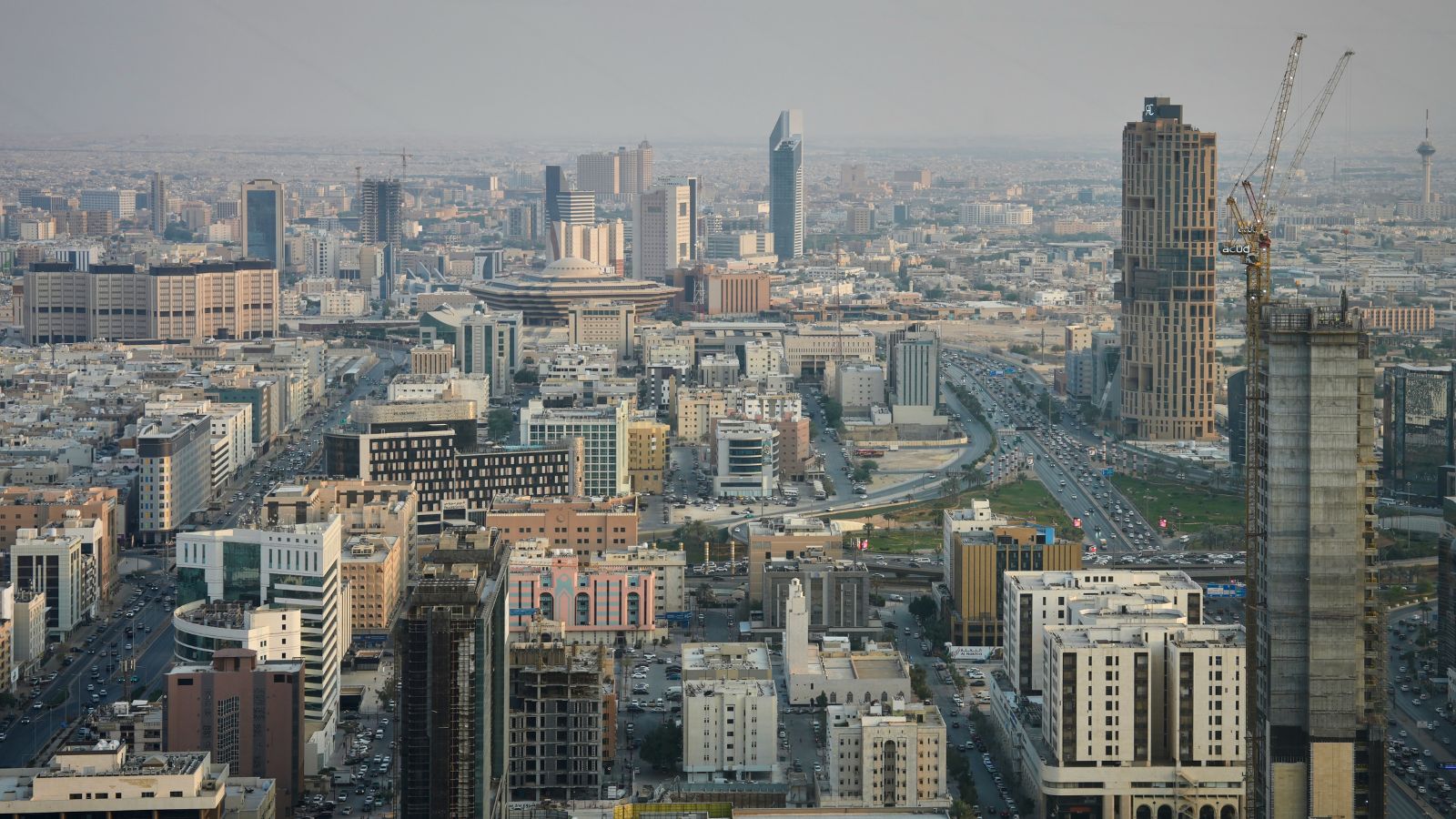
At King Khalid International Airport in Riyadh, that stillness recently took on a sharper, colder edge.
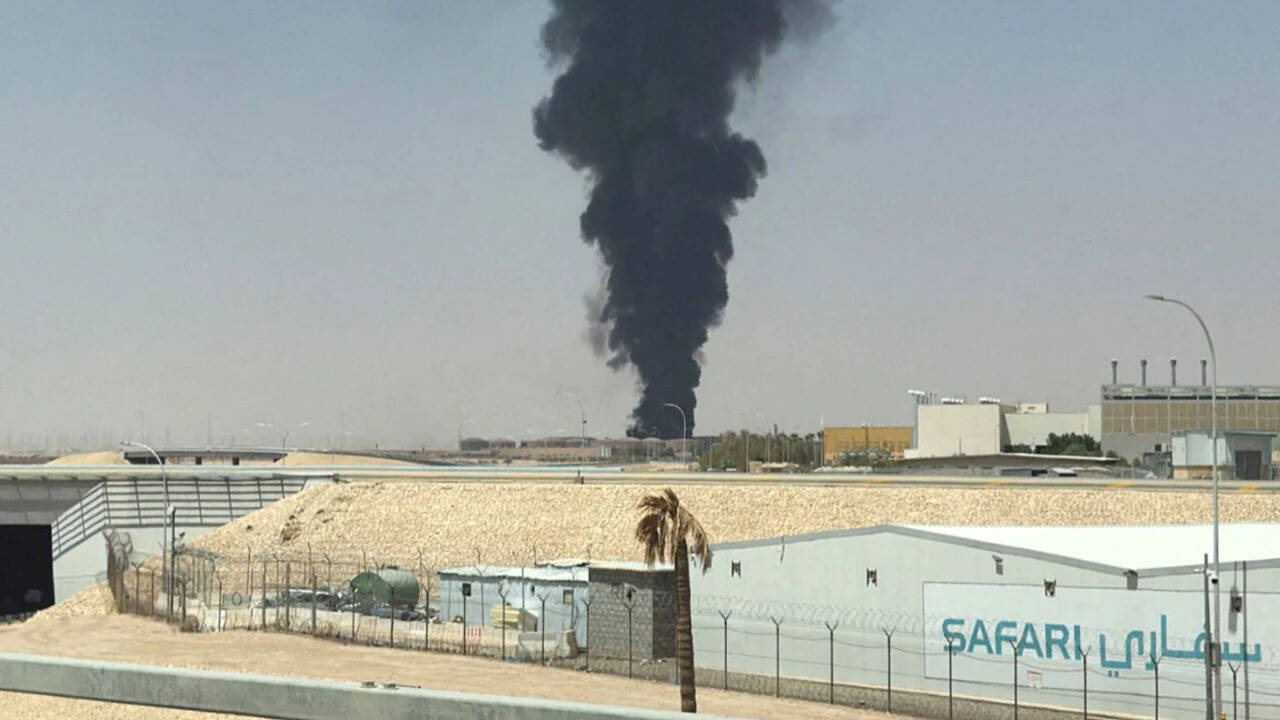
For a few tense hours, the primary aerial gateway to Saudi Arabia's capital did not merely slow down. It paused. Outside the thick, sound-dampened glass of the terminals, far above the desert floor and the sodium-vapor glow of the ring roads, Saudi air defense batteries intercepted a ballistic missile and armed drones launched by Houthi forces in Yemen. Inside, announcements echoed across the concourses, flights rerouted into holding patterns over the Persian Gulf, and thousands of travelers suddenly found themselves staring at their phones, trying to translate geopolitical headlines into the practical question of whether they would make their connecting flight in London, Cairo, or Manila.
By dawn, the runways were active again. King Khalid International partially reopened, operations resumed under tight coordination, and the first wave of delayed jets lifted off into the pale morning haze. To a casual reader scanning a news ticker, the story appeared neat, self-contained, and reassuringly brief. Missiles intercepted. Airport reopened. Crisis averted.
Yet reducing that night to a three-line security bulletin misses the deeper human story unfolding beneath the flight paths.
The Architecture of an Invisible Shield
To understand what happened over Riyadh, it helps to picture an ordinary family sitting near Gate 24. Let us call them Tariq and Layla—a hypothetical composite drawn from the thousands of expatriate workers, engineers, and returning students who pass through Saudi terminals every week—trying to keep a five-year-old asleep across two linked plastic chairs while waiting for a red-eye to Amman.
Tariq does not see radar cross-sections or trajectory calculations. He sees a glowing departure screen and a cup of tea going cold. When the terminal goes quiet and ground crew members step back from the jet bridge, he feels that sudden, familiar drop in the stomach—the realization that the modern world's sleekest conveniences rest on an invisible infrastructure of protection that most of us never notice until it has to work.
Think of an air defense network like the shock absorbers on a car driving fast over broken asphalt. When the system works properly, the passengers inside barely feel the violence of the impact beneath them; they only notice a brief hesitation in the ride before the wheels grip the road again.
Saudi Arabia's air defense forces—operating layers of Patriot missile batteries and short-range interceptors—have spent years refining that shield in response to repeated cross-border drone and ballistic missile attacks originating from Houthi-controlled territory in northern Yemen, roughly six hundred miles to the south. A ballistic missile covers that distance in minutes, arcing high into the upper atmosphere before plunging toward its target at several times the speed of sound. Unmanned aerial vehicles, or drones, take a different path altogether, flying low and slow to hug terrain and evade conventional radar sweeps.
Intercepting both simultaneously requires split-second choreography between satellite early-warning sensors, ground radar arrays, and human operators sitting in windowless command rooms under fluorescent lights. There is nothing automated about the weight of that decision. Someone has to verify the track, distinguish a lethal warhead from commercial air traffic crowding one of the busiest aviation corridors on earth, and authorize a launch that will detonate tons of high explosive miles above a city of seven million people.
When the booms rattle windows across northern Riyadh, residents know the sound immediately. It is not the sharp crack of thunder, which rolls and fades into rain. It is a heavy, percussive thud that vibrates in the floorboards—the acoustic signature of two objects colliding at hypersonic speed in the dark.
Why a Partial Reopening Matters More Than a Full Shutdown
In aviation, closing an airport is easy. Reopening it safely while fragments of intercepted hardware are still being accounted for is an exercise in disciplined nerve.
Commercial airliners are marvels of redundancy, yet they are remarkably fragile against debris. A single metallic shard ingested into a high-bypass turbofan engine during takeoff rotation can shred compressor blades in milliseconds. When an interception occurs near a major urban center, air traffic controllers and military liaisons face an immediate dilemma: keep the airspace sealed indefinitely and strand tens of thousands of passengers across three continents, or clear specific corridors once radar confirms the sky is clean.
That is why the phrase partially reopens carries so much operational weight.
A partial reopening is not a half-measure born of hesitation; it is a surgical triage of the sky. Authorities prioritize outbound aircraft already loaded and fueled at the gates, clearing departure paths away from the southern sectors while holding incoming long-haul flights at alternate hubs in Dammam, Jeddah, or neighboring Gulf states until ground crews inspect every meter of asphalt for foreign object debris.
Consider what happens next inside the terminal when those first boarding calls finally resume.
The tension does not vanish all at once. You can hear it in the way people lower their voices, in the sudden rush toward charging stations, in the small courtesies strangers extend to one another—passing a bottle of water down a row of seats, holding a stroller while a parent digs through a backpack for passports. Vulnerability has a way of stripping away the usual armor of modern travel. Nobody cares about priority boarding groups when everyone is simply grateful that the radar screens are clear.
I have sat in Middle Eastern terminals during moments like this, watching the glow of live flight-tracking apps light up dozens of faces in a darkened gate area. You see the little yellow aircraft icons circling in neat oval racetracks over the desert, waiting for permission to descend, and you feel a strange mixture of awe and unease. Awe at the sheer precision required to keep global aviation moving through a contested neighborhood; unease at how normalized the extraordinary has become.
The Geopolitics Beneath the Tarmac
If you zoom out from the departure lounge, the incident at Riyadh is part of a much older, stubbornly unresolved conflict that continues to test the boundaries of regional stability.
Since 2014, when the Iran-aligned Houthi movement seized Yemen's capital, Sanaa, the war on the Arabian Peninsula has repeatedly spilled across borders in ways that blur the line between military frontlines and civilian infrastructure. Airports, desalination plants, oil facilities, and Red Sea shipping lanes have all become pressure points in a protracted struggle over power, legitimacy, and deterrence.
For years, analysts treated drone and missile strikes deep into Saudi territory as sporadic escalations—sharp spikes on a graph that eventually settled back into quiet diplomacy or fragile truces. Yet every launch carries an economic and psychological tax that extends far beyond the point of impact.
Saudi Arabia is in the middle of an ambitious economic transformation, betting tens of billions of dollars on turning Riyadh into a premier global hub for finance, tourism, and international aviation. New airlines are being built from scratch; massive airport expansions are underway; international conferences fill the city's hotels every week. That entire vision depends on one foundational currency: predictability.
Investors, business travelers, and families do not check defense budgets before booking a ticket. They assume the sky is neutral territory.
When drones and ballistic missiles target a capital city's main airport, the objective is rarely just physical destruction—air defense batteries intercept the vast majority of incoming threats before they reach the ground. The deeper target is confidence itself. A two-hour airspace closure forces airlines to burn extra fuel on diversions, scrambles crew duty limits across international time zones, drives up hull insurance premiums, and plants a seed of hesitation in the mind of anyone planning a trip through the region.
And yet, looking at how quickly King Khalid International returned to service reveals the other half of the equation.
Resilience, in the twenty-first century, is measured in minutes of downtime. A decade ago, an aerial attack near a major international airport might have paralyzed commercial traffic for days, triggering cascading cancellations across Europe and Asia. Today, integrated air defense and civil aviation protocols absorb the shock, verify the airspace, and restore flight schedules before the morning commuter rush even begins.
What Travelers Actually Need to Know
Strip away the military terminology and the dramatic headlines, and most people reading about Riyadh's airspace closure are asking a simple, personal question: Is it safe to fly there?
The honest answer requires holding two truths in your head at the same time—something news headlines rarely encourage us to do.
First, commercial aviation authorities operate on margins of safety so conservative they border on obsessive. Neither Saudi civil aviation regulators nor international carriers will keep an airspace open if there is credible, unmitigated risk to passenger aircraft. The moment an alert triggers, commercial traffic is vectored away from defended zones long before interceptors leave their rails. In the long history of cross-border missile and drone incidents across the Gulf, commercial airliners have been consistently shielded by early-warning protocols that prioritize clearing the sky first and asking questions second.
Second, flying through a region experiencing geopolitical friction means accepting the possibility of sudden, unannounced disruption. Delays, diversions, and temporary terminal lockdowns are not signs that the system has failed; they are proof that the safety protocols are working exactly as designed.
If your itinerary takes you through Riyadh or neighboring Gulf hubs, practical preparation beats anxiety every time:
- Keep essentials in your carry-on, including medications, chargers, and a change of clothes, because an unexpected diversion to another city can separate you from checked luggage for twenty-four hours.
- Book through-tickets on a single itinerary rather than stitching together separate budget carriers, ensuring that if airspace closures cause a missed connection, the airline bears the legal and financial responsibility to rebook you.
- Monitor official airline alerts rather than social media rumors, where old footage from previous years routinely resurfaces within minutes of any siren or loud boom.
Confusion thrives in the gap between an event and the official explanation. During those quiet minutes in the terminal when information is scarce, rumors always travel faster than facts.
Dawn Over the Runway
By seven in the morning in Riyadh, the desert sun climbs fast, bleaching the sky from deep indigo to a pale, dusty gold.
Out on the tarmac at King Khalid International, yellow ground-support trucks weave between wide-body jets. Baggage handlers load containers into open cargo holds. Inside the terminal, the coffee kiosks raise their metal shutters, the smell of cardamom and espresso returns to the concourses, and Tariq finally wakes his five-year-old as the gate agent picks up the microphone to announce boarding for Amman.
Nothing about the morning looks dramatic. No scorched concrete, no sirens wailing across the airfield, no visible trace of the violent geometry that played out miles above the city while the passengers slept in their chairs.
Just a line of tired travelers rolling their suitcases down a carpeted jet bridge, trusting that the invisible architecture holding their world together will hold for one more flight, and stepping aboard as the engines spool up toward the open sky.