The night smelled of woodsmoke and dry dust before the sky tore apart.
In the high valleys where the peaks of the Hindu Kush scrape the stars, silence is not merely the absence of noise; it is a heavy, living blanket worn by people who have known too many winters of gunpowder. In one such nameless settlement tucked inside the Khost or Paktika provinces—territories where maps are drawn by ink but lived by blood—a kerosene lamp flickered on a low wooden table. Tea was cooling in small, handleless cups. Children slept bundled in wool blankets, their breathing rhythmic against the earthen floor.
Then came the scream.
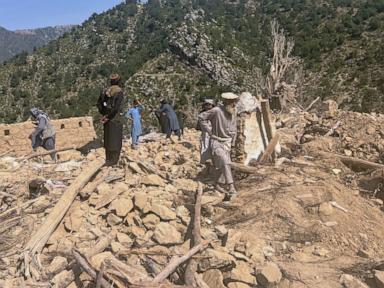
It was not the wind howling down the mountain pass. It was metal screaming faster than sound, tearing through the thin upper atmosphere with a predatory authority. A heartbeat later, the world dissolved into an orange flash and a concussion wave that rattled teeth, shattered glass, and turned stone walls into choking clouds of powdered grey.
When the dust settled, the lamp was gone. The table was splinters. And ten human lives had been erased from the census of the living, folded instantly into the quiet statistics of regional fallout.
Official statements rarely bleed. They are manufactured in sterile offices under fluorescent lights, typed on heavy stationery, and dispatched via digital wire to newsrooms thousands of miles away. Within hours of the strike, two distinct realities were born across the Hindu Kush.
In Kabul, officials spoke with a voice cold with fury. Ten civilians, they declared. Women. Children. Innocent souls whose only crime was sleeping too close to a border that exists more as a scar than a boundary. They released numbers, names, and grief packaged into diplomatic protests. They condemned the violation of national sovereignty, framing the event not as a defensive posture, but as an act of unwarranted aggression upon sovereign soil.
Across the mountains in Islamabad, a different ledger was tallied. The security establishment spoke of precision, intelligence, and necessity. Only militants were hit, their narrative insisted. High-value targets. Insurgents who had used the rugged, porous terrain as a staging ground to export terror across the international border. For Pakistan, facing mounting casualties from domestic militant factions operating with impunity from the shadows of Afghan valleys, the strikes were presented as an unavoidable stroke of self-defense. A necessary surgery to excise a cancer.
Two stories. One crater.
Consider, for a moment, a hypothetical villager named Gul Rahman. (While names in news wire reports are often reduced to anonymous tallies, lives like Gul's form the bedrock of this human tragedy.) Imagine Gul waking up not to the call to prayer, but to the crushing weight of concrete slabs pinning his legs. Imagine him clawing through jagged stone with bare, bleeding fingers, shouting names that return only the hollow echo of burning timbers.
Gul is neither a statesman nor an insurgent. He is a shepherd, a farmer, a man whose worldview is bounded by the height of his wheat stalks and the health of his goats. To him, the abstract geopolitical chess match between governments is as distant as the weather on the moon. Yet, when jets streak across the nocturnal sky, it is Gul's roof that caves in. It is his daughter's school notebook, charred at the edges, that flutters down like black snow into the rubble.
When states collide, individuals become collateral footnotes.
The friction between Pakistan and the interim Afghan government is neither new nor accidental. It is the product of a fractured history, an inherited colonial line drawn by Mortimer Durand in an era of empire, and decades of shifting proxy alignments that left both nations trapped in a security dilemma of their own making. Pakistan built fences; militants found tunnels. Pakistan demanded crackdowns; Kabul replied with sovereignty appeals. The border region has long functioned as a geopolitical fault line where tectonic plates of ideology, ethnicity, and national security grind against one another, constantly threatening to spark an earthquake.
Behind every cross-border strike lies a desperate calculus. On the Pakistani side, military planners gaze at intelligence maps dotted with red pins representing attacks on police stations, military checkposts, and civilian markets in Peshawar or Quetta. They see a relentless stream of suicide bombers and ambush squads slipping back across the Durand Line into safe havens where authorities either cannot or will not reach them. Frustration builds. Patience frays. The pressure from a grieving domestic public mounts. Eventually, the threshold is crossed. Decision-makers authorize the jets.
On the Afghan side, the psychological weight is equally profound. Having endured over four decades of continuous warfare—invaded by superpowers, torn by civil strife, and battered by aerial campaigns—the collective psyche of the population is hyper-sensitive to any violation of airspace. Every roar overhead revives generational trauma. Every civilian casualty reported in a border province feeds a narrative of victimization, hardening local populations against their neighbors and driving desperate families further into the arms of radical recruiters who promise protection against outside forces.
This is the grim irony of counter-terrorism from the clouds. In attempting to eliminate a threat, the strike often manufactures ten more.
When a mother pulls her lifeless child from the ruins of a mud-brick home, she does not calculate strategic military necessity. She does not weigh intelligence dossiers or verify insurgent hideout coordinates. She feels grief. She feels rage. And rage, in these valleys, is a durable currency that outlasts any government policy. The brother who watches his family buried under a mound of freshly turned earth does not care about geopolitical stability; he cares about retribution. The vacuum left by the dead is quickly filled by vengeance.
Governments measure success in tonnage dropped and targets neutralized. People measure tragedy in empty chairs at dinner.
Look closer at the mechanics of these modern conflicts. Technology has sanitized war to a terrifying degree. High-altitude sensors, thermal imaging, and guided munitions create an illusion of clinical perfection. From a cockpit miles above the earth or a command center illuminated by blue-lit monitors, a target is merely a cluster of pixels on a screen. It lacks a pulse, a family history, a favorite song, or a drawer full of old letters. It is a coordinate. It is a problem to be solved with mathematics and velocity.
Yet, when the missile hits flesh and bone, the math dissolves into mud and weeping.
The divergence between Kabul's casualty count and Islamabad's denial of civilian deaths highlights an enduring truth of modern warfare: the first casualty is never just truth; it is agreement on reality itself. How can two nations looking at the exact same strip of earth see two entirely different universes? To one, it is a graveyard of innocents. To the other, it is a neutralized nest of vipers.
The gap between these perspectives cannot be bridged by press releases. It is widened by every explosion, deepened by every morgue visit, and cemented by every defiant speech delivered from a podium in a capital city far removed from the dust and blood of the frontier.
Consider what happens next in the quiet aftermath of such an event. The diplomatic cables are exchanged. Ambassadors are summoned and handed sharp demarches. Statements of condemnation are broadcast across state television networks, consumed by populations already primed to distrust their neighbors. Border crossings may be temporarily closed, stranding traders, sick patients seeking medical care, and families divided by lines on a map. The economic chokehold tightens. The human cost ripples outward, affecting thousands who never heard the jets, but who now feel the economic and social shockwaves of escalating hostility.
Meanwhile, the militants whose presence ostensibly triggered the operation often slip away into the labyrinthine caves of the mountains, bruised perhaps, but unbroken, waiting for the smoke to clear so they can resume their grim enterprise. The ordinary villagers, the ones buried beneath the concrete, bear the full weight of a war they did not start and cannot stop.
We must confront the uncomfortable discomfort at the heart of this dynamic. Security is a legitimate demand. No sovereign state can tolerate an active insurgency operating with impunity from across its borders. The Pakistani state has every right to protect its citizens from extremist violence. But method matters. When the application of force consistently claims the lives of the most vulnerable—those who have no weapons, no ideological agenda, and no voice in the halls of power—the moral authority of the mission collapses.
Conversely, governance requires accountability. If border regions become launchpads for transnational violence, ignoring the problem or offering sanctuary to armed actors invites catastrophe. True stability cannot be achieved through unilateral air raids that leave craters where homes once stood, any more than it can be achieved by turning a blind eye to cross-border militant networks.
The tragedy of the Durand Line is that both sides are trapped in a cycle of mutual destruction fueled by fear and historical grievance. Every strike is an admission of failure—a failure of diplomacy, a failure of intelligence sharing, and a failure of regional cooperation. As long as Islamabad and Kabul view each other primarily through the crosshairs of suspicion, the valleys will continue to tremble under the roar of unseen jets.
Night falls again over the Hindu Kush.
The stars reappear, cold and indifferent, arched above peaks that have witnessed empires rise and crumble into dust. In a rebuilt tent or among the skeletal remains of a stone house, a survivor sits in the dark. The tea is cold. The silence is back, but it is no longer peaceful. It is a loaded silence, pregnant with memory, waiting for the next tremor to shake the earth.
The jets are gone. The press releases have been filed away. But the smoke still lingers in the blood, refusing to clear.