Night arrives differently in a city waiting for the thunder.
It does not creep in softly with the scent of dusk or the cooling of asphalt. It drops like an iron plate. In places where the air is heavy with the threat of falling metal, night is when the sirens wake. It is when the sky ceases to be a canopy of stars and becomes a chessboard of lethal mathematics.
Picture a control room sixty feet beneath the earth. Concrete walls sweat. Fluorescent tubes hum with a harsh, unblinking frequency that drills straight into the back of your eyes. A radar operator—let us call him Oleh, though his name changes with every shift—watches a green line sweep across a circular glass. He has been awake for nineteen hours. His coffee is cold, a skin forming over the surface of the dark liquid.
Then, the line jitters.
A blip. Small at first, a pinprick of digital intent screaming across the upper atmosphere at three times the speed of sound. A ballistic missile.
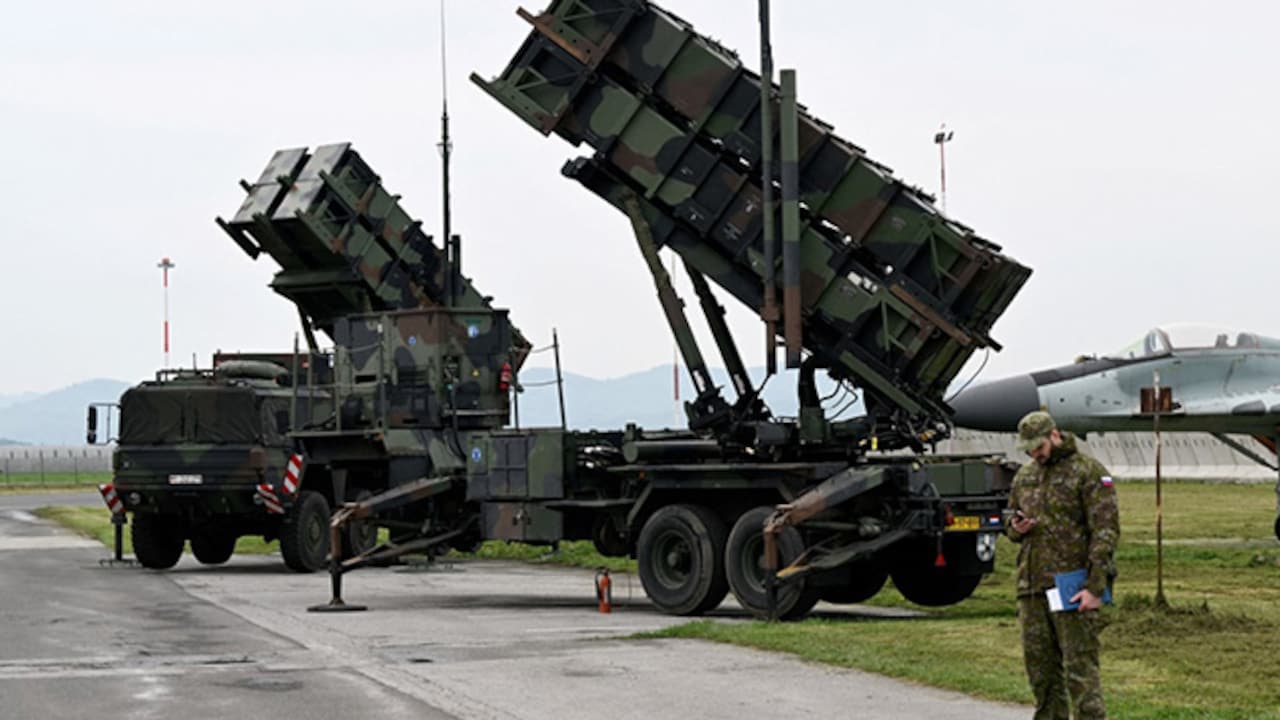
Oleh does not panic. Panic is a luxury for people who have never seen a theater of war. Instead, his fingers move with the terrifying economy of a concert pianist striking a final chord. He executes a sequence. Somewhere in a darkened field miles away, a heavy, multi-ton launcher wakes up. Its hydraulic stabilizers groan. A tube tilts toward the black vault of heaven.
Seconds bleed.
With a roar that tears the silence of the countryside apart and shakes dust from the bunker ceiling, a Patriot interceptor leaves the rail. It is a pillar of white fire, burning through the dark, carrying a price tag measured in millions of dollars and a burden measured in human survival. It climbs to meet the incoming death.
They collide three miles up. The flash turns the night into blinding noon for a fraction of a second. Down in the city, windows rattle, car alarms wail in a frantic chorus, and then silence rushes back in. The missile did not fall. The apartment block remains standing. The people inside can breathe again.
Until tomorrow night.
The Anatomy of a Scarce Shield
To understand why the supply lines of the Patriot missile system are gasping for breath, you have to look past the bureaucratic euphemisms of defense budgets and military aid packages. You have to look at the physical reality of what it takes to build a modern miracle of kinetic interception.
We talk about air defense as if it were a utility. We treat it like electricity flowing from a wall socket or water running from a tap. If you need it, you flip a switch. If the threat grows, you just ask for more.
The truth is much more fragile.
The Patriot, formally known as the MIM-104 Patriot, is not a single weapon. It is an intricate, sprawling nervous system. There is the radar—a massive, phased-array behemoth that can track dozens of incoming targets while guiding interceptors toward them. There is the engagement control station, the truck-mounted brain where humans make split-second choices about who lives and who dies. And then there are the missiles themselves, packed inside heavy rectangular canisters, waiting for a command that lasts only milliseconds.
Building one of these interceptor missiles is an exercise in microscopic precision. Consider the guidance systems. The seeker heads must lock onto targets maneuvering violently in the upper atmosphere. The rocket motors must ignite with absolute, flawless symmetry. The materials involved—specialized alloys, advanced composites, hyper-sensitive microelectronics—do not sit on shelves in a warehouse waiting to be boxed up.
They are grown in laboratories. They are machined to tolerances thinner than a human hair by technicians who have spent decades mastering trades that cannot be outsourced to a quick-assembly line.
When people ask why stockpiles are dwindling, they look at shipping manifests and political gridlock. But the real bottleneck is deep inside the industrial ecosystem. You cannot scale up the production of a masterpiece overnight. You cannot rush an artisan who carves cathedral pillars, and you cannot rush a factory that builds interceptors designed to intercept a bullet with another bullet while traveling at hypersonic speeds.
The Arithmetic of Attrition
Consider the math of modern defense, and you will see the trap closing.
When an adversary launches a barrage consisting of cheap, mass-produced loitering munitions alongside sophisticated ballistic missiles, they are not just waging a physical war. They are waging an economic war of attrition. A swarm of low-cost drones costs a fraction of what a single Patriot PAC-3 interceptor costs. If a defender is forced to fire a multi-million-dollar interceptor at a target worth a tenth of its price, the balance sheet becomes unsustainable.
Worse still, the manufacturing output of these systems moves at a linear pace. War moves at an exponential one.
For decades, the Western defense industrial base was optimized for efficiency, not volume. Just-in-time manufacturing was the gospel of the corporate world. Warehouses were kept empty to save on overhead. Supply chains spanned the globe, relying on single-source suppliers for critical components because it was cheaper that way.
Then the world caught fire.
The systems that were meant to deter conflict suddenly found themselves consumed by it at a rate that outpaced production capacity by orders of magnitude. Factories that were turning out a handful of interceptors a month found themselves expected to feed a gaping maw that swallowed months of production in a single weekend.
I remember talking to an engineer who spent thirty years working on propulsion systems for aerospace defense. He looked at me with tired eyes and said something that stayed with me.
"We built an artisan weapon for a mass-production war," he muttered, shaking his head. "And now we are paying the price for our own brilliance."
The Weight of an Empty Rail
When a battery runs low on interceptors, the danger is not just tactical. It is psychological. It alters the behavior of entire populations.
When people know the sky is guarded, they walk children to school. They keep bakeries open. They repair roofs shattered by previous blasts. There is a psychological armor that comes from knowing a shield stands between you and the void.
Remove that shield, or even let it wear thin, and the atmosphere shifts.
An empty launcher is a quiet terror. If commanders know their interceptor count is dropping into the single digits, they face agonizing choices that no human should ever have to make. Do they fire at the incoming missile heading toward the power plant, letting the one aimed at the residential district slip through? Do they hold their fire, saving the last few rounds for an even larger expected assault tomorrow, while civilians die today?
These are not hypothetical dilemmas played out in academic war games. They are ledger entries written in blood and ash in real-time control rooms across embattled borders.
The dwindling supply of Patriot systems exposes the illusion of invulnerability that powerful nations built for themselves during times of relative peace. We assumed that technological superiority was a permanent state of being, rather than a living, breathing process that requires constant nourishment, raw materials, skilled hands, and immense industrial will.
The Long Road Back to the Forge
Fixing this is not a matter of signing a legislative bill or writing a blank check. Money cannot bend time.
It takes years to train the engineers who design the guidance software. It takes years to build the specialized facilities where solid rocket fuel is cast without microscopic air bubbles that could cause a catastrophic explosion mid-flight. It takes a generational commitment to manufacturing infrastructure that our economic models spent thirty years dismantling in favor of globalization and short-term margins.
The factories are expanding now. Shifts are running around the clock. New assembly lines are being bolted to concrete floors in quiet towns far from the front lines. Workers are being trained. Supply chains are being reshaped to ensure that critical components have backups, redundancies, and domestic roots.
But industrial recovery is like turning an oil tanker in a narrow canal. It happens sluggishly, inch by agonizing inch, while the current pushes hard against the hull.
Until that turn is complete, the people sitting in bunkers beneath blinking radar screens will continue to watch the green lines sweep across their glass. They will continue to calculate the odds with cold precision and warm hearts. And every time the night erupts in white fire, they will look at their remaining inventory, knowing full well that every shield deployed today is one less shield standing between tomorrow and the dark.
The siren starts again.
Oleh reaches for his coffee, finds it cold, and pushes it aside. The green line sweeps across the screen. The blip appears.
He blinks once, squares his shoulders, and reaches for the switch.