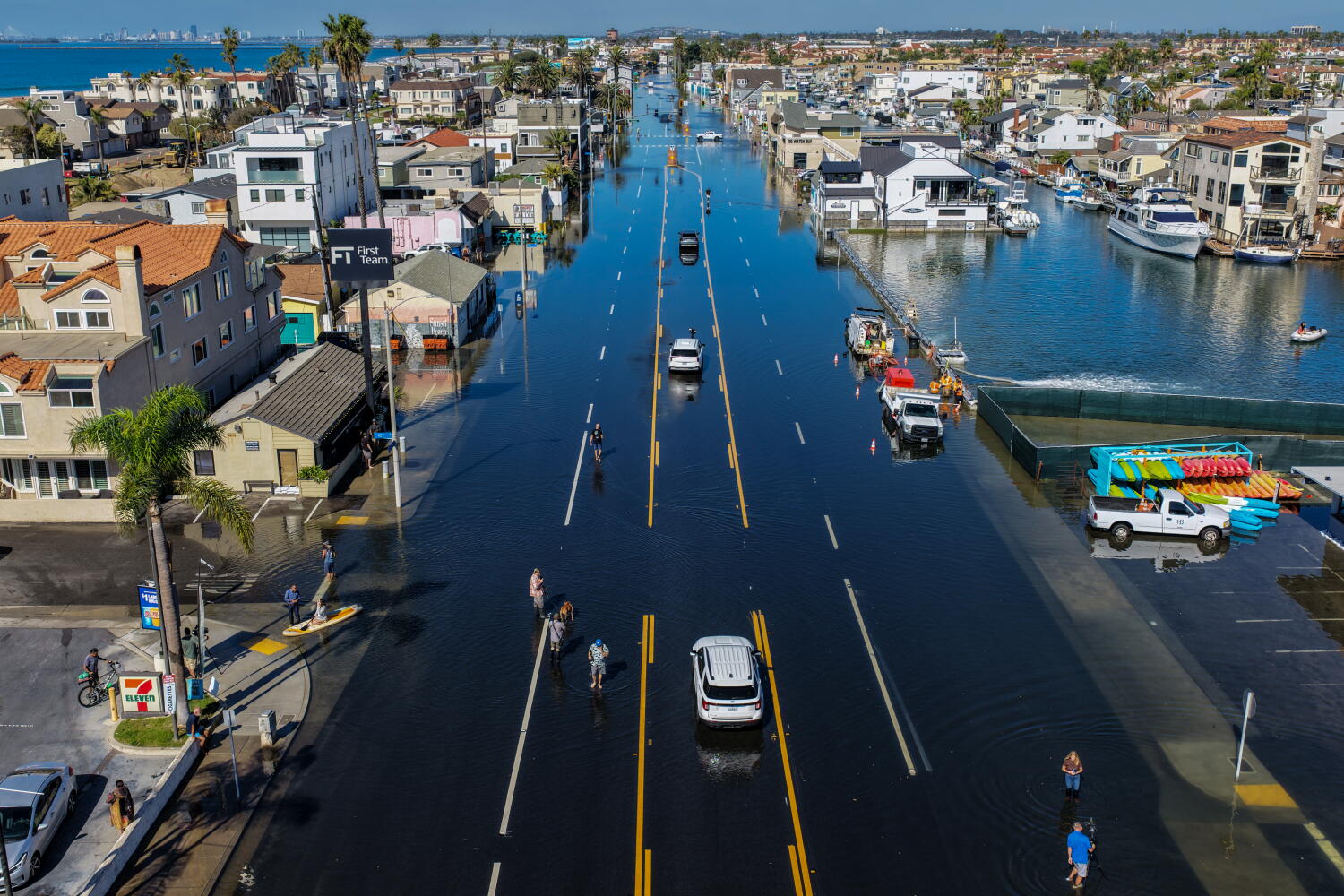
You can't out-muscle the Atlantic Ocean. You definitely can't out-spend the Pacific.
Every time a major hurricane batters the Eastern Seaboard or a king tide floods downtown Miami on a sunny Tuesday, the same predictable debate erupts in local newspapers and town hall meetings. One side demands massive concrete seawalls to hold back the water at any cost, while the other throws up their hands and insists coastal communities are doomed. Both sides miss the real point. Smart coastal policy isn't about stopping the tides—it's about adapting how we build, insure, and zone our shorelines so a rising ocean doesn't bankrupt entire states.
I've spent years analyzing municipal flood mitigation budgets and watching coastal towns make the exact same expensive mistakes. They pour millions into dumping sand onto eroding beaches only to watch a single winter nor'easter wash that tax money right back out to sea. Meanwhile, the policies that actually save homes and taxpayer dollars—like stricter elevation mandates, wetland restoration, and ending subsidized flood insurance for repeatedly flooded properties—get bogged down in local politics.
The Myth of Holding Back the Water
Hard armoring looks impressive on a ribbon-cutting day. When a town builds a towering seawall or drops thousands of tons of granite boulders along a shoreline, residents feel safe.
That feeling is mostly an illusion.
According to research from the United States Geological Survey, vertical seawalls reflect wave energy downward and outward, which actually accelerates erosion at the base of the wall and starves neighboring beaches of natural sand flow. You save one strip of expensive beachfront condos while destroying the public beach fifty yards down the coast. Even worse, hard infrastructure creates what urban planners call the "levee effect." People see a wall, assume the flood risk is zero, and build even denser, more expensive real estate right behind it. When a storm surge eventually overtops that barrier, the financial devastation is exponentially worse than if the wall had never been built.
Why Beach Nourishment Is Just an Expensive Band-Aid
If you live anywhere from New Jersey to Florida, you've seen the massive dredge pipes pumping offshore sand onto eroded shorelines. Beach nourishment has become the default political response to coastal erosion because nobody loses their oceanfront view and the tourism board stays happy.
Here's the problem with that approach. It's a treadmill you can never step off.
Data tracked by the Program for the Study of Developed Shorelines at Western Carolina University shows that the United States has spent billions of dollars pumping sand onto beaches over the past few decades, and the pace of spending is accelerating rapidly. As sea levels rise and storms grow more intense, those engineered beaches wash away faster than before. Towns end up paying double or triple what they budgeted just to maintain the exact same shoreline width they had ten years ago. It's a temporary tactical delay, not a long-term coastal policy.
What Smart Coastal Policy Actually Looks Like
If walls fail and sand washes away, what works? Real resilience comes down to boring, unsexy policy changes that shift financial incentives before the storm hits.
Look at how flood insurance operates in the United States. For decades, the National Flood Insurance Program (NFIP), managed by FEMA, offered heavily subsidized rates that didn't reflect actual flood risk. Property owners could rebuild a flooded house in the exact same low-lying spot three or four times using federal payouts. Those "severe repetitive loss" properties represent a tiny fraction of insured homes, yet they drain a massive share of program funds.
When FEMA rolled out Risk Rating 2.0 to align insurance premiums with actual property-specific flood risk, homeowners in high-hazard zones faced steep increases. Politicians screamed. Homeowners protested. Yet pricing risk honestly is the single most effective policy tool we have. When insurance reflects reality, developers stop building in marshlands, and buyers think twice before purchasing a slab-on-grade house three feet above high tide.
Let Nature Absorb the Punch
The best storm surge barrier ever invented doesn't require concrete or federal maintenance contracts. It's a healthy coastal wetland.
Salt marshes, mangrove forests, and oyster reefs act like giant sponges. A landmark study published in Scientific Reports examining the economic value of coastal wetlands during Hurricane Sandy found that marshes prevented more than $625 million in direct flood damages across twelve states. Where wetlands were intact, property damage dropped dramatically. Where towns had paved over marshes for strip malls and parking lots, the storm surge tore straight through residential neighborhoods.
Smart policy means buying up vulnerable coastal land and turning it back into functioning marshes. Places like New Jersey's Blue Acres program have already proved this works. Instead of paying homeowners to rebuild in floodplains after Superstorm Sandy, the state bought out willing sellers, demolished the damaged houses, and restored the land to open space that absorbs future floodwaters for surrounding communities.
Upgrading Building Codes Before the Next Storm
You don't have to abandon every coastal city to survive rising tides. You just have to change how structures are built.
In the Florida Keys, strict post-Hurricane Andrew building codes require new homes to be elevated well above base flood elevation, with breakaway walls on the ground level so storm surge can pass underneath without taking the house off its pilings. When Hurricane Irma slammed into the Keys as a Category 4 storm in 2017, older ground-level homes were gutted, while modern elevated structures right next door suffered minimal structural damage.
- Freeboard requirements force builders to elevate homes two to four feet above the minimum federal flood map lines, cutting flood insurance costs by half or more while protecting against future sea level rise.
- Permeable pavement mandates require new commercial developments to use porous concrete or pavers so rainwater drains into the ground instead of overwhelming municipal storm sewers during heavy downpours.
- Rolling easements allow coastal property owners to use their land normally until the shoreline naturally migrates inland, at which point the structure must be removed rather than armored with a seawall.
- Disclosure laws force sellers to hand buyers a complete history of past flood claims and current flood risk estimates before a real estate contract is signed.
Notice what all four of those policies have in common. None of them require a trillion-dollar federal bailout. They rely on local zoning boards, state insurance regulators, and municipal building inspectors enforcing clear rules.
The Hard Truth About Managed Retreat
Nobody running for local office wants to utter the words "managed retreat." It sounds like surrender. Voters hear it and immediately picture government bulldozers seizing their family beach house.
That's a total misunderstanding of how retreat works in practice.
Managed retreat isn't forced confiscation. It's stopping the flow of public subsidies into areas that can no longer be safely defended. Right now, taxpayers across the country pay to rebuild washed-out coastal highways, extend municipal water lines to eroding barrier islands, and bail out beachfront infrastructure after every major storm. When local governments decide to stop upgrading utilities in chronically flooded zones and redirect that money toward inland infrastructure, communities naturally shift toward higher ground over decades.
Take Oakwood Beach on Staten Island. After Hurricane Sandy killed residents and destroyed hundreds of homes in that low-lying neighborhood, homeowners organized and petitioned New York State to buy their properties so they could move to safer areas. The state purchased the homes, returned the land to natural coastal wetlands, and created a permanent buffer that now protects inland Staten Island neighborhoods from future storm surges.
How Coastal Residents and Local Leaders Can Act Right Now
Waiting for Congress to pass sweeping climate legislation won't keep seawater out of your living room next hurricane season. The most effective coastal policies happen at the county and municipal level, where individual voices carry serious weight.
Start by checking your property's actual flood exposure using tools like First Street Foundation's Flood Factor, which models future tidal and rainfall flooding rather than relying solely on outdated federal maps. If you live in a coastal municipality, show up to local planning board meetings when zoning variances are on the agenda. Developers routinely ask towns to waive wetland buffers or elevation rules to squeeze extra units onto waterfront lots—and those waivers pass quietly when residents stay home.
Push your city council to adopt a minimum two-foot freeboard standard for all new construction and major renovations, and demand that your state enforce mandatory flood-history disclosures on every real estate transaction. We can't stop the ocean from rising, and pretending otherwise only drives up the final bill. Stop funding temporary fixes that wash away with the next storm, and start enforcing the local rules that actually keep communities standing.


