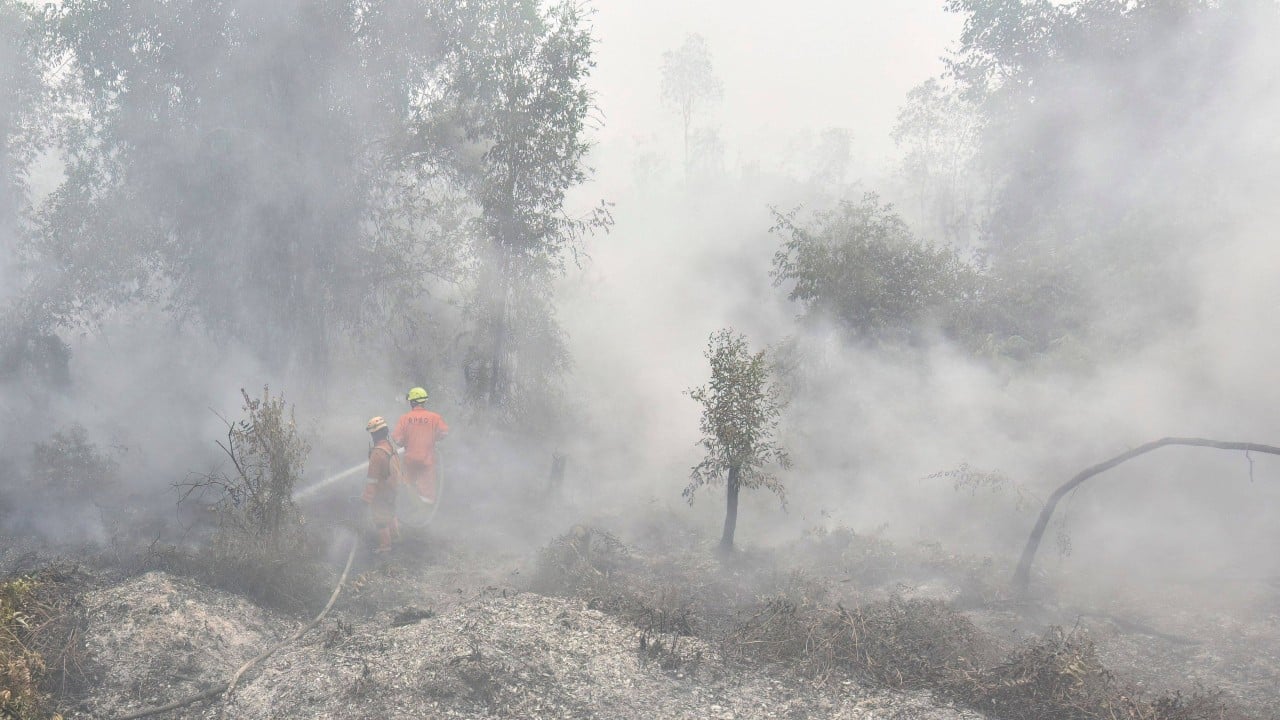
Dawn used to arrive with color. Golden light would spill over the emerald canopies, piercing through morning mist to warm the earth. Now, dawn arrives with silence. And smoke.
Imagine waking up in a home where the air feels heavy, tasting like burnt wood and ash before your feet even touch the floor. For more than 170,000 people across regions of Indonesia, this description is not a poetic exaggeration. It is daily survival.
Consider a hypothetical mother named Siti living in Sumatra. Every morning during the dry season, she checks the sky not to see if it will rain, but to measure how thick the gray shroud has become. Her youngest son wakes up coughing, a dry, persistent hack that rattles his small chest. She reaches for an inhaler that feels increasingly inadequate against an enemy she cannot see, touch, or sweep away.
Wildfires are not new here. Every year, agricultural clearing and peatland fires ignite, fueled by dry winds and parched soil. But the scale shifts. The numbers climb. Over 170,000 cases of acute respiratory infections accumulate in clinics and makeshift medical tents. Clinics overflow with patients gasping for filtered air. Nurses work double shifts, handing out masks that offer only a fraction of protection against microscopic soot particles infiltrating human lungs.
Air is supposed to be invisible. When air becomes visible, something fundamental has broken.
Microscopic smoke particles, known scientifically as PM2.5, bypass the body's natural defense filters in the nose and throat. They travel deep into the bronchial tubes, slipping past cellular walls straight into the bloodstream. Once inside, they trigger inflammation, constricting airways, straining the cardiovascular system, and turning every breath into an uphill battle.
For the elderly and the very young, this crisis is an existential threat. Their bodies lack the resilience to fight off constant oxidative stress. A simple breath becomes a hazard. Schools close. Streets empty. Communities retreat indoors behind shut doors and damp towels wedged beneath doorframes, waiting for winds that refuse to shift.
The human cost extends far beyond emergency room visits. It touches the psychological weight of chronic anxiety. When your home smells of fire and your children struggle to catch their breath, peace vanishes. People feel trapped inside their own neighborhoods, prisoners of an environmental breakdown rooted in complex economic pressures, agricultural habits, and climate shifts.
Solutions require more than temporary medical aid. They demand systematic changes in how land is managed, how fires are prevented, and how communities are protected when disaster strikes. Yet, while policy debates unfold in distant offices, the immediate reality remains stark.
Outside, the gray haze clings to the rooftops. The sun is a pale, bruised orange disc struggling to pierce the veil. Another day begins. Another breath is drawn.


