The air in Jackson Hole always feels a little too thin in late August. Pine scent presses down from the Tetons, mixing with the low, anxious murmur of economists trading whispers over lukewarm coffee. Everyone is waiting for the signal. They are looking for a tremor in the mountain air, a twitch of an eyebrow from the podium, any sign of which way the wind will blow for the rest of us.
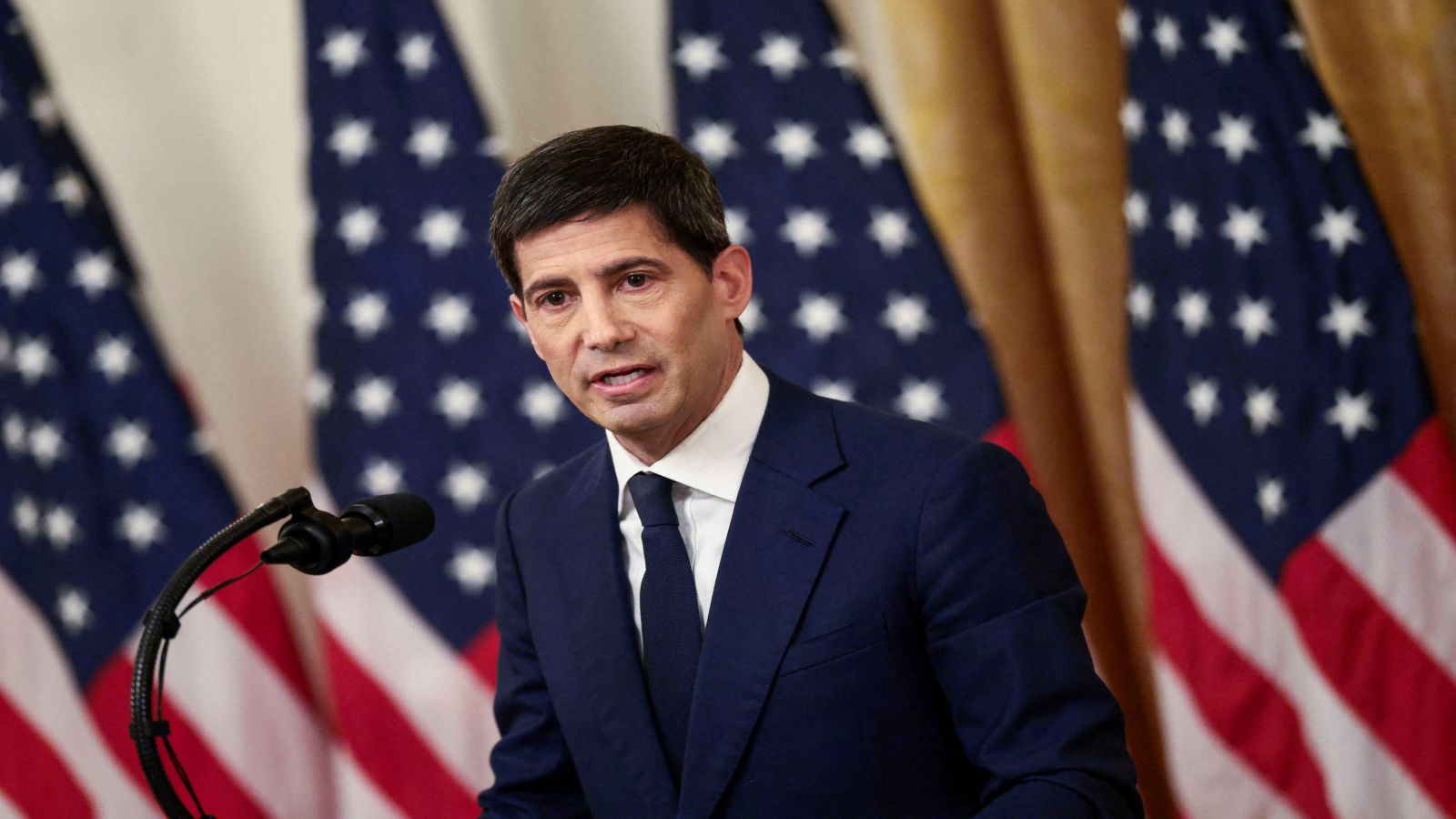
Then Kevin Warsh steps up to the microphone.
He does not yell. He does not need to. Federal Reserve chairs and close watchers of central banking know that power in Washington rarely announces itself with a megaphone; it arrives in dry prose that carries the weight of an anchor chain. When Warsh signals that interest rates might need to climb higher, the room does not gasp. It stiffens.
To understand why a speech in a Wyoming valley matters to a machinist in Ohio or a young couple staring at mortgage rates in Austin, you have to strip away the jargon of basis points and quantitative tightening. You have to look at what money actually is.
Money is trust.
When borrowing becomes too easy, that trust stretches like cheap elastic. Prices drift upward. The grocery bill creeps past reason. The used car lot down the street starts pricing hatchbacks like luxury sedans. For a while, everybody feels richer because the numbers on the screen are bigger. But reality has a stubborn way of collecting its debts.
Inflation is a silent tax. It robs the cautious and rewards the reckless. It steals the purchasing power of the grandmother living on a fixed pension while bidding up speculative assets in distant boardrooms. The central bank's job is supposed to be simple, though it is never easy: take away the punch bowl right when the party gets loud.
Warsh knows this rhythm intimately. Markets have grown accustomed to a safety net, a whispered promise that whenever the economic floor gets a little shaky, the central bank will rush in with lower borrowing costs to cushion the fall. But inflation does not care about market comfort. Inflation feeds on cheap money.
Consider a hypothetical small business owner named Elena. She runs a commercial bakery in Cincinnati. For three years, Elena has watched the cost of flour double, her electricity bills climb by half, and the wages she must pay to keep her bakers from leaving for larger warehouses rise month by month. She cannot just print more money to cover the gap. She has to pass those costs on to customers who are already tightening their belts.
When Elena hears that the Federal Reserve is contemplating further rate hikes, she does not see a headline about macroeconomic policy. She sees the cost of the new commercial oven she desperately needs inching further out of reach. She sees credit lines tightening. It is a bitter medicine. Raising interest rates to cool an overheated economy is a bit like treating a raging fever by plunging the patient into ice water. It shocks the system. It hurts.
Yet, the alternative is worse. Unchecked inflation hollows out the middle class from the inside out, turning daily survival into a grinding exercise in arithmetic.
The speech in Jackson Hole was a reminder of an old, uncomfortable truth. Easy money creates illusions. Hard money demands reckoning.
Markets bounced on the news, as they always do, twitching like a startled animal before trying to figure out what the new reality means for stock prices and corporate earnings. Algorithms scanned the transcript in milliseconds, looking for pivot words, hunting for weakness. But Warsh’s message was stubborn. There was no pivot. There was only the steady, unyielding arithmetic of supply, demand, and the cost of capital.
We have lived through an era where debt was nearly free, where borrowing money felt like downloading a song—instant and without consequence. Generations of investors and corporate executives grew up knowing only one direction for interest rates over the long haul: down. They built towering financial architectures on the assumption that cheap money was a permanent atmospheric condition, like oxygen or gravity.
It never was.
The wind in the Tetons shifts suddenly, carrying the chill of an early autumn snow down the slopes. Down in the valleys and cities far from Wyoming, the real work begins. The loans will cost more. The expansion plans will pause. The fever will break, not because it was comfortable, but because the alternative was consumption without end.
The heavy hand has dropped. The echo is still rolling across the canyons.