Morning light usually brings a specific kind of noise to a schoolyard. It is a chaotic, beautiful symphony of sliding backpack zippers, the scrape of sneakers against asphalt, and the overlapping chatter of children who have not yet learned how to filter their joy. But some sounds do not belong. Some sounds shatter the architecture of safety in less than a second, turning a sanctuary into a crime scene before the morning bell has even finished ringing.
Asia is waking up to a chilling reality. Within the span of a single week, a second major tragedy has pierced the heart of a school community, this time striking the Philippines. Two students are dead. Classrooms that were supposed to hold geometry equations and whispered secrets about weekend plans are now sealed behind police tape.
Grief has a weight to it. You can feel it in the heavy air of the corridors, the stunned silence of parents clutching smartphones outside security gates, and the vacant desks that will remain empty tomorrow.
We need to talk about why this is happening. We need to look past the breaking news banners and confront the raw, uncomfortable truth about the erosion of safety in spaces once deemed untouchable.
The Illusion of Distance
It is easy to believe that certain horrors only happen somewhere else. Distance acts as a psychological buffer. When we read about violence in distant cities, our brains construct an invisible shield, convincing us that our local communities are immune.
They are not.
(Note: The following scenario is a hypothetical reconstruction based on recurring patterns documented by safety analysts to illustrate how quickly institutional security can fracture.)
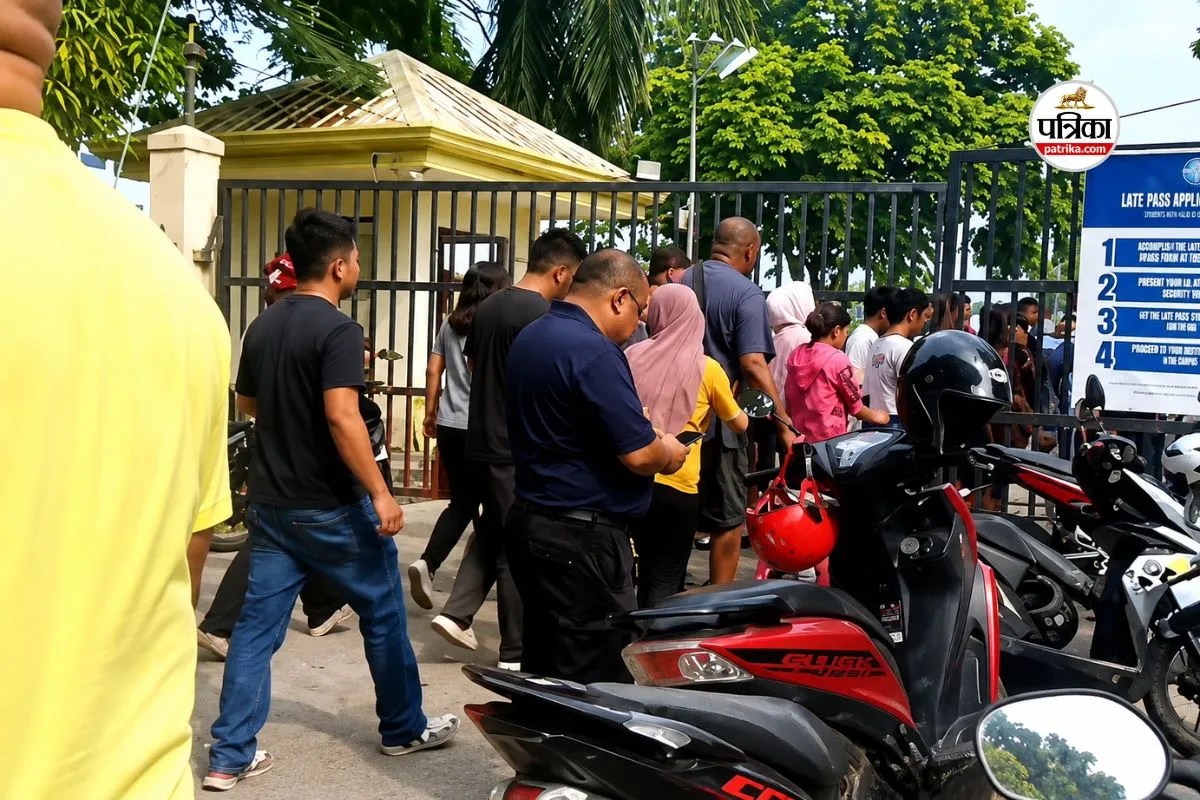
Imagine a Tuesday morning that starts entirely normally. A security guard at a Manila-region school finishes his coffee, standing by a gate that sees hundreds of students stream past every hour. The infrastructure is stretched thin. Metal detectors are often absent or bypassed; budgets dictate what can be protected and what must be left to chance. In an environment where resources are scarce, vigilance is the only line of defense. And human beings get tired. Human beings miss things.
When a weapon crosses a threshold, it does not make a loud announcement. It enters quietly, tucked into the canvas lining of a backpack, hidden by indifference or desperation.
And then the world stops.
Two lives are snuffed out. Families are shattered in an instant. The statistics will be logged, categorized, and filed away by evening news anchors, but statistics do not bleed. They do not capture the sound of a mother crying out in a hospital corridor, a sound that defies language and reason.
Why the Second Wave Stings So Deeply
One event is an anomaly. Two events within seven days across the region form a trend, a terrifying pattern that forces society to wake up from its collective sleepwalk.
We have seen this script before. It starts with shock, moves rapidly to outrage, plateaus into political finger-pointing, and eventually fades until the next alarm bell rings. But this cycle of numbness is lethal.
Consider the psychological toll on the survivors. Children who witness violence do not simply bounce back. They carry an invisible architecture of trauma. They start looking for exits the moment they enter a room. They flinch at slamming doors. They trade the carefree innocence of youth for a hyper-vigilant survival mode that changes how they learn, how they trust, and how they dream.
We are failing our children. Not just by failing to keep weapons out of schools, but by failing to address the underlying fractures in the social fabric that make a young person pick up a gun in the first place.
Violence of this nature is rarely born in a vacuum. It is the culmination of isolation, unchecked mental health struggles, accessibility, and a cultural narrative that increasingly normalizes aggression. When we ignore the early warning signs—the sudden withdrawal, the whispered threats, the cries for help disguised as rebellion—we become silent co-conspirators in the tragedy that follows.
The Hard Questions We Keep Avoiding
Every time bullets tear through a classroom, the same hollow debates emerge. Do we arm teachers? Do we turn schools into fortresses with barbed wire and metal detectors at every entrance? Do we lock the doors and pretend the outside world does not exist?
These are security measures, not solutions. They treat the fever while ignoring the infection.
Turning a school into a prison transforms the psychological environment entirely. Children cannot thrive in an atmosphere of constant fear and suspicion. If education requires surveillance to survive, we have already lost the essence of what schools are meant to be.
The real work happens long before anyone reaches for a trigger. It happens in the quiet moments when an isolated student is noticed instead of ignored. It happens when mental health resources are treated as essential infrastructure rather than expendable luxuries. It happens when communities break their silence and refuse to look away from the darkness festering in the corners of their neighborhoods.
Two young lives in the Philippines will not return. Their desks are empty. Their futures have been stolen by an act of senseless violence that leaves a permanent scar on an entire nation.
As the sun sets over the grieving schoolyards of Asia, the empty chairs remain. The silence left behind is deafening, asking a question we must answer before another morning bell rings: How many more have to die before we change the way we live?