The End of All-or-Nothing Diplomacy
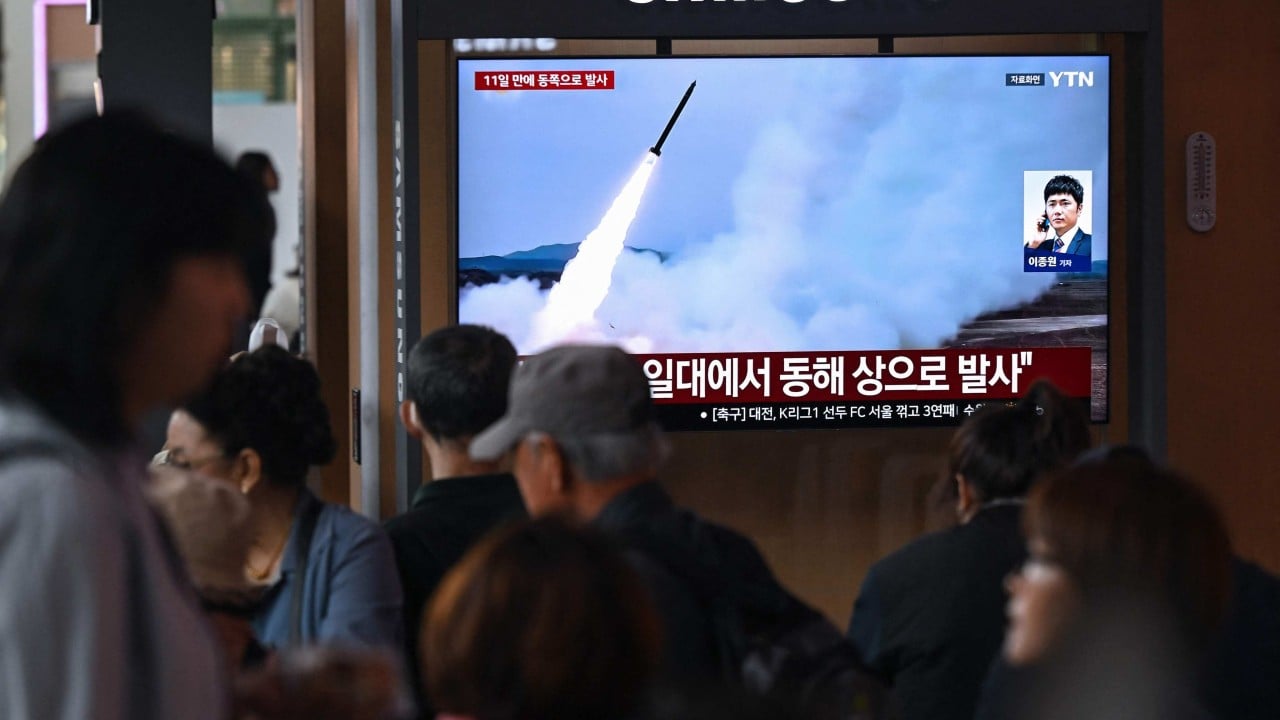
Setting unrealistic preconditions usually guarantees one thing: complete silence. That is precisely what happened on the Korean Peninsula over seven years of deadlocked communication, escalating missile tests, and an expanding nuclear arsenal in Pyongyang.
Unification Minister Chung Dong-young made it official. South Korea has abandoned its longstanding stance of demanding full denuclearization before entering broader peace negotiations with North Korea.
Instead, the Lee Jae Myung administration shifted toward a "peace-first" doctrine. The primary focus isn't demanding immediate disarmament. It's halting the ongoing expansion of Pyongyang's nuclear capabilities.
It's a practical recognition of reality. When you insist on total nuclear dismantlement right at the front door, the door never opens.
Previous Policy: Denuclearization First (CVID) ──> Zero Progress ──> 7 Years of Silence
New Policy:      Freeze First / Peace First   ──> Open Dialogue ──> Goal: Nuclear-Free Peninsula
Why Demanding Disarmament Upfront Failed
For decades, foreign policy in Seoul and Washington revolved around CVID: Complete, Verifiable, and Irreversible Dismantlement. The logic sounded sound on paper. Why reward a rogue regime with economic aid or security guarantees while they retain nuclear weapons?
In practice, CVID became a diplomatic dead end.
North Korea didn't stop building weapons while everyone waited for talks. They accelerated.
Look at the numbers. The Stockholm International Peace Research Institute released data showing North Korea had roughly 60 assembled nuclear warheads, up from 50 the year before. Estimates indicate they possess enough fissile material to assemble up to 90 weapons.
When a nuclear power codifies its arsenal into its national constitution—as Kim Jong Un did—and develops tactical nuclear weapons specifically tailored for regional strikes, demanding they give up everything just to sit at a table isn't realistic strategy. It's wishful thinking.
Former administrations often kept the "denuclearization-first" stance alive for domestic political messaging rather than strategic efficacy. Admitting that an adversary won't disarm looks politically weak, so leaders doubled down on maximum pressure. Meanwhile, the security threat grew every single day.
What "Peace-First" Actually Means
Dropping denuclearization as a precondition doesn't mean South Korea formally recognizes North Korea as a permanent nuclear state. The end goal remains a nuclear-free Korean Peninsula.
The sequencing changed.
The New Sequence
- Immediate Freeze: Halt further production of fissile materials, warhead assembly, and missile testing.
- Dialogue & De-escalation: Re-establish communication channels, reduce military flashpoints along the Demilitarized Zone, and pursue economic or humanitarian exchanges.
- Long-Term Arms Control: Work toward a phased reduction of nuclear capabilities within a broader security framework.
President Lee Jae Myung pushed this freeze-first approach directly to allies, raising the concept during discussions at the Group of 7 summit. President Lee noted that stopping Pyongyang's active nuclear development—suspending new warhead production and stopping the import of key nuclear materials—is an immediate net gain for global security.
If your house is on fire, you don't argue about who pays for the full remodel before turning on the hose. You put out the flames first.
       ┌──────────────────────────────────────────────────────────┐
       │             OLD APPROACH vs. NEW APPROACH                │
       └──────────────────────────────────────────────────────────┘

  OLD: [Demands Disarmament] ──► [Refusal] ──► [Zero Dialogue] ──► [Arsenal Grows]

  NEW: [Freeze Arsenal] ──► [Reopen Talks] ──► [Peace Framework] ──► [Gradual Reduction]
A Shift Reflected Across Major Powers
Seoul isn't acting in a vacuum. Major powers shifted away from total dismantlement as an immediate requirement.
Victor Cha, Korea Chair at the Center for Strategic and International Studies and historically a hawkish voice on North Korean affairs, noted that traditional denuclearization has become a distant objective. He advocated for establishing a "cold peace" to manage risks rather than chasing an improbable diplomatic breakthrough.
Washington, Beijing, and Moscow have all altered their language. Key national security documents from major capitals routinely omit the word "denuclearization," choosing instead to discuss stability, threat reduction, and risk management.
China dropped explicit references to North Korean denuclearization in major defense white papers. Russia expanded military and economic cooperation with Pyongyang, providing tacit acceptance of Kim's nuclear status in exchange for munitions and military hardware.
If the superpowers aren't holding out for immediate disarmament, Seoul insistence on it only isolated South Korea from managing its own backyard.
Navigating the Two-State Reality
The diplomatic pivot isn't just about warheads; it's about how the two nations view each other legally and politically.
Kim Jong Un declared inter-Korean relations to be those of "two hostile states," effectively abandoning Pyongyang's decades-long commitment to peaceful reunification.
Seoul responded with a distinct framework: "two peaceful states pursuing unification." To explain this balance, Unification Minister Chung referenced the seventh-century Buddhist concept of not-one, not-two—acknowledging two separate political entities that remain fundamentally connected.
This diplomatic nuance matters. If Seoul treats North Korea as a foreign state without abandoning the ultimate hope of peaceful co-existence, it opens functional avenues for diplomacy that don't trigger Pyongyang's paranoia about regime change or absorption.
Real Reforms Beyond High-Level Foreign Policy
A policy pivot on paper means little without practical changes on the ground. The Unification Ministry started implementing concrete shifts in how South Korea handles relations and North Korean newcomers.
Social and Lexicon Updates
- Language shift: The ministry requested media outlets retire the term talbukmin (North Korean defector) in favor of bukhyangmin (people whose home region is in the North). The goal is removing the social stigma associated with the word "defector."
- Resettlement reforms: Facilities at Hanawon—the government resettlement center for North Koreans arriving in the South—saw structural overhauls. Officials removed barbed wire fences, modernized the curriculum, and allowed trainees to use smartphones to ease their transition into modern South Korean society.
- Direct assistance: New arrivals now receive private-donor funded smartphones upon graduation to assist in immediate social integration and employment searches.
These tactical adjustments signal a broader attempt to move away from a confrontational, Cold War-era posture toward a practical, humanitarian approach.
What This Means for Regional Security
Dropping the denuclearization precondition creates immediate strategic realignments across East Asia.
For the United States, South Korea's pivot requires close coordination on extended deterrence. Washington must reassure Seoul and Tokyo that a freeze-first approach doesn't undermine the American nuclear umbrella.
For Japan, any agreement that halts North Korea's short- and intermediate-range ballistic missile development directly improves immediate homeland defense, even if warheads remain in underground bunkers for now.
For Pyongyang, the ball returns to their court. Kim Jong Un spent years refusing dialogue under the pretext that Seoul and Washington demanded his unilateral surrender. With that demand off the table, Pyongyang must decide whether to engage in pragmatic arms-control talks or continue full-scale nuclear expansion into isolation.
Next Steps for Policy and Pragmatism
Understanding where this policy shift leads requires watching specific indicators over the coming months.
- Watch the military hotlines: The first real test of the peace-first policy is whether Pyongyang agrees to restore direct inter-Korean military communication channels and border hotlines that were severed during previous escalations.
- Monitor bilateral trilateral coordination: Keep an eye on joint statements between Seoul, Washington, and Tokyo. Effective policy implementation depends on whether the U.S. fully backs a freeze-first framework during bilateral summits.
- Track missile testing cadence: If Pyongyang continues high-frequency missile tests despite Seoul's diplomatic overtures, domestic political pressure in South Korea could force the Lee administration to reconsider its posture.
- Follow inter-Korean trade discussions: Look for proposals regarding limited economic cooperation or joint humanitarian initiatives, which serve as the traditional stepping stones for rebuilding inter-Korean trust.

/https://i.s3.glbimg.com/v1/AUTH_e84042ef78cb4708aeebdf1c68c6cbd6/internal_photos/bs/2026/g/B/3vpkvHQKizRKAfzDxjXA/vini-jr-antes-e-depois.jpg)