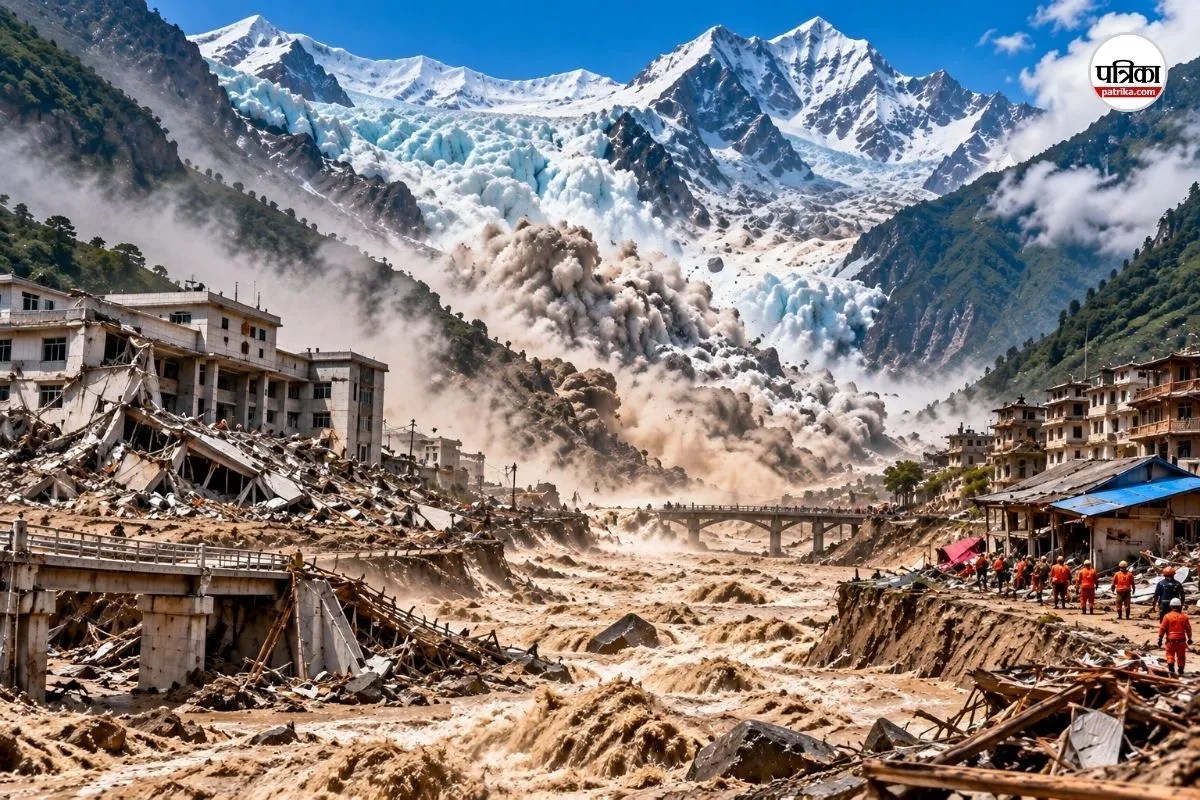
Sovereign credit ratings do not measure the immediate human or physical toll of a natural disaster; they measure the structural capacity of a state to service its debt obligations over a multi-year horizon. When Fitch Ratings affirmed Nepal’s Long-Term Foreign-Currency Issuer Default Rating (IDR) at 'BB-' with a Stable Outlook for the third consecutive year following severe monsoon flooding and landslides, surface-level observers treated the decision as an anomaly. In reality, the affirmation exposes a fundamental divergence between localized physical infrastructure damage and macroeconomic balance-of-payments insulation. Nepal’s credit profile holds steady because its external liquidity buffers, concessional debt structure, and remittance-driven current account act as structural shock absorbers against acute climate events.
To understand why physical devastation fails to trigger a sovereign downgrade, one must deconstruct the sovereign rating methodology into its core operational variables. Credit rating agencies evaluate four primary pillars: structural features, macroeconomic performance, public finances, and external finances. A climate shock—such as the late-monsoon floods that damaged hydropower installations, road networks, and agricultural output across Nepal—impacts fiscal expenditure and short-term GDP growth. Yet, for a frontier economy classified under the 'BB' category, external liquidity and debt composition carry disproportionate weight in preventing default. Don't miss our earlier article on this related article.
The External Liquidity Buffer and Remittance Mechanics
The primary stabilizer of Nepal’s 'BB-' rating is its external balance sheet. Standard economic theory dictates that a severe supply-side shock—such as destroyed agricultural yields and disrupted transit corridors—forces a nation to increase imports of food, fuel, and reconstruction materials while simultaneously depressing export capacity. In a vulnerable economy, this dynamic rapidly depletes foreign exchange reserves, triggers currency depreciation, and precipitates a balance-of-payments crisis.
Nepal bypasses this trap through a counter-cyclical remittance mechanism. Historically, external shocks within Nepal induce an acceleration in outward labor migration and an uptick in remittance inflows from the diaspora in the Gulf Cooperation Council (GCC) states, Malaysia, and India. These inflows are unrequited transfers; they carry zero debt-servicing obligations and directly replenish the central bank's foreign exchange reserves. If you want more about the background of this, The Motley Fool offers an excellent breakdown.
- Import Coverage Ratio: Nepal consistently maintains foreign exchange reserves sufficient to cover over a year of prospective current account payments, vastly exceeding the three-month benchmark typically required by rating agencies for 'BB' tier sovereigns.
- Currency Peg Stability: The Nepalese Rupee (NPR) is pegged to the Indian Rupee (INR) at a fixed rate. While this removes independent monetary policy flexibility, it anchors inflation expectations and eliminates the risk of a disorderly currency collapse following localized domestic shocks.
- Current Account Surplus Dynamics: Sluggish domestic capital expenditure—a chronic governance failure in normal times—paradoxically preserves foreign reserves during crises by suppressing the import of heavy machinery and industrial inputs.
Because the external sector remains insulated from domestic physical destruction, the immediate probability of a foreign-currency liquidity freeze approaches zero. Rating committees recognize that a sovereign cannot default on external obligations when its central bank holds record reserves relative to its short-term external debt.
Concessional Debt Architecture and Interest Rate Insulation
The second pillar neutralizing the fiscal impact of flood damage is the composition of Nepal’s public debt. When an emerging market faces an unexpected reconstruction bill, the standard sovereign response involves issuing high-yield bonds on international capital markets or tapping domestic commercial banks, which crowds out private sector credit and spikes debt-service costs.
Nepal operates outside commercial international debt markets. Its external public debt is almost entirely owed to multilateral and bilateral development partners—specifically the World Bank’s International Development Association (IDA), the Asian Development Bank (ADB), and bilateral sovereign lenders. This debt architecture creates three distinct protective mechanisms:
- Ultra-Long Maturities: Repayments are stretched across 30-to-40-year horizons, eliminating rollover risk and preventing sudden maturity walls from colliding with post-disaster fiscal deficits.
- Below-Market Interest Rates: Fixed, concessional interest rates—often hovering around 1% to 2%—ensure that the interest-to-revenue ratio remains exceptionally low compared to 'BB' median peers, who frequently pay 6% to 9% on commercial Eurobonds.
- Contingent Disaster Financing: Multilateral institutions embed Catastrophe Deferred Drawdown Options (Cat DDOs) and rapid-response grant facilities into their lending frameworks. When floods destroy infrastructure, these mechanisms convert physical liabilities into low-cost liquidity injections rather than commercial debt burdens.
The fiscal cost of flood reconstruction does widen the budget deficit, pushing public debt-to-GDP ratios upward. However, because the marginal cost of borrowing remains structurally suppressed, debt sustainability metrics do not breach the thresholds required to justify a negative rating action.
The Growth Paradox and Hydropower Vulnerability
While external and debt metrics explain the stability of the 'BB-' rating, the domestic growth transmission mechanism reveals the exact vulnerabilities preventing Nepal from achieving an upgrade to the 'BB' or 'BB+' tier. Floods and landslides directly target the two sectors Nepal relies upon for structural transformation: agriculture and hydropower.
Hydropower represents Nepal’s primary long-term export asset and its most viable path toward structural current account diversification via electricity sales to India and Bangladesh. Run-of-river hydropower projects, which dominate Nepal’s energy mix, are acutely exposed to hydrological volatility and sediment transport triggered by extreme monsoon events. When flash floods damage headworks, transmission lines, and access roads, two compounding economic losses occur:
- Direct Capital Stock Destruction: Physical assets require capital-intensive repairs, diverting fiscal resources away from new productive investments toward mere asset replacement.
- Foregone Export Revenue: Generation outages during peak monsoon months—precisely when water flow should maximize power output—reduce cross-border electricity exports, delaying the structural shift away from remittance dependency.
Simultaneously, agricultural disruption depresses rural consumption and pushes up domestic food inflation. Yet, in sovereign credit modeling, a temporary 1% to 1.5% drag on real GDP growth caused by weather events is treated as a transient cyclical shock rather than a permanent erosion of potential growth—provided the underlying institutional framework remains intact.
Governance Bottlenecks as an Unintended Fiscal Brake
A rigorous examination of Nepal’s public finances uncovers a counterintuitive operational reality: chronic under-execution of the capital budget acts as an automatic fiscal stabilizer. Year after year, the government of Nepal fails to spend its allocated capital expenditure due to bureaucratic friction, procurement delays, land acquisition disputes, and political coalition turnover.
In a post-disaster environment, political leadership routinely announces multi-billion-rupee reconstruction packages. If executed rapidly, these outlays would widen the fiscal deficit and accelerate domestic inflation. In practice, institutional bottlenecks ensure that actual cash disbursements occur slowly across multiple fiscal years. This administrative inertia smooths out the fiscal shock, preventing sudden spikes in net domestic borrowing and keeping headline deficit numbers within the tolerances modeled by rating analysts.
This dynamic illustrates a critical limitation in sovereign credit analysis. A stable credit rating does not indicate economic dynamism or effective disaster management; it often reflects a low-equilibrium trap where weak administrative capacity inadvertently prevents fiscal overextension.
Separating Structural Credit Risks from Transitory Shocks
To evaluate frontier sovereigns accurately, analysts must separate transitory climate events from structural credit deterioration. Fitch’s affirmation of the 'BB-' rating relies on the persistence of specific macroeconomic guardrails. If those guardrails erode, future climate shocks will cease to be rating-neutral.
The primary variables that would invalidate this stability thesis include:
- Commercialization of External Debt: If Nepal shifts away from concessional multilateral borrowing toward commercial external debt or non-concessional bilateral loans to finance large-scale infrastructure, its debt-service profile would immediately become vulnerable to interest rate shocks and currency mismatches.
- Structural Decline in Remittances: A prolonged economic contraction in the GCC states or regulatory shifts restricting migrant labor would sever the external liquidity buffer, leaving the current account exposed to post-disaster import surges.
- Erosion of Central Bank Independence: Politicization of Nepal Rastra Bank (NRB) leading to directed lending, artificial suppression of interest rates, or monetization of fiscal deficits would undermine the INR currency peg and trigger capital flight.
- Compounding Climate Frequency: Rating models treat severe floods as periodic anomalies. If extreme weather events transition from five-year cycles to annual occurrences, the cumulative depreciation of capital stock—particularly in hydropower and transport corridors—will permanently lower potential GDP growth and exhaust multilateral grant capacity.
Strategic Positioning for Sovereign and Institutional Stakeholders
For institutional investors, development finance institutions, and policy strategists operating in Nepal or comparable remittance-backed frontier markets, treating headline disaster news as a proxy for sovereign default risk leads to systematic mispricing. Sovereign creditworthiness in these economies is decoupled from localized physical damage so long as concessional external financing and diaspora transfers remain intact.
Capital allocation and risk management strategies must reflect this structural reality rather than react to short-term media narratives:
- Anchor Risk Models to External Liquidity, Not Fiscal Headlines: Sovereign risk assessments must weight foreign exchange reserve adequacy and concessional debt ratios above short-term fiscal deficit expansions caused by disaster relief. A widening budget deficit financed at 1.5% over 40 years does not constitute a credit event.
- Price Physical Infrastructure Risk at the Project Level: While the sovereign balance sheet remains insulated, individual corporate and project-finance exposures—specifically run-of-river hydropower and domestic insurance providers—absorb the direct financial shock of climate volatility. Credit differentiation must occur at the sector and asset level rather than the sovereign ceiling.
- Monitor Budget Execution Over Budget Announcements: Fiscal forecasts should discount official post-disaster reconstruction pledges by historical capital expenditure execution rates to avoid overestimating sovereign borrowing requirements and domestic liquidity tightening.
- Track Debt Composition Shifts as the Primary Downgrade Trigger: Maintain the 'BB-' baseline outlook until concrete evidence emerges of either a sustained contraction in remittance inflows or a policy pivot toward non-concessional external debt issuance. Until those structural anchors shift, climate shocks in Nepal will remain humanitarian and operational crises rather than sovereign credit events.