Five bodies recovered along a single 1.6-kilometer corridor immediately trigger public panic over a serial offender, yet spatial proximity alone proves neither a single perpetrator nor a homicide. A rigorous analytical breakdown separates physical discovery mechanics from offender behavior, evaluates why media narratives default to serial killer framing, and establishes a triage sequence for investigators and local decision-makers.
Headline coverage of clustered discoveries compresses months or years of complex forensic and behavioral work into a single dramatic attribution. When five sets of remains appear within a mile-long stretch, observers treat the corridor as a signature hunting ground. In operational reality, a short linear path acts as a spatial funnel—a geographic feature that concentrates unrelated events, bodies, or hazards into a narrow band without requiring a unified cause. Also making headlines in this space: The Anatomy of Capital Punishment and Moral Intuition.
The Anatomy of a Spatial Funnel
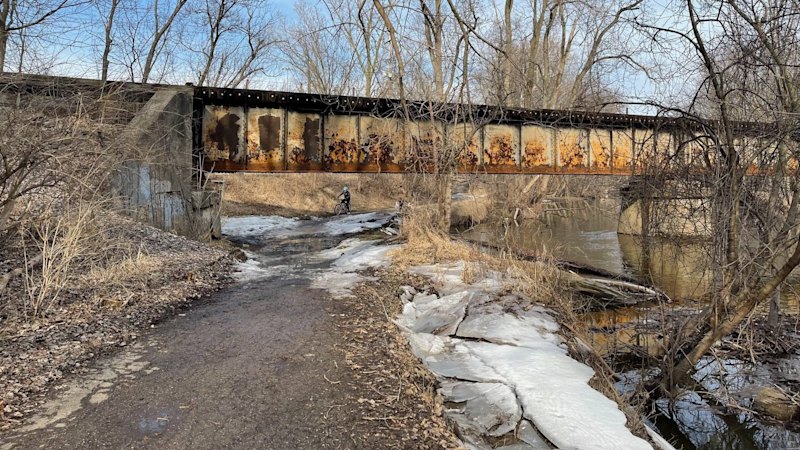
A 1.6-kilometer trail represents roughly twenty to thirty minutes of brisk walking, a few minutes of cycling, or a brief vehicle pull-off along a secondary road. Because linear corridors have defined entry and exit points, movement along them is constrained. That constraint shapes how things accumulate in space.
- Topographic channelling: Ravines, tree lines, drainage ditches, and embankments naturally guide foot traffic, runoff, and wildlife movement into predictable troughs.
- Accessibility gradients: Trailheads near parking areas, transit stops, or unmonitored pull-outs experience higher footfall and lower formal surveillance than deep interior segments.
- Concealment economics: Dense brush or uneven terrain within a short walk of a path reduces visibility while keeping travel effort low, making a stretch attractive for opportunistic dumping, shelter, or solitary wandering.
- Environmental preservation: Cool soil, shade, or standing water along specific micro-segments can slow decomposition or shield remains from scavengers, creating a false impression that deaths occurred around the same time.
Consider a wooded corridor bordering an urban edge. Over a five-year span, two unhoused individuals could die of exposure or medical crises off the path, one person could die by suicide in a secluded pocket, and two sets of remains from separate incidents elsewhere could be deposited near accessible pull-outs. To a casual reader scanning a headline, those five recoveries merge into one story. To an analyst, spatial clustering is a hypothesis generator, not a conclusion. Further details into this topic are detailed by Reuters.
Why Serial Killer Framing Dominates Early Coverage
Public fear and media headlines gravitate toward the serial killer model because it imposes a single villain and a clear narrative arc onto a chaotic scene. Human pattern recognition is wired to connect points in space and infer agency. When multiple bodies appear near one another, the brain supplies a unifying motive before forensic data exists.
This cognitive shortcut is reinforced by information asymmetry in the early hours or days of an investigation. Authorities rarely release granular forensic details immediately—such as post-mortem intervals, cause and manner of death, toxicology, or trace evidence—to protect investigative integrity and avoid misinforming families. In that vacuum, speculation fills the space. Journalists need concise framing to explain why a local trail matters to readers, and "serial killer fears" captures attention instantly.
A second distortion comes from conflating disposal clustering with attack clustering. Even when foul play is involved, finding five bodies along a 1.6-kilometer route does not mean five attacks occurred on that trail. A corridor can function as a secondary dump site for offenders operating miles away, or as a staging zone where victims were never brought alive. Treating every clustered discovery as an active hunting ground distorts public risk perception and misallocates attention.
Four Competing Hypotheses for Clustered Remains
Because no external case file or forensic dataset is present in the reference headline, exact probabilities cannot be assigned. Instead, investigators and analysts must evaluate four mutually non-exclusive mechanisms that explain five bodies along a short corridor.
Independent Accidental or Medical Deaths
A trail used by walkers, runners, cyclists, or people experiencing homelessness or acute crisis carries baseline mortality risks. Cardiac events, hypothermia, heat stroke, overdoses, or falls in steep terrain occur without third-party involvement. If remains are discovered only periodically—perhaps when vegetation dies back in autumn or after heavy rain shifts soil—separate historical deaths can surface in a tight cluster.
Unrelated Homicides Using a Shared Dump Zone
Offenders seeking low-risk disposal sites often rely on word of mouth, local familiarity, or Google Earth reconnaissance to find quiet stretches near roads or trails. Two or more independent perpetrators can select the same convenient corridor over months or years without any connection to one another. The shared geography reflects convenience convergence, not collaboration or a single serial actor.
A Single Offender With Serial or Opportunistic Intent
A single perpetrator may indeed use a familiar corridor repeatedly, either targeting individuals along the route or returning to a known concealment area. Distinguishing a true serial pattern requires evidence beyond location: consistent victim selection criteria, overlapping timelines or forensic signatures, and a manner of death pointing to deliberate interpersonal violence.
Non-Homicidal Self-Harm or Misadventure
Remote or semi-secluded segments along linear paths sometimes draw individuals seeking privacy during personal crises, or hikers who stray off-trail and become disoriented. When remains are skeletonized or partially degraded, initial visual discovery rarely resolves manner of death on site.
Cause-and-Effect Chains Analysts Often Miss
Surface-level reporting tends to move in a straight line: five bodies found, therefore serial killer suspected, therefore trail closed. That linear reading misses several second-order feedback loops that alter both the investigation and the surrounding community.
First, discovery bias shapes when and how bodies are found. A single high-profile discovery brings search teams, cadaver dogs, drones, and curious civilians into an area that previously saw sparse off-trail foot traffic. Once boots are on the ground, secondary searches frequently turn up older remains that were already there but went unnoticed. A spike in recoveries can therefore reflect a search-intensity shock rather than a sudden wave of killings.
Second, panic-driven behavioral shifts alter the environment itself. When rumors of a serial killer spread, casual walkers and joggers abandon the trail. Lower legitimate foot traffic reduces natural surveillance—often called eyes on the street or passive guardianship in criminology. Paradoxically, a quieter corridor can become more isolated and less monitored just as authorities are trying to stabilize the area.
Third, investigative resource dilution occurs when high-fear framing forces agencies into reactive posture. Floods of tips from across a region, media pressure for daily updates, and political demands for visible patrols can pull detectives and forensic specialists away from methodical cold-case matching, toxicology workups, and digital or physical canvassing.
Operational Triage for Investigators and Civic Leaders
When a cluster of remains is reported along a narrow corridor, disciplined sequencing prevents premature conclusions and keeps public communication grounded.
- Establish separate evidentiary envelopes per recovery. Treat each set of remains as an independent case file until forensic anthropology, pathology, DNA, and trace analysis establish links or rule them out. Prematurely merging files risks cross-contaminating timelines and assumptions.
- Map micro-topography and access points. Record exact coordinates alongside distance to nearest road, parking, sightlines, soil type, water flow, and scavenging activity. Geography explains transport and preservation as much as offender movement.
- Separate known facts from working hypotheses in briefings. State clearly what is confirmed (number of recoveries, general location, perimeter status) versus what remains under examination (identities, dates of death, cause and manner of death). Precision curbs rumor spirals better than vague reassurance.
- Calibrate perimeter and patrol strategy to actual risk. Use targeted physical security and forensic grid searches where evidence warrants, while avoiding theatrical over-deployment that burns out personnel without improving detection.
Methodological Limitations and Blind Spots
No analytical framework eliminates uncertainty at a complex outdoor scene. Decomposed or skeletonized remains can mask soft-tissue trauma, toxicology findings, or exact time-of-death windows. Heavy rain, animal activity, or prior unrecorded disturbance can scatter evidence along a 1.6-kilometer stretch. Furthermore, public fear often moves faster than laboratory turnaround times, creating a persistent gap between what communities worry is happening and what forensic science can prove in real time.
Strategic Play
Treat a 1.6-kilometer cluster of bodies as a spatial anomaly requiring forensic disaggregation, not as proof of a serial killer. Direct immediate leadership attention toward locking down independent case files, completing rapid comparative timelines and cause-of-death assessments across all five recoveries, and publishing tightly bounded updates that separate confirmed recoveries from open investigative questions. Only after forensic and behavioral links are demonstrated—rather than inferred from distance along a trail—should operational doctrine shift to a linked-offender posture.