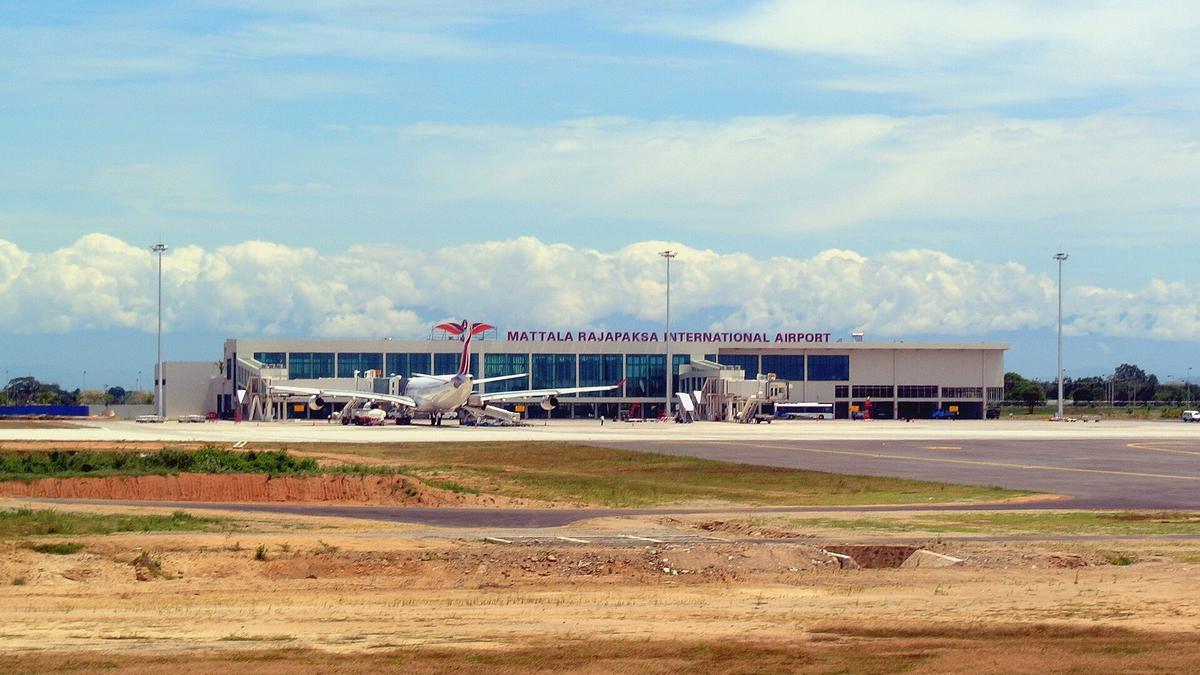
Imagine building a $209 million international airport and realizing the only regular visitors are a few confused elephants and migratory birds. It's not a punchline; it's the reality of Mattala Rajapaksa International Airport (MRIA). Sri Lanka's government is once again knocking on the doors of global investors, trying to lease out this "white elephant" after a high-profile deal with Indian and Russian firms collapsed.
You've probably heard the stats. It was designed to handle a million passengers a year but often sees fewer than a dozen people a day. It’s located in the middle of a jungle, hours away from the capital, Colombo. Now, as the country struggles to climb out of its worst economic crisis since independence, the state can't even afford the electricity bill for the terminal.
The failed Indo Russian gamble
Just two years ago, there was a glimmer of hope. The Sri Lankan cabinet approved a 30-year lease to a joint venture between India's Shaurya Aeronautics and Russia's Airports of Regions Management Company. On paper, it looked like a win. India gets to keep a foot in the door near a Chinese-built port, and Russia gets a tropical hub for its charter flights.
But the deal never materialized. The government hasn't been vocal about why it fell through, but sources suggest the technical and financial hurdles were just too steep. When you're dealing with an airport that loses roughly $18 million annually, convincing private companies to sign on the dotted line is a nightmare. This failure has forced the Ministry of Ports, Shipping, and Aviation to issue a fresh call for Expressions of Interest (EOI). They're looking for anyone with the capital and the guts to turn this ghost town into a functional business.
Why Mattala keeps failing to take off
If you look at a map, Mattala seems like it's in a decent spot—right near the Hambantota Port and close to wildlife parks. In reality, it’s a logistics disaster.
The elephant in the room
Literally. The airport was built right in the middle of an elephant corridor. The Sri Lankan military has previously been deployed just to chase deer and buffalo off the runway. It’s not exactly the "seamless" experience travelers expect. Bird strikes are a constant threat because the site sits on a major migratory path. Several aircraft have been grounded after hitting fowl, making airlines understandably nervous about scheduled flights.
Zero local demand
Airlines don't fly to empty runways; they fly to people. Mattala lacks a surrounding resident population that can afford international travel. It also lacks the commercial infrastructure to support business travelers. Most tourists heading to the south of Sri Lanka still prefer the three-hour drive from Colombo over the uncertainty of a flight to Mattala that might get cancelled due to low occupancy.
The Chinese debt trap connection
You can't talk about Mattala without talking about the money. Most of the $209 million used to build it came from high-interest loans from the Exim Bank of China. It was part of a massive infrastructure spree under former President Mahinda Rajapaksa, which also included the nearby Hambantota Port.
When the port couldn't pay its debts, Sri Lanka ended up handing it over to China on a 99-year lease in 2017. Critics fear Mattala is headed for a similar fate. The airport’s interest payments alone have historically outstripped its actual revenue. For a country that defaulted on its $46 billion foreign debt in 2022, keeping this facility on the books is financial suicide.
What investors are actually being offered
The government isn't just selling a runway; they're selling "untapped potential." The new EOI pitch focuses on a few niche areas that might actually work if handled by a private operator:
- Exotic Tourism: Using the airport as a dedicated hub for high-end wildlife tourism and luxury charters.
- Flight Training: The empty airspace makes it a decent spot for pilot schools.
- Maintenance and Repair (MRO): Turning the massive hangars into a regional hub for aircraft servicing.
- Cargo and Refueling: Taking advantage of the nearby shipping lanes for air-to-sea logistics.
Honestly, the MRO and cargo angles are the only ones that make sense. Scheduled commercial flights have failed repeatedly. Even when FlyDubai and Air Arabia tried to make it work, they eventually pulled out because the numbers didn't add up.
The privatization pressure
Sri Lanka is under a microscope right now. The International Monetary Fund (IMF) has made it very clear that the country needs to dump its loss-making state-owned enterprises (SOEs). Mattala is at the top of that list. The government has tried to privatize everything from the national airline to hotel chains, mostly with zero success.
Potential investors are wary of the political instability. While the current administration is pro-reform, there’s always the risk that a future government might try to undo these deals or change the terms. If you're an investor, you're looking for a 30-year guarantee of stability, and that’s something Sri Lanka is still struggling to provide.
Reality check for the next move
If you're thinking about the future of Mattala, don't expect a sudden influx of tourists. The next steps for the government involve evaluating the EOIs by mid-2026. They need a partner who isn't just looking for a land grab but has a legitimate plan to use the facility for something other than storing grain—which, by the way, actually happened a few years ago when the government used the terminal to store paddy.
If you’re watching this space, keep an eye on Indian interest. Despite the previous deal falling through, India remains the most likely candidate simply because they want to prevent Chinese dominance in the southern part of the island. It’s as much a move of "geopolitics" as it is "business."
The window for a "clean" sale is closing. Every month the airport stays under state control is another month it drains the national budget. For Sri Lanka, the goal isn't just to find an investor; it's to find an exit strategy before the terminal becomes nothing more than a very expensive monument to political hubris. If you're an aviation or infrastructure investor, you'll need to weigh the low entry cost against the massive environmental and logistical headaches that have haunted this project since 2013.