A 28-year-old man is dead on a Florida highway because he ran.
He didn't die from a bullet, but from a split-second decision to sprint across a roaring multi-lane road in St. Augustine. A tractor-trailer, unable to halt its massive momentum in time, struck him down right in front of the federal agents he was desperate to escape.
This isn't just another tragic local headline. It's the third death involving U.S. Immigration and Customs Enforcement (ICE) and Homeland Security Investigations (HSI) in a span of just seven days. The incident has triggered an immediate, dramatic policy shift from the federal government, exposing a massive, pressure-cooked systemic breakdown that's currently boiling over.
If you think immigration enforcement is just about paperwork and border patrols, this week proved how quickly those operations turn into chaotic, lethal street fights. Here's what really happened on State Road 16, and why the fallout is already changing how federal agents operate across the country.
What Went Wrong on State Road 16
The sun wasn't even fully up before the chaos started on Tuesday, July 14, 2026.
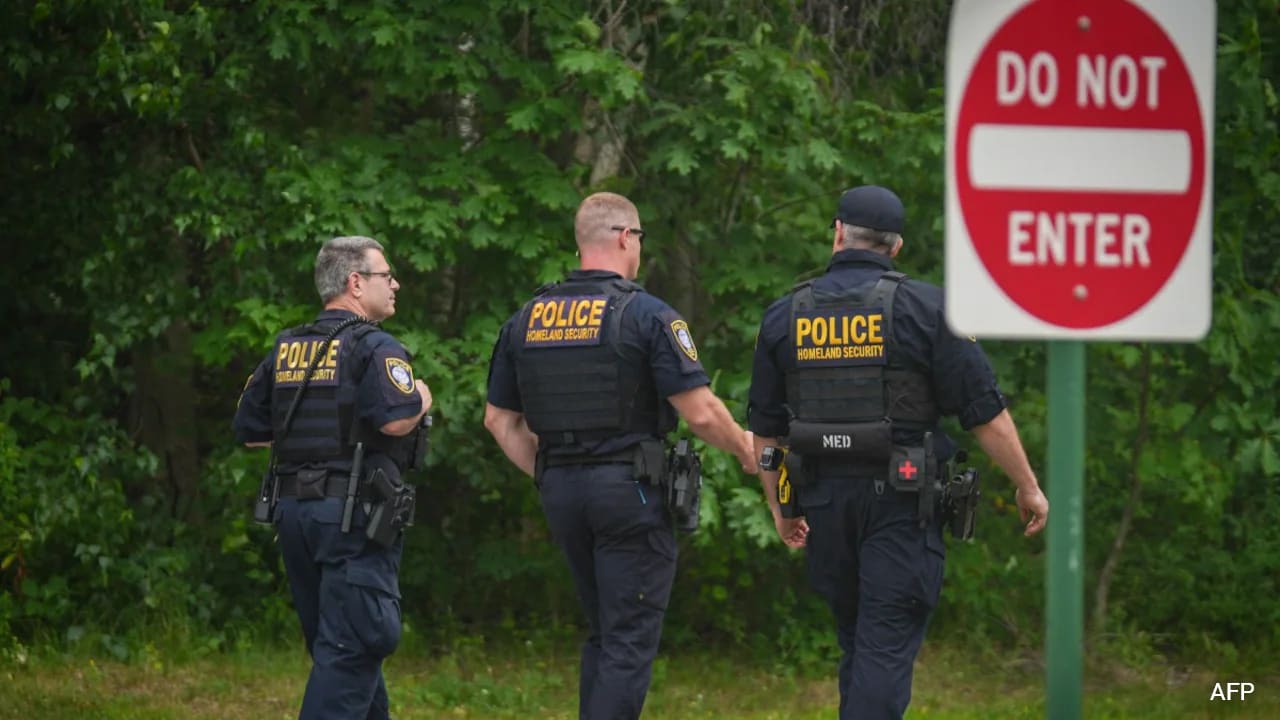
Around 7:00 a.m., a vehicle carrying four men pulled into a gas station and convenience store parking lot near the busy intersection where State Road 16 meets Interstate 95, just outside historic St. Augustine. Waiting for them were federal agents from HSI and ICE.
What was supposed to be a targeted "encounter" rapidly dissolved. The moment agents approached, all four occupants bolted from the car on foot.
One of those men, later identified by the Department of Homeland Security as a 28-year-old Mexican national, made a fatal dash directly into the right lane of State Road 16. He ran straight into the path of an oncoming semi-truck.
The driver of the tractor-trailer slammed on his brakes, stopped the rig, and desperately tried to render aid. It was too late. First responders pronounced the young man dead at the scene.
While the Florida Highway Patrol and local sheriff's offices scrambled to manage the horrific scene, the political shockwaves traveled to Washington instantly.
Three Deaths in Seven Days
To understand why this specific death caused panic in the Department of Homeland Security, you have to look at the bloody trail of the six days leading up to it. The St. Augustine tragedy was the exclamation point on a week of extreme violence.
July 7, 2026 — Houston, Texas
An ICE tactical operation turned deadly when federal agents attempted to pull over a vehicle in Houston's East End. According to ICE officials, 52-year-old Lorenzo Salgado Araujo allegedly tried to escape, ramming his vehicle into an ICE SUV and attempting to use his car as a weapon against officers. An agent opened fire in "self-defense," killing Salgado Araujo.
July 13, 2026 — Biddeford, Maine
Less than a week later, another pre-dawn operation ended in gunfire. ICE officers tracking a home in Biddeford, Maine, shot and killed 26-year-old Johan Sebastián Durán Guerrero, a Colombian national. Agents claimed he weaponized his car and drove toward an officer. However, Durán Guerrero's family pointed out that he possessed a social security number and work authorization. Local witnesses reported hearing him yell "I tried to stop" before his body was dragged from a bullet-riddled car.
Neither the Texas nor the Maine shooting was captured on body cameras. This lack of transparency has supercharged public fury.
By the time the Mexican national was crushed by a semi-truck in Florida on Tuesday morning, federal immigration agencies were already facing a public relations nightmare. The St. Augustine incident became the tenth death linked to immigration enforcement encounters since the administration launched its aggressive mass deportation push.
The Instant Policy Panic
The Department of Homeland Security knew it couldn't simply weather this storm. Within hours of the Florida death, DHS took a massive, unprecedented step: it ordered an immediate nationwide freeze on most vehicle traffic stops conducted by ICE agents.
The emergency directive specifically targets agents under Enforcement and Removal Operations (ERO). Under the new stopgap rules, these agents are strictly barred from pulling over vehicles on their own. If they have a warrant for someone inside a vehicle, they must now coordinate with local police or state highway patrol agencies to perform the actual traffic stop.
This is a massive operational blow to the agency's daily tactics. Vehicle stops have long been a primary tool for picking up targeted individuals, but the sheer chaos of these situations—cars being rammed, suspects fleeing into heavy traffic, and officers firing without body-cam footage—has made them a liability the government can no longer defend.
The Real Breakdown: Why Panic Rules the Streets
Let's cut through the official press releases and get to the core of the issue. Why are these routine encounters suddenly turning lethal?
- The Climate of Absolute Fear: Under the current administration's aggressive deportation campaign, undocumented individuals believe that any encounter with ICE means immediate, permanent banishment. When people are terrified of losing their families, their homes, and their livelihoods, they don't think logically. They run. They jump into traffic. They ram cars. Fear overrides the instinct for self-preservation.
- The Tactical Blindspot: When federal agents conduct high-stakes operations in busy public parking lots or near high-speed interstate exits, the margin for error is zero. A suspect fleeing on foot at 7:00 a.m. near an I-95 on-ramp is almost guaranteed to end up in front of a commuter car or a semi-truck.
- Zero Accountability Breed Suspicion: The absolute lack of body-worn cameras during the Maine and Texas shootings leaves a vacuum of truth. Did Durán Guerrero really try to run over an officer, or did a panicked agent fire too quickly? Without footage, the public—and immigrant communities—will always assume the worst. That assumption breeds deeper distrust and a higher likelihood that the next suspect will choose flight over compliance.
What Happens Now?
If you are a community advocate, a local law enforcement officer, or simply someone trying to make sense of this policy chaos, here is what you need to keep your eye on:
- Watch the Local Police Response: Because ICE is now restricted from making independent vehicle stops, they will rely heavily on local sheriffs and police departments to do their dirty work. Keep a close eye on your local city council and sheriff's department. Some local agencies will happily cooperate; others will refuse to protect their community relations, leading to a patchwork of enforcement across county lines.
- Demand Body Camera Progress: The political finger-pointing over why federal agents still don't wear body cameras needs to end. Until federal operations are fully documented on video, every single officer-involved shooting will spark protests and deepen the divide.
- Prepare for Legal Battles: Civil rights groups are already moving to challenge these aggressive street operations. Expect a wave of lawsuits targeting the tactics of both HSI and ICE, using this week's rapid succession of deaths as Exhibit A.
The St. Augustine death proves that the current aggressive strategy is breaking under its own weight. When the pursuit of civil immigration violations consistently results in bodies on the pavement, the system isn't working—it's just generating casualties.