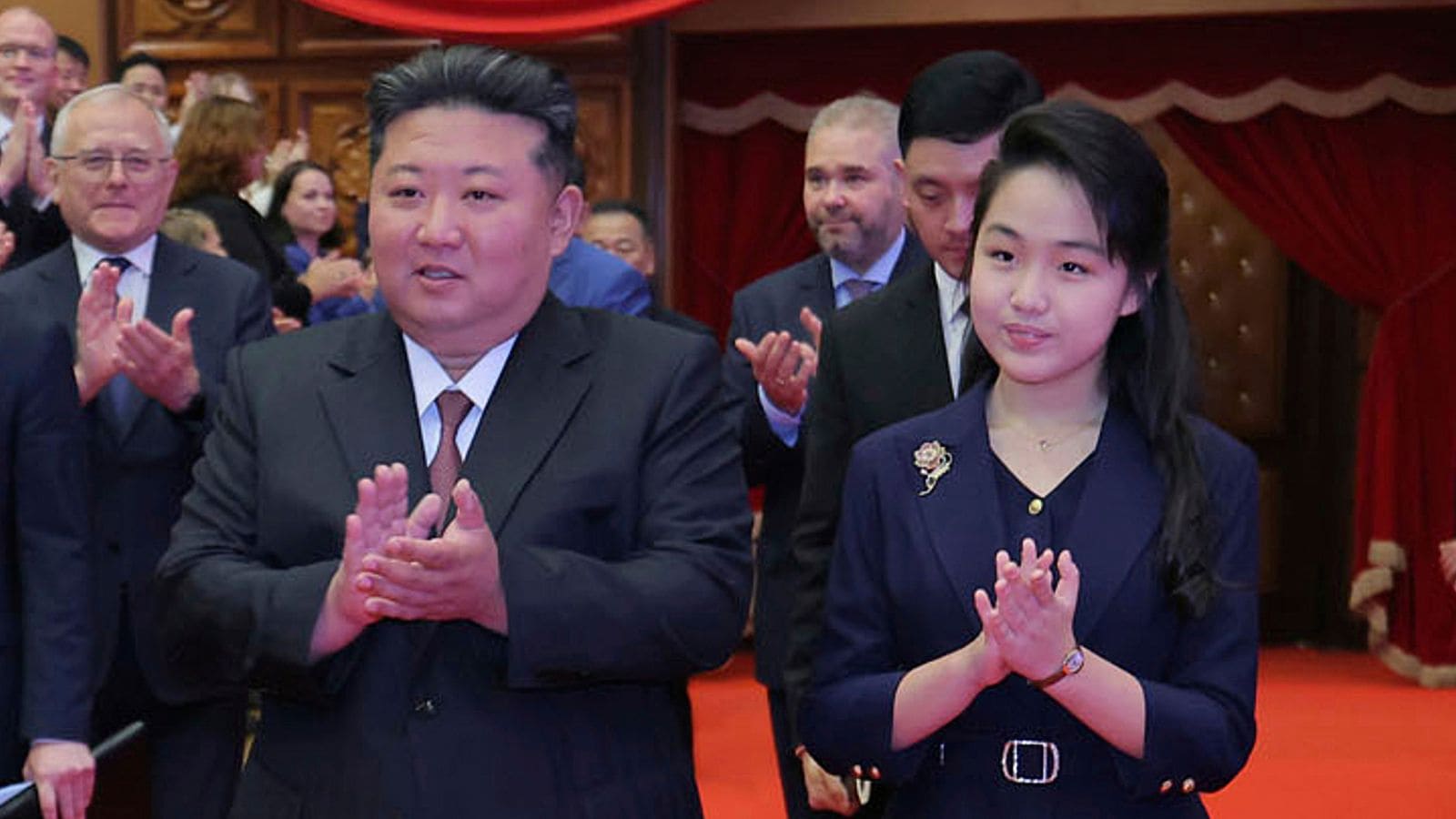
The inauguration of a dedicated housing district for the families of personnel killed in the Ukraine conflict represents a pivot in North Korean domestic management: the transition from ideological mobilization to material compensation for external kinetic involvement. This infrastructure project serves as the first physical verification of significant North Korean casualty rates in European theaters. By codifying the "Hero" status through real estate, the Kim Jong Un administration is addressing a specific bottleneck in its expeditionary logic: the need to maintain domestic stability while escalating military exports to the Russian Federation.
The strategic utility of this development functions across three distinct analytical axes: the valuation of human capital in a command economy, the stabilization of the internal security apparatus, and the signaling of a long-term defense industrial partnership with Moscow.
The Political Economy of Specialized Housing
In a centralized economy where the state maintains a monopoly on land and resource allocation, housing is the ultimate currency of loyalty. The construction of these districts is not a humanitarian gesture but a calculated distribution of "Sovereign Rent."
The Valuation Mechanism
North Korea operates on a tiered social hierarchy known as Songbun. Traditionally, status was inherited or earned through internal party loyalty. The introduction of high-end housing specifically for the "Families of Fallen Soldiers" in a foreign war introduces a new variable into this social calculus.
- Capital Conversion: The state converts the life of a soldier (human capital) into a permanent asset (real estate) for the surviving kin.
- Luxury as Deterrent: By providing modern amenities—often reported to include superior heating systems and appliances—the state creates a visual incentive for the remaining military cadres. The message is clear: the state honors its debt, mitigating the friction of risky foreign deployments.
Supply Chain and Resource Allocation
The timing of this construction suggests a redirection of the "20x10 Policy"—the regime’s regional development initiative. Building specialized districts requires a diversion of steel, cement, and high-skilled labor from civil or nuclear projects. This indicates that the compensation for the Ukraine deployment—likely paid by Russia in hard currency, fuel, or satellite technology—is being partially reinvested into the domestic military-industrial complex to prevent internal resentment.
Kinetic Feedback and Domestic Stability
The emergence of these housing units confirms a critical data point: North Korean casualties are high enough to require a systematic, state-level response rather than ad-hoc compensation.
Managing the Information Vacuum
The North Korean state faces a challenge in "Information Containment." While the general populace may not have access to global news, the sudden absence of thousands of elite troops cannot be hidden indefinitely. The housing district serves as a narrative anchor. It frames the loss not as a mercenary transaction for Russian grain, but as a "Sacred Struggle" against Western hegemony. This prevents the "Afghan Syndrome" where a population grows weary of a distant, opaque war.
The Military-Civilian Friction Point
The Korean People’s Army (KPA) is the backbone of the regime. If the officer corps perceives that their subordinates are being used as "disposable labor" without adequate protection for their families, the risk of a coup or internal fracture increases.
- Vertical Loyalty: Ensuring the welfare of the "Martyr’s family" secures the loyalty of the surviving soldiers currently in the trenches.
- Prestige Preservation: The quality of the housing must exceed standard civilian blocks to maintain the military’s elite status in the social hierarchy.
The Strategic Signaling of Infrastructure
Infrastructure is permanent. By building fixed-site housing for this specific demographic, Pyongyang is signaling that its involvement in the Ukraine conflict is not a short-term tactical excursion but a structural realignment of its foreign policy.
The Russia-DPRK Defense Treaty in Concrete
Article 4 of the "Comprehensive Strategic Partnership" between Kim and Putin mandates mutual assistance in the event of war. The housing district is the domestic manifestation of this treaty. It prepares the North Korean public for a prolonged period of military engagement.
- Institutionalization of the Conflict: Unlike a temporary barracks, a residential district implies a permanent change in the social fabric.
- Technology Transfer Proxy: The sophistication of the construction often mirrors the level of technical assistance received from the partner state. Analysts monitoring the materials and architectural standards of these new districts can derive insights into the current liquidity of the North Korean treasury.
The Logistics of Martyrdom
The logistical requirements for these districts involve more than just bricks and mortar. They require ongoing state subsidies for electricity, water, and food distribution. This creates a "Dependency Loop." The families become stakeholders in the regime’s continued survival and its continued relationship with Russia. If the Russian flow of resources stops, the state’s ability to maintain these elite enclaves fails, creating a new pocket of high-status, high-resentment citizens.
Quantifying the Opportunity Cost
Every ton of concrete poured into a "Martyr District" is a ton not used for the development of Special Economic Zones (SEZs) or civilian manufacturing.
- The Industrial Trade-off: The regime is prioritizing "Control Infrastructure" over "Growth Infrastructure." This reinforces the "Fortress Economy" model where all economic activity is a subset of defense requirements.
- The Demographics of Depletion: The soldiers being sent to Ukraine are often from elite units—the healthiest and most technically proficient of their generation. Replacing this human capital is a multi-decade process. The housing is a "Lagging Indicator" of the loss of productive capacity that will haunt the North Korean economy in the 2030s.
The Strategic Play
The international community must interpret these housing projects as a "Hard Commitment" signal. Diplomatic efforts aimed at de-escalation must account for the fact that the Kim regime has already "priced in" the cost of the war into its domestic social contract.
- Monitor Construction Velocity: The rate at which these districts expand serves as a proxy for casualty rates and the volume of Russian payments. High-velocity construction indicates high turnover in the expeditionary force.
- Target Peripheral Resource Flows: Sanctions should focus on the specific materials required for high-end residential construction (specialty steel, HVAC components, finishing glass) to degrade the regime's ability to fulfill its "Martyrdom Contract."
- Information Operations: Highlighting the disparity between the "Hero Housing" and the deteriorating conditions of the average civilian can exacerbate internal class tensions, forcing the regime to spend more on internal security and less on foreign kinetic capability.
The housing district is not merely a building; it is a defensive fortification for the regime’s domestic narrative. To crack the narrative, one must first understand the structural dependencies of the concrete.