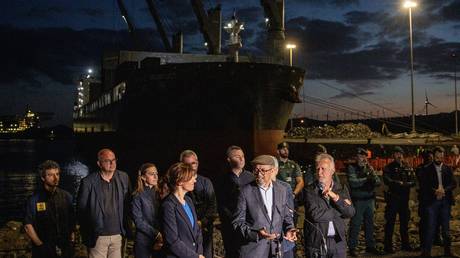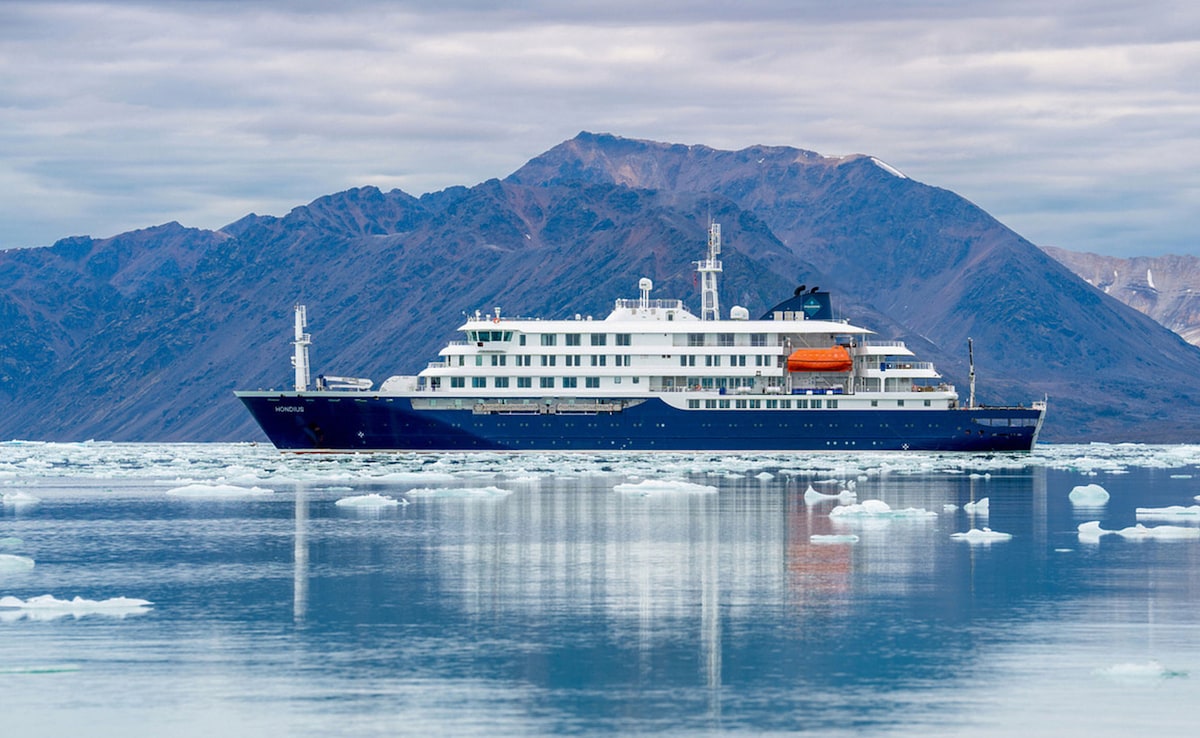
The salt air off the coast usually smells like freedom. For the crew of a massive cargo ship, it smells like work, rust, and the slow crawl toward a distant horizon. But on a recent voyage, the air inside the hull turned heavy with something else. Anxiety. It started with a single man, a laborer whose body suddenly became a furnace, his lungs struggling to pull oxygen from the very air that had sustained him for weeks at sea.
He died. Building on this theme, you can also read: Operational Mechanics and Biohazard Risk Mitigation in Post-Quarantine Maritime Disembarkation.
Death at sea is a logistical nightmare, but this wasn't just a heart attack or a tragic accident in the engine room. This was an invitation for a ghost to board the vessel. When the World Health Organization (WHO) stepped in, the verdict was chilling: Hantavirus. Suddenly, a multi-ton steel fortress became a floating petri dish. Everyone on board was no longer just a sailor; they were a "high-risk contact."
The Intruder in the Galley
We think of viruses as sophisticated invaders, but Hantavirus is primitive, opportunistic, and deeply tied to the earth. It doesn't travel through the air like a common cold from a sneeze across a room. It lingers in the shadows. Specifically, it lives in the waste of rodents—rats and mice that find their way into the tightest crevices of a ship’s pantry or the dark corners of the hold. Experts at Mayo Clinic have provided expertise on this situation.
Imagine a young deckhand, let's call him Elias. Elias is twenty-four, sending money home to a family he hasn't seen in six months. He walks into a storage locker to grab a fresh filter. He breathes in. He doesn't see the microscopic particles of dried rodent urine kicked up by his boots. He doesn't feel the virus latching onto the lining of his lungs.
For the next two to four weeks, Elias feels fine. He eats, he sleeps, he jokes with the cook. That is the cruelty of the incubation period. It is a silent countdown.
The biology of Hantavirus Pulmonary Syndrome (HPS) is a terrifying mechanical failure of the human body. It isn't like the flu, where your immune system fights a pitched battle and eventually wins. Hantavirus makes the capillaries in your lungs leak. Your own plasma, the fluid that should be carrying life through your veins, begins to fill the air sacs. You aren't just sick.
You are drowning from the inside out while standing on dry land.
The Geography of Fear
When the WHO flags a ship as a high-risk site, the gears of international maritime law and global health protocols grind into motion. It isn't just about the one man who perished. It is about the thirty others who shared his oxygen, his meals, and his tight living quarters.
The ship becomes a pariah. Ports that were once welcoming destinations now look at the vessel as a biological weapon. This is where the human element gets messy. Behind the clinical terms like "monitoring" and "quarantine" are thirty human beings trapped in a steel box, wondering if the next cough they hear is just a tickle in the throat or the sound of the end.
Is it fair?
In a world still reeling from the memory of global lockdowns, the word "quarantine" carries a weight it didn't have five years ago. We used to view it as a distant, historical concept from the days of the Black Death. Now, it is a lived reality. For the crew of this Hantavirus-hit ship, the isolation is compounded by the vastness of the ocean. There is nowhere to run. There is only the daily temperature check. The pulse oximeter. The wait.
The Rodent and the Machine
We built these massive machines to conquer the globe, to move millions of tons of grain and steel and gadgets across the blue expanse. Yet, the entire system can be brought to a staggering halt by a creature that weighs less than a pound.
The relationship between humans and rodents is an ancient, unwanted dance. On a ship, this dance is intimate. Rats are the ultimate stowaways. They don't need passports. They don't need a bunk. They find the warmth of the engines and the abundance of the stores. The virus they carry is a byproduct of their existence, a silent hitchhiker that has likely been on this planet longer than the ships we sail.
When we talk about "monitoring high-risk contacts," we are talking about a sophisticated surveillance net. Health officials must track every person who stepped foot on that deck. Where did they go? Who did they hug during a brief shore leave? The math of contagion is a branching tree, and the WHO’s job is to prune it before it grows out of control.
But let's be clear: Hantavirus is not the next COVID-19. It doesn't jump easily from person to person. You usually have to be in the presence of the source—the rodent—to catch it. The risk on a ship is that everyone is essentially living in the same house. If there is a nest in the ventilation or a contaminated food supply, everyone is a target.
The Invisible Stakes
There is a psychological toll to being a "contact." Every morning, you wake up and perform a mental inventory.
Do my muscles ache?
Is my chest tight?
Was that a headache, or just the sound of the engine vibrating through the bulkhead?
The WHO guidelines suggest rigorous monitoring for up to 21 days. That is three weeks of looking in the mirror and searching for a ghost. It is three weeks of looking at your friends and wondering if they are the ones who will bring the virus to your cabin.
The stakes aren't just biological; they are economic. A ship sitting idle is a drain of tens of thousands of dollars an hour. The pressure to "get back to normal" is immense. But the virus doesn't care about quarterly earnings. It doesn't care about shipping schedules. It operates on a timeline of cellular replication.
Consider the medical officer on board. They aren't a high-tech lab tech. They are often a person with basic trauma training and a cabinet full of antibiotics that won't touch a virus. They are the ones who have to look a frightened sailor in the eye and say, "We have to wait."
The Lessons of the Hull
Why does this matter to those of us on land?
Because the world is smaller than we think. That ship is a microcosm of our interconnected existence. The grain it carries might end up in your bread. The crew might be the ones who deliver your next car. When a "high-risk" label is slapped on a vessel, it is a reminder that our global infrastructure is incredibly fragile.
We have spent billions on satellite arrays and deep-sea cables, yet we are still vulnerable to a virus carried by a rat in a cargo hold. It is a humbling realization. It strips away the arrogance of the modern age and puts us back in the position of our ancestors: huddled together, watching the horizon, hoping the sickness passes over us.
The monitoring of this ship isn't just a bureaucratic exercise. It is an act of defense for the rest of us. Every blood draw, every fever log, and every day of isolation is a brick in the wall that keeps a localized tragedy from becoming a regional crisis.
The man who died was a father, a son, a person who had a life before he became a statistic in a WHO report. His death is the warning shot. The remaining crew are the sentinels. They sit in their steel jar, surrounded by a thousand miles of water, waiting for the silence to either break or become their new normal.
The salt air still smells like rust and work, but for now, the crew breathes it in with a newfound, trembling respect for the simple act of drawing a breath.