You can only compromise your core identity for so long before the mirror starts looking back at you with disappointment.
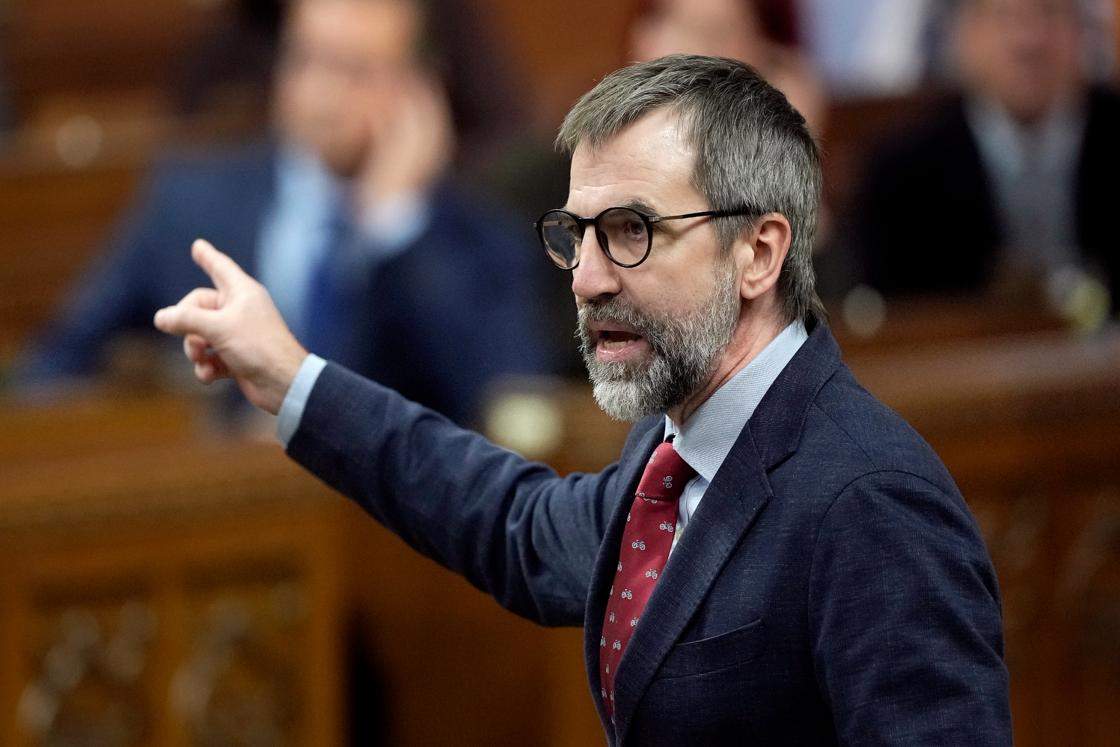
Steven Guilbeault has hit that wall. The veteran environmental activist turned politician just announced he is resigning his seat as a Liberal MP, effective this summer. He dropped the news on his fellow caucus members during a closed-door meeting on Wednesday morning, later confirming it to the public with a social media post stating he needs to pursue his climate fight "in a different way."
This isn't just a routine political departure. It's the final crack in a fractured marriage between a lifelong activist and a governing party that completely pivoted its identity when Mark Carney took over the prime minister's office.
Let's look at the real story behind the exit, what it means for the shifting Canadian political scene, and why this leaves Ottawa with a razor-thin majority.
The pipeline deal that broke the activist
You don't scale the CN Tower in a Greenpeace jumpsuit just to sit quietly while your own government builds a massive new bitumen pipeline. Guilbeault spent decades on the radical frontlines of environmentalism. When Justin Trudeau brought him into the Liberal fold back in 2019, critics called him a hypocrite, but his allies hoped he would push real climate policy from inside the room.
For a while, he did. As environment minister from 2021 to early 2025, he championed the consumer carbon tax, zero-emission vehicle mandates, and strict emissions caps.
Then Mark Carney became prime minister in March 2025, and everything changed.
Carney represents a pragmatic, corporate style of governance. Facing economic headwinds, inflation pressures, and intense provincial pushback, the Carney government systematically dismantled the very policies Guilbeault spent his life building. The consumer carbon tax was dumped. The electric vehicle mandates vanished. The oil and gas emissions cap was killed off.
The final straw landed on May 17, when Carney stood next to Alberta Premier Danielle Smith to sign a massive energy pact. The agreement explicitly pledges federal backing for a new bitumen pipeline to the West Coast to transport over one million barrels of oil per day to Asian markets. It also dials back industrial carbon pricing and offers exemptions on clean electricity regulations.
Guilbeault already walked away from cabinet last November when the initial memorandum of understanding was drafted. Staying on as a backbench MP for the Montreal riding of Laurier-Sainte-Marie was his last-ditch effort to keep a foot in the door. Now, even that is over. You cannot expect Canada’s most famous eco-warrior to endorse a pipeline deal that effectively makes hitting 2030 and 2050 climate targets an impossibility.
A razor thin majority gets even tighter
Political departures have real consequences on the scoreboard in the House of Commons. The timing of this exit puts the Liberal majority on life support.
The math is simple and brutal. Following three crucial byelection wins in April, Carney’s Liberals managed to claw their way to a slim majority with 174 seats. A majority government requires 172 seats.
When Guilbeault officially vacates his seat this summer, that number drops to 173.
That leaves the government exactly one vote away from losing its absolute control over legislative business. To make matters worse, Guilbeault isn't the only one heading for the exits. Nathaniel Erskine-Smith is planning to step down following his run for the Ontario Liberal leadership, and Jonathan Wilkinson is scheduled to vacate his seat by July to take a new role as Canada’s ambassador to the European Union.
If the Liberals lose the upcoming byelections in these ridings, Carney will find himself pushed right back into a volatile minority parliament. When reporters asked Carney if the Alberta energy deal was worth losing a high-profile figure like Guilbeault, his answer was direct: "Absolutely."
Carney is betting that a pro-industry, economically focused message will win over suburban swing voters who are tired of high living costs. He is intentionally trading the urban environmental vote to secure economic alignment with Western Canada.
What comes next for environmental policy
If you're tracking where Canada goes from here on climate action, expect the federal approach to look a lot more like corporate sustainability and a lot less like aggressive regulation. Carney’s inner circle argues that in an era of global trade wars and geopolitical instability, resource wealth cannot be ignored.
For activists, Guilbeault’s exit serves as a cautionary tale about the limits of working within the system. Green Party Leader Elizabeth May called the resignation "heartbreaking" and admitted that tears were shed when she spoke to him. May had previously supported the federal budget based on assurances that fossil fuel subsidies would end. Now, she openly states that Carney is not the leader people thought he would be.
Guilbeault says he is at peace with the decision. He’ll give a formal statement in the House of Commons, serve out the remaining weeks of the current parliamentary session, and then return to the advocacy space where he built his reputation.
Watch the upcoming summer byelections in Montreal and Vancouver closely. They will serve as the first real test of whether Carney's pivot toward resource development can survive the backlash from progressive voters who feel completely left behind.


