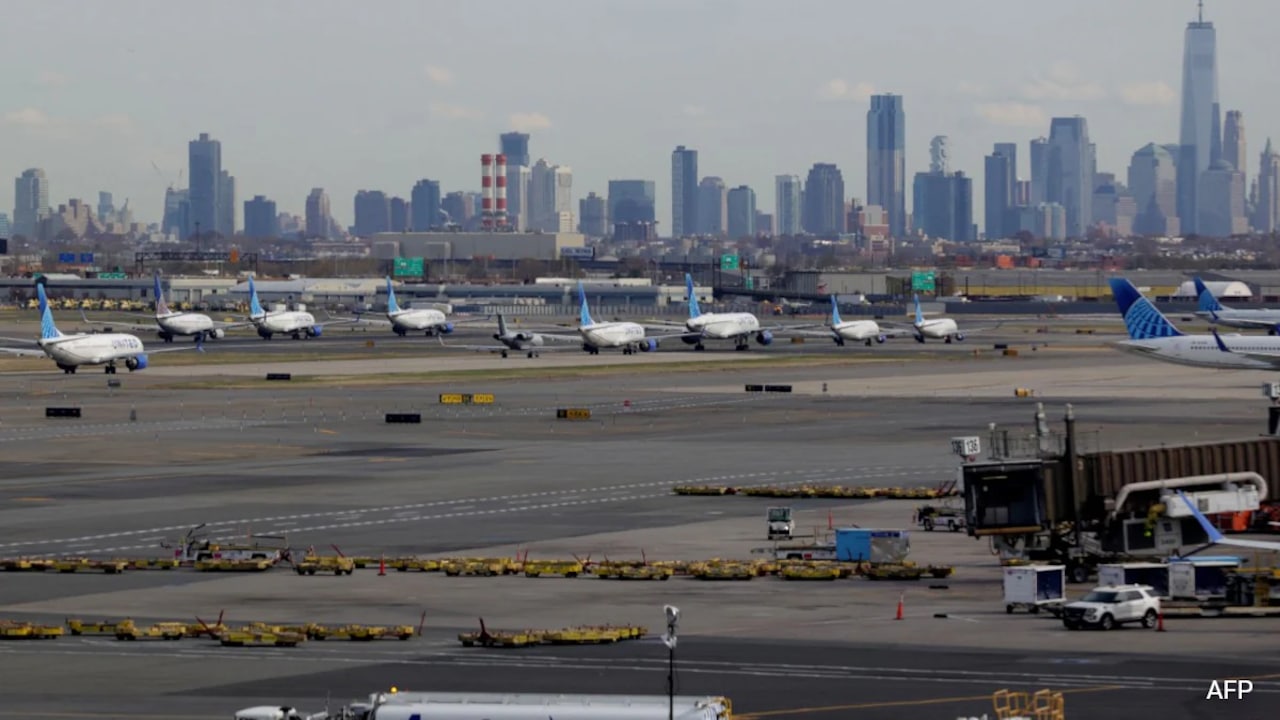
Every time a major storm hits or an air traffic control center short-circuits, the local news crews rush to Terminal B. They stick a microphone in the face of a exhausted parent sleeping on a luggage carousel. The headline writes itself: Travel Nightmare Continues for Stranded Passengers Awaiting Flights.
It is the laziest narrative in modern journalism. It paints a picture of helpless victims crushed under the boot of greedy, incompetent airline executives. Recently making headlines in this space: Stop Blaming Ancient Tech for Airport Meltdowns Because the Real Culprit Is Pure Greed.
Here is the reality nobody wants to print. When you get stranded at an airport during a systemic meltdown, the airline is rarely the primary villain. You are witnessing the collision of three forces: physics, federal safety mandates, and your own refusal to buy proper insurance or book sensible itineraries.
I have spent fifteen years analyzing aviation operations and watching carriers burn hundreds of millions of dollars trying to recover from irregular operations. When a hub collapses, the airline wants you off that concourse more than you want to leave. A plane sitting at a gate makes zero dollars. A stranded passenger costs the carrier hotel vouchers, meal stipends, rebooking labor, and brand equity. Yet travelers continue to fall for the myth that airlines simply choose not to fly, or that gate agents are hiding secret seats out of spite. More information regarding the matter are detailed by Lonely Planet.
If you want to survive modern air travel, you need to stop reading sob-story news coverage and start understanding how aviation logistics actually break.
The Myth of the Greedy Delay
The standard media coverage of flight cancellations relies on a fundamental misunderstanding of airline economics. Commentators love to imply that carriers cancel flights to consolidate half-empty planes and save fuel.
That logic fails basic accounting.
Commercial aviation operates on a hub-and-spoke network—a centralized system where flights funnel passengers from smaller regional airports into massive connecting hubs before redistributing them to final destinations. Because aircraft and crews rotate through multiple cities in a single day, canceling one flight does not save money. It strands an aircraft out of position. That missing plane then triggers a domino effect, forcing three or four subsequent cancellations down the line.
- Lost Revenue: Refunded tickets and reaccommodation costs immediately wipe out any fuel savings.
- Crew Displacement: Pilots and flight attendants end up in the wrong cities, requiring deadhead flights and hotel rooms.
- Slot Penalties: At congested airports like JFK, Heathrow, or LaGuardia, failing to operate scheduled flights risks losing valuable takeoff and landing slots.
Airlines lose staggering amounts of money during mass disruptions. During the December 2022 Southwest Airlines meltdown, the operational collapse cost the carrier over $1.1 billion in a single quarter. No executive boardroom in Dallas, Atlanta, or Chicago sits around manufacturing cancellations for profit.
When a flight is canceled, it is almost always because operating it became legally or physically impossible.
Why Your Plane Is Sitting at the Gate While You Wait
Nothing enrages a terminal full of passengers faster than looking out the window, seeing their shiny Boeing 737 parked at the jet bridge under blue skies, and hearing the gate agent announce a cancellation.
"The weather here is fine!" someone yells at the podium. "The plane is right there!"
This is where traveler ignorance meets federal law. Aviation is not a city bus route. That aircraft sitting outside your window is only one piece of a four-part puzzle. To push back from the gate, an airline needs four distinct elements aligned simultaneously:
- The Airframe: Inspected, fueled, and free of deferred maintenance items that violate the Minimum Equipment List (MEL).
- The Cockpit Crew: Two qualified pilots with legal duty hours remaining.
- The Cabin Crew: The exact number of flight attendants mandated by the Federal Aviation Administration (FAA) based on passenger seating capacity—typically one attendant per 50 seats.
- Airspace Capacity: An open corridor approved by Air Traffic Control (ATC) from origin to destination.
If any single element fails, the plane stays parked.
Under FAR Part 117—the strict federal regulations governing pilot flight and duty time limits—pilots are legally barred from flying past a hard cap of hours, depending on their start time and number of flight segments. If a thunderstorm in Atlanta delays your inbound crew by ninety minutes, those pilots might "time out" ten minutes before your boarding door closes.
You cannot ask a pilot to push through it. Doing so violates federal law and revokes their license. The gate agent cannot conjure a replacement captain out of thin air at 8:00 PM in a spoke city. So the plane sits. The sun shines. And the local news calls it corporate negligence.
The Infrastructure Bottleneck Nobody Mentions
While passengers scream at airline employees, the actual choke point of American aviation sits largely outside airline control.
The United States relies on an aging Air Traffic Control infrastructure managed by the FAA. Major airspace corridors—particularly the Northeast Corridor covering New York, Newark, Philadelphia, and Washington D.C.—operate near maximum capacity on clear days.
According to Department of Transportation (DOT) and FAA data, national airspace system delays and weather account for the vast majority of systemic disruptions. When convective weather (thunderstorms) builds over the Midwest or Florida, ATC must widen the spacing between aircraft for safety. Capacity drops by 40% to 60% instantly.
Furthermore, chronic staffing shortages at critical facilities like the New York Terminal Radar Approach Control (TRACON) mean that even minor shifts in wind direction or staffing call-outs force the FAA to implement Ground Delay Programs (GDPs) or Ground Stops.
When the FAA issues a Ground Stop, airlines are legally prohibited from taking off toward the affected hub. It does not matter how much you paid for First Class. It does not matter that you have a cruise departing in four hours. The federal government has locked the sky.
Dismantling the Worst Advice in Travel
Whenever travel chaos hits the news cycle, the internet floods with terrible advice disguised as "insider hacks." Let us dismantle the most dangerous myths circulating in "People Also Ask" threads and viral social media posts.
"Should I just wait in the customer service line at the airport?"
No. Standing in a physical line of 300 angry people at the airport is the single slowest way to get rebooked. By the time you reach the front of that line two hours later, every remaining seat on rival flights for the next three days will be gone. While you stand in line, open the airline's mobile app, call the carrier's international support line (such as their UK, Canadian, or Australian help desks, which route to the same reservation system with shorter hold times), and tweet or message their social media team simultaneously.
"Does the airline have to put me on a competitor's flight?"
Legally, in the United States, no. Under current DOT regulations, airlines are required to refund your ticket if your flight is canceled and you choose not to travel. They are not legally mandated to buy you a ticket on a rival carrier. Major legacy carriers (Delta, United, American) maintain interline agreements—commercial contracts allowing airlines to endorse tickets over to each other during disruptions—and will often use them for elite status holders or during controllable mechanical delays. Ultra-low-cost carriers like Spirit, Frontier, and Allegiant do not have interline agreements. If they cancel, you wait for their next available plane, even if that takes four days.
"Will travel insurance reimburse me if I get stranded?"
Only if you bought the right policy before the storm was named, and only if you read the exclusions. Most basic credit card trip delay protections require a delay of 6 to 12 hours before coverage kicks in, and many explicitly exclude "controllable" airline delays or only cover specific out-of-pocket expenses like hotels and meals up to a strict cap (often $500 per ticket). If you bought a bare-bones policy that only covers medical emergencies, you are paying for that airport hotel out of your own pocket.
You Built Your Own Travel Trap
Here is the uncomfortable truth that travelers hate hearing: most "travel nightmares" are self-inflicted wounds caused by optimizing purely for the cheapest ticket price.
When you book a 55-minute connection through Chicago O'Hare in February, or through Dallas-Fort Worth in May during peak tornado season, you are gambling with slim margins. When you book the last flight of the night out of a regional airport, you eliminate your safety net. If that flight cancels, there is no 10:30 PM backup. You are sleeping on the terminal floor.
Modern travelers treat complex, weather-dependent, international transit networks like a subway system. They pack essential medications in checked luggage. They book separate tickets on unrelated airlines to save $80, voiding any protection if the first leg runs late. Then, when the inevitable friction of global logistics hits, they demand a bailout.
The Contrarian Playbook for Bulletproof Travel
If you want to stop becoming a statistic on the evening news, abandon conventional booking habits and adopt operational discipline:
- Fly the First Wave: Book flights departing between 6:00 AM and 8:00 AM. At dawn, the aircraft is already sitting at the gate from the night before, the crew is fresh with full FAR Part 117 duty clocks, and convective weather has not yet built up in the afternoon heat. Delay rates spike exponentially after 2:00 PM.
- Buffer Your Connections: Never accept an airline's minimum connection time (MCT). If a carrier sells you a 40-minute layover in Atlanta, reject it. Force a 2-hour minimum buffer on domestic connections and 3 hours on international transfers.
- Treat Low-Cost Carriers as Point-to-Point Only: Never use an ultra-low-cost carrier for a multi-leg journey or an event with a hard deadline (weddings, cruises, business conferences). Their lack of fleet depth and absence of interline agreements means a single mechanical failure destroys your entire trip.
- Self-Insure with Backup Bookings: If you are traveling for a non-negotiable event during high-risk weather seasons, book a fully refundable backup flight on a competing carrier departing a few hours later. Once your primary flight pushes back from the gate, cancel the backup on your phone for a full refund.
The Downside of Flying Smart
This strategy is not cheap, and it is not convenient.
Waking up at 3:30 AM to catch a 6:00 AM departure ruins your sleep schedule. Paying a $150 premium to fly a legacy hub carrier instead of a budget airline hurts your wallet upfront. Carrying all your essentials in a compact backpack instead of checking a massive suitcase forces you to pack with ruthless minimalism. Holding a refundable backup ticket ties up hundreds of dollars on your credit card statement until the refund clears.
You will pay a tax in either money, sleep, or preparation.
The airlines are flawed, bureaucratic machines running on razor-thin margins in an increasingly crowded sky. They make terrible communication errors, their customer service technology frequently lags behind demand, and their fee structures are infuriating. Holding them accountable for legitimate failures—like IT meltdowns or poor communication—is completely justified.
But the next time you see a viral video of stranded passengers yelling at a exhausted gate agent because a thunderstorm shut down the Eastern Seaboard, recognize it for what it is. It is not a conspiracy. It is physics winning an argument against wishful thinking.
Stop buying the cheapest, tightest, last-flight-of-the-day ticket on the board and acting shocked when the system breaks. Book the 6:00 AM flight, pack a carry-on, buy real insurance, or enjoy the terminal floor.