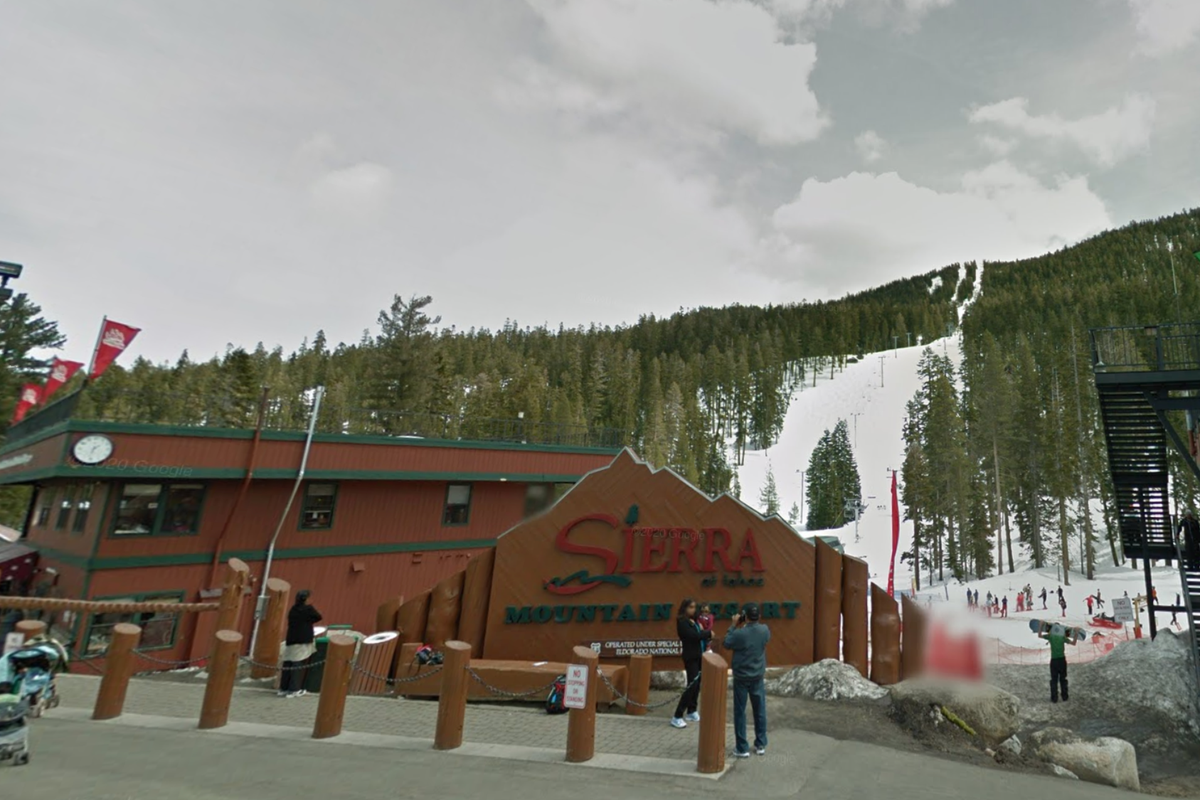
A child falls from a chairlift. The headlines scream about negligence. The public demands "better safety bars." The resort issues a boilerplate statement about "safety being the top priority." It is a scripted dance of outrage that avoids the uncomfortable reality of high-altitude mechanics and human error.
The incident at Tahoe, where an eight-year-old boy fell 30 feet, is a tragedy for the family. But the subsequent conversation is a masterclass in missing the point. We are obsessed with the hardware when the actual failure exists in the soft tissue of our expectations. We have sanitized the mountain experience to the point where people forget they are dangling from a cable in a sub-freezing environment.
The Myth of the Safety Bar
Most people believe the safety bar is a physical cage designed to lock you into a chair. It isn't. In many European ski cultures, the bar is a footrest, and it is frequently ignored. In the United States, we treat it like a legal shield.
The physics are simple. A chairlift operates on a pendulum principle. If you sit back, stay still, and follow the basic instructions of the lift operator, gravity does the heavy lifting for you. The "safety bar" is largely psychological. It provides a sense of enclosure that often leads to a dangerous relaxation of vigilance.
I have spent twenty years on mountains from the Alps to the Rockies. I have seen parents let their children wiggle, turn around to talk to friends, or lean forward to adjust a boot buckle while 50 feet in the air. They do this because the bar is down. They believe the bar has "saved" them, when in reality, it’s just a metal pipe that offers zero protection against a lateral slip or a child sliding underneath.
The Negligence of Sanitized Risk
Resorts are partially to blame for this. They market skiing as a luxury lifestyle product, not an extreme sport. When you sell a "family-friendly experience," you implicitly promise that the danger has been engineered out of the environment.
It hasn't.
You are traveling through the air at multiple meters per second on a machine that is subject to wind shear, icing, and mechanical vibration. The moment we stop acknowledging that reality, we become less safe.
The Tahoe fall shouldn't just trigger an inspection of the lift. It should trigger an inspection of how we train young skiers to exist in high-consequence environments. We focus on the "pizza and french fries" of the slopes, but we spend zero time teaching the mechanics of the lift.
The False Narrative of Resort Liability
The "lazy consensus" is to sue the resort. While mechanical failure is a legitimate grounds for litigation, most chairlift falls are behavioral. According to data from the National Ski Areas Association (NSAA), falls from chairlifts are statistically rare—roughly $0.14$ per million passenger trips. When they do happen, a staggering majority are attributed to passenger behavior.
We want to blame the resort because it’s easier than admitting that skiing is inherently dangerous. If a resort installs a "bubble" or an automatic locking bar, the user stops paying attention. This is a phenomenon known as risk compensation. As the environment feels safer, the individual takes more risks.
Why Automatic Restraints Fail the Logic Test
Critics argue for "bubble" chairs and magnetic locks like those found in modern European resorts. They cite these as the gold standard. But there is a hidden cost to this level of automation: the death of individual responsibility.
Imagine a scenario where every chairlift is a sealed pod. You lose the ability to see the terrain, feel the wind, and gauge the conditions. You are no longer a participant in the mountain; you are a passenger in a transit system. When that system fails—and all systems eventually fail—the passenger is completely unprepared to handle the emergency.
The Uncomfortable Truth About Age and Ability
We put children on chairlifts before they have the core strength or the attention span to sit still for ten minutes. An eight-year-old's center of gravity is higher than an adult's. Their legs often don't reach the footrest, meaning they are essentially balancing on their sit-bones on a slippery plastic bench.
If a child is too small to sit back against the seat while their knees bend over the edge, they shouldn't be on that specific chair without a direct physical tether or a harness. Yet, we allow them on because "it's part of the vacation."
We are prioritizing the convenience of the family unit over the physical limitations of the child's anatomy.
Stop Asking if the Lift is Safe
People always ask: "Is this resort safe?"
It is the wrong question. The right question is: "Are you competent enough to use this equipment?"
We have outsourced our survival to lift operators making $18 an hour and metal bars designed in the 1990s. If you want to prevent another 30-foot fall, stop looking at the resort's maintenance records and start looking at how you sit on the chair.
- Sit all the way back.
- Do not lean forward.
- Do not use your phone.
- Hold the child, bar or no bar.
The mountain doesn't care about your lawsuit or your sense of entitlement to a risk-free afternoon. It is a physical environment governed by gravity.
Respect the machine, or stay off the hill.
Would you like me to analyze the specific safety protocols of major North American resorts compared to the ISO standards used in the Alps?


