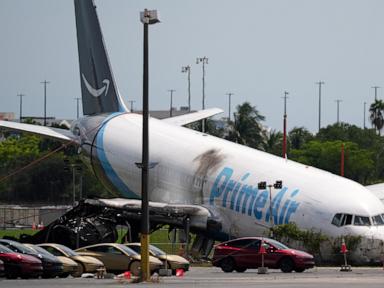
The lazy consensus of aviation journalism is comforting. Whenever a hull goes down in a thunderstorm, the narrative writes itself before the wreckage even cools. A sudden microburst. An unrecorded shear. A crew caught flat-footed by Mother Nature. The latest federal disclosures surrounding the Atlas Air Flight 3591 Boeing 767 cargo crash in Trinity Bay, Texas, operating for Amazon Prime Air, lean heavily into this well-worn groove. Investigators point to wind data and communication gaps, fueling the public appetite for a simple scapegoat.
Blaming the wind lets everyone off the hook. It absolves the corporate logistics machine pushing dispatch turnaround times. It shields the training apparatus certifying pilots to standardized minimums rather than chaotic reality. And it grants absolution to an oversight structure that treats severe weather advisories as bureaucratic checkboxes rather than tactical warnings.
The inconvenient truth is that wind never brings down a modern, heavy commercial jetliner on its own. Human factors, operational tempo, and systemic cognitive overload do the dirty work long before the first gust crosses the threshold.
The Myth of the Unseen Gust
Let us dismantle the core falsehood driving the federal discourse. The narrative suggests that pilots were blindsided by atmospheric conditions they had no business anticipating. That framing insults the capability of the flight deck crew and fundamentally misunderstands how professional aviators read a sky.
A seasoned captain does not rely on a localized red alert to know a squall line is packing a punch. They look at the radar return, they track the barometric trend, and they feel the airplane. When a cargo jet flies straight into an unmoored attitude anomaly, the failure did not happen at five hundred feet above the mud. It happened in the dispatch office hours earlier, in the cockpit resource management breakdown during the descent briefing, and in an industry culture that rewards pressing on when common sense dictates holding short.
I have spent decades watching logistics conglomerates scale faster than their safety margins can absorb. When you run a fleet connecting regional distribution hubs on tight overnight schedules, the invisible friction between schedule adherence and absolute prudence becomes deadly. The pressure to keep the boxes moving creates a subtle, toxic normalization of deviance. Crews learn that delaying a departure for weather inspection draws uncomfortable questions from operations control.
The Human Error Loop in Automated Cockpits
We need to talk about how modern flight decks dull the knife edge of raw piloting skill. The Boeing 767 is a workhorse, but the transition from traditional piloting to managing automation changes how crews react to sudden energy states.
When an aircraft encounters severe localized wind shear or rolling moments at low altitude, the recovery requires immediate, aggressive, manual intervention. It demands brutal muscle memory. But if your flight hours for the past six months consist largely of monitoring autopilot parameters while crossing checklists, your reaction time in the microsecond window between stable flight and a catastrophic nose-down pitch excursion degrades.
Federal investigators focus endlessly on whether the crew received specific wind warnings from ground radar. This is a distraction. The question is not whether they got a warning label. The question is why a professional crew found themselves in an energy state where a wind disturbance could flip the aircraft past recovery limits.
If your safety margin requires pristine meteorological data to survive an approach, your safety margin does not exist. Weather is inherently chaotic, unpredictable, and hostile. Designing a system that assumes clear air until proven otherwise is corporate malpractice.
The Amazon Logistics Paradox
We cannot discuss this tragedy without addressing the elephant in the hangar: the relentless velocity of e-commerce logistics.
Amazon did not invent air cargo, but they scaled it with the expectation of ground-shipping predictability. When you treat air transport like a fleet of delivery vans on the interstate, you warp the risk calculus. Prime Air routes are engineered to compress transit times down to the minute. That operational velocity cascades down to the flight crews, the maintenance schedulers, and the meteorologists parsing radar returns at three in the morning.
Imagine a scenario where a first officer notices deteriorating convective activity building along the arrival corridor. In a purely safety-first culture, mentioning a diversion or a holding pattern is met with immediate support. In an aggressive corporate logistics pipeline, every minute spent circling burns margin, disrupts downstream sorting facilities, and triggers cascade delays across a national network.
The pilots on Flight 3591 were consummate professionals doing their jobs within a broken ecosystem. Pinning the tail of this accident on a missing weather advisory protects the architects of that ecosystem. It allows the supply chain giants to issue solemn statements about safety while changing none of the structural incentives that prioritize speed over survival.
Dismantling the Oversight Illusion
The National Transportation Safety Board does heroic forensic work, but its recommendations often suffer from regulatory timidity. They issue circular safety bulletins about communication protocols between air traffic control and flight crews. They suggest better radar resolution for regional airports.
These fixes are administrative theater. They tinker at the edges while leaving the core engine of risk untouched.
Better warnings will not save a crew exhausted by duty-time limits designed to maximize hours rather than cognitive recovery. Better weather briefs will not fix a dispatch culture that views meteorological uncertainty as a hurdle to clear rather than a boundary to respect.
If we genuinely want to stop cargo planes from augering into swamps and bays, we have to stop accepting the whitewash of environmental excuses. The wind was there. It is always there. The airplane was built to handle it. The system surrounding the cockpit was what failed.
Stop looking at the clouds. Look at the ledger.
Until the financial penalty for rushing through a storm outweighs the cost of waiting it out on the ramp, cargo planes will keep falling out of the sky, and investigators will keep blaming the breeze.