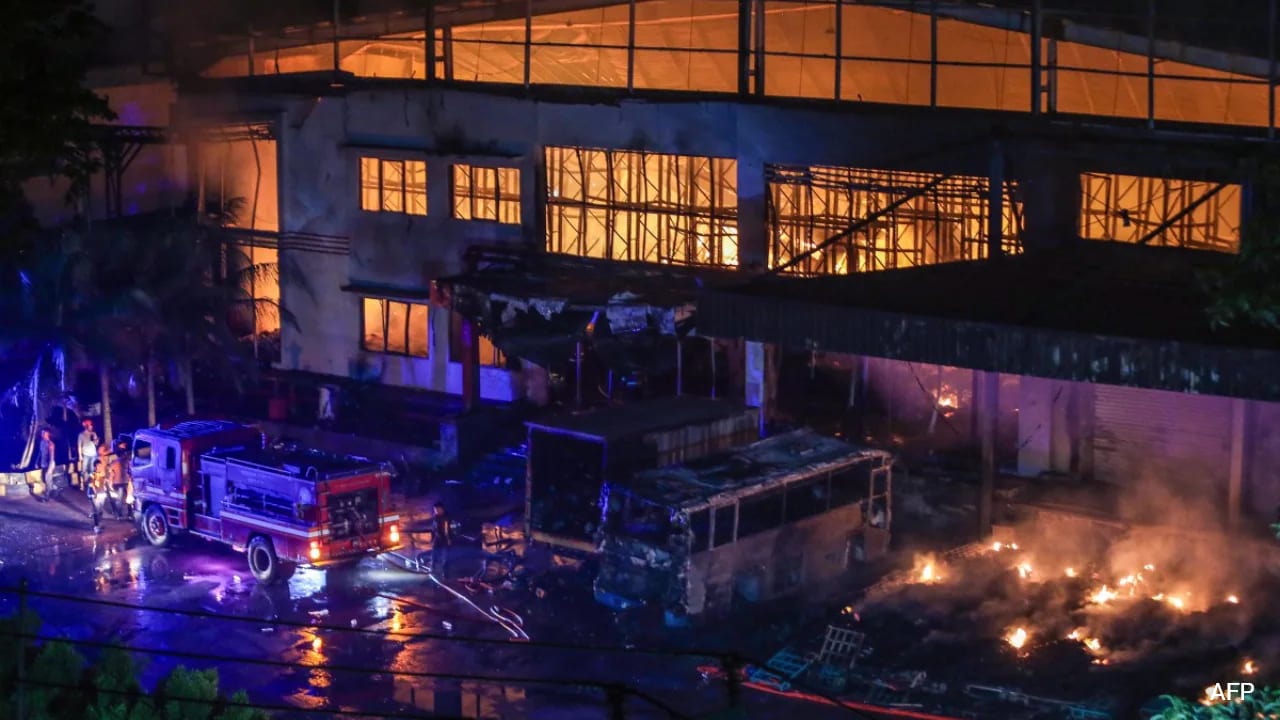
Three dead. Thirty-six missing. An Indonesian confectionery factory reduced to twisted steel and ash.
Every mainstream outlet covering this disaster is running the exact same script. They call it a "tragedy." They quote weeping relatives outside police cordons. They mention vague "investigations into safety violations" and wait for a local official to promise that "lessons will be learned."
That coverage is worse than useless. It is active misdirection.
Calling an industrial fire a tragedy frames it as an act of God—an unpredictable, unavoidable stroke of terrible luck like a lightning strike or an earthquake. It absolves the architects of the disaster by pretending nobody saw it coming.
In industrial manufacturing, fires do not just happen. They are engineered. Every locked fire exit, every unmaintained dust collector, and every bypassed thermal sensor is a line item on a spreadsheet. When an Indonesian candy plant burns down and traps nearly forty workers inside, you are not looking at a sudden accident. You are looking at the predictable maturity of a high-yield financial bet made by supply chain executives half a world away.
The Myth of the Rogue Local Operator
Whenever a factory burns in Southeast Asia—whether it is textiles in Bangladesh or confectionery in Indonesia—Western media immediately deploys its favorite scapegoat. They blame the "negligent local owner." They point fingers at weak regional enforcement, corrupt municipal inspectors, and cut-rate contractors who ignored basic building codes.
This narrative is comforting because it draws a thick, clean line between "us" and "them." It allows multinational brands and Western consumers to tut-tut at developing-world dysfunction while enjoying cheap imported goods.
It is also complete fiction.
I have spent fifteen years auditing tier-two and tier-three manufacturing facilities across Southeast Asia. I have walked into plants producing everything from bulk sugar syrups to packaged snack foods for global distributors. And I can tell you with absolute certainty that local factory owners do not wake up in the morning wanting to burn their own capital assets to the ground.
They strip out safety infrastructure because the procurement math demands it.
When a multinational buyer demands a 4% year-over-year cost reduction on bulk confectionery inputs while sugar and palm oil prices are rising, the local manufacturer has zero room to maneuver. Labor costs are fixed by regional minimums. Raw commodities are priced globally. Energy costs are non-negotiable.
There is only one variable left on the balance sheet that a factory owner can actually compress without halting the assembly line. Compliance.
You defer maintenance on the exhaust ventilation. You skip the explosion-proof electrical casings. You lock the secondary fire exits to prevent inventory pilferage—a standard practice in facilities operating on razor-thin margins where losing fifty kilos of refined sugar wipes out the week's profit.
The local owner holds the match, yes. But global procurement teams hand them the gasoline and dare them not to strike it.
Sugar Is High Explosive
To understand why confectionery plants are uniquely lethal, you have to strip away the sweet, harmless marketing of candy and look at the industrial chemistry.
Refined sugar, cornstarch, flour, and cocoa powder are innocent enough on a kitchen counter. Suspended in the air inside an enclosed, poorly ventilated factory floor, they behave like military-grade thermobaric weapons.
This is the physics of combustible dust.
For a dust explosion to occur, you need five specific elements—what safety engineers call the Dust Explosion Pentagon:
- Combustible dust (fuel)
- Ignition source (heat)
- Oxygen in the air
- Dispersion of dust particles in the right concentration
- Confinement of the dust cloud
Confectionery manufacturing naturally generates massive amounts of fine particulate matter during grinding, sifting, coating, and packaging. In a properly engineered facility—the kind built to NFPA 652 standards—you spend millions on negative-pressure dust collection systems, spark detection sensors, explosion venting panels, and intrinsically safe Class II electrical wiring.
That hardware produces zero candy. It adds zero units to daily output. To a private equity firm or a cost-obsessed supply chain director, it looks like dead weight.
When a facility skips dust mitigation, fine sugar accumulates on overhead rafters, electrical conduits, and machinery housings. All it takes is a single overheated bearing on a conveyor belt to trigger a primary flash. That initial pressure wave shakes the accumulated dust loose from the rafters, creating a massive airborne cloud. A millisecond later, the secondary explosion hits. It blows out load-bearing walls, collapses roofs, and turns the building into a furnace before anyone near the assembly line can even register the sound.
Calling that a "mystery fire" is an insult to basic physics. If you run unshielded motors inside a room full of powdered sugar without pneumatic extraction, you have built a bomb. The only variable is the timer.
Why Social Audits Are Expensive Theater
Right now, corporate PR departments are scrambling to check if their supply chains touch this specific Indonesian facility. If they do, they will issue a boilerplate statement expressing "deep sorrow" and announcing an "immediate suspension of the supplier" alongside a "comprehensive third-party audit."
Do not fall for it. The social compliance audit industry is one of the biggest frauds in modern global commerce.
I have watched audit theater play out in real time across dozens of factories from Jakarta to Ho Chi Minh City. Here is how the game actually works:
First, the audit is almost always announced weeks in advance. Even "unannounced" audits usually give a thirty-day window, and local fixers tip off factory managers the moment an auditor lands at the regional airport.
Second, the factory puts on a Broadway show. On audit day, the fire doors are unlocked and propped open with brand-new wedges. The aisles are freshly painted yellow. Workers are handed crisp personal protective equipment they have never seen before, and the production line runs at 60% speed so the ventilation system appears adequate.
Third, the auditor—often an underpaid twenty-something working for a firm hired by the factory itself—spends six hours checking boxes on a clipboard. They verify that the fire extinguishers have current inspection tags. They do not test the pressure gauges. They check that an evacuation map is posted on the wall. They do not run a surprise drill to see if thirty-nine people can actually exit the building in under three minutes when the lights go out.
The moment the auditor gets back into their air-conditioned van, the padlocks go back on the fire doors. The PPE goes back into storage so it doesn't get dirty. The line speed cranks back up to 110%.
The brand gets a clean PDF certificate indemnifying them from legal liability. The factory keeps its contract. And thirty-nine workers remain locked inside a tinderbox.
Answering the Questions Nobody Wants to Ask
When disasters like this hit the news cycle, search engines flood with predictable questions from the public. Most of them miss the point entirely because they are built on faulty assumptions about how global manufacturing operates.
Why didn't the workers just run out when the fire started?
Because they were physically prevented from doing so, or they never knew a fire had started until the exits were gone. In high-density manufacturing floors across Indonesia and neighboring manufacturing hubs, doors are routinely chained from the outside to stop unauthorized breaks and petty theft. Furthermore, industrial sugar and plastic packaging fires do not behave like house fires. They produce thick, toxic, black cyanide and carbon monoxide smoke within seconds. Without automated strobe alarms and unobstructed, pressurized stairwells, disorientation happens in less than ten seconds. You cannot outrun a flash fire in pitch darkness when the only door you know is welded shut.
Isn't Indonesia's government responsible for enforcing safety laws?
On paper, yes. Indonesia has comprehensive occupational health and safety regulations under Law No. 1 of 1970 and subsequent ministerial decrees. In practice, expecting a developing economy with tens of thousands of dispersed industrial facilities to police every factory floor with a tiny fraction of the inspectors needed is pure fantasy. Regulatory enforcement in emerging markets is reactive, underfunded, and easily bypassed. Relying on local municipal inspectors to protect workers while Western corporations extract billions in margin from those exact same factories is like firing the security guards at a bank and blaming the local beat cop when the vault gets robbed.
Will this disaster finally force factories to upgrade their safety standards?
No. Not unless the financial penalty for burning down a factory exceeds the cost of making it safe. Right now, the math still favors negligence. Even when a facility is completely destroyed and dozens of workers die, the corporate restructuring is swift. Insurance pays out on the physical structure, shell companies absorb the wrongful death claims—which in Southeast Asia settle for a few thousand dollars per life—and production quietly shifts to an identical, equally hazardous factory three miles down the road within sixty days.
The Uncomfortable Downside of Real Safety
If we actually wanted to stop factory fires in Indonesia, Bangladesh, Vietnam, and Mexico, we could do it tomorrow. We do not lack the engineering knowledge. We do not lack the fire suppression technology.
We lack the willingness to pay what things actually cost.
Here is the contrarian truth that labor activists and corporate sustainability officers both hate admitting: true industrial safety destroys the current business model of cheap consumer goods.
If you force every tier-two and tier-three confectionery supplier in Southeast Asia to retrofit their plants with NFPA-compliant dust collection, automated deluge sprinklers, fire-rated compartmentalization, and independent structural exits, two things happen immediately:
- Consumer prices go up. That bag of bulk candy, that cheap baked good, that low-cost snack bar jumps in price by 15% to 25% at retail.
- Small factories go bankrupt. Thousands of mid-sized regional manufacturers lack the capital reserves to fund a $2 million safety overhaul. They will shut their doors, throwing hundreds of thousands of low-income workers out of formal employment and pushing them into even more dangerous informal sector jobs.
This is the brutal trade-off hiding behind every cheap barcode on a supermarket shelf. We have built a global economy addicted to artificially suppressed manufacturing costs, and we subsidize those low prices with the physical safety of workers who have no leverage to say no.
How to Actually Break the Cycle
If you are a supply chain executive, a procurement director, or an institutional investor sitting on boards that source from emerging markets, you already know your current compliance playbook is a lie. If you actually want to prevent your company's logo from showing up in the wreckage of the next industrial fire, stop buying audit reports and start changing your contracts.
- Separate safety from unit pricing. Stop forcing suppliers to bury compliance costs inside their per-unit manufacturing bids. Ring-fence capital expenditure budgets specifically for fire suppression, electrical upgrades, and structural exits. Pay for the sprinkler system directly as a co-investment rather than squeezing the factory owner to fund it out of their margin.
- Tie executive bonuses to unannounced engineering inspections. Fire your generic social compliance auditors. Hire independent, licensed fire protection engineers—the people who inspect chemical refineries and grain silos—and give them unrestricted, zero-notice access to every facility in your tier-one and tier-two network. If a single fire door is found locked during an unannounced visit, terminate the contract immediately and forfeit the factory's security deposit.
- Mandate worker-controlled stop-work authority. A safety system designed by executives will always fail under production pressure. Establish anonymous, direct-to-buyer reporting channels with guaranteed financial bounties for any factory worker who submits photographic proof of a blocked exit, disabled alarm, or unmitigated dust hazard. Pay the worker six months' wages out of the supplier's penalty fee.
Watch how fast the padlocks disappear when the people on the assembly line get paid to report them.
The Cost of Looking Away
Three bodies pulled from the rubble. Thirty-six families waiting by a chain-link fence for phone calls that will never come.
Tomorrow, the news cycle will move on. The hashtags will fade. The global confectionery market will not miss a single shipment, because another factory down the highway is already running double shifts to pick up the slack, its fire exits chained shut to keep the sugar from walking out the back door.
Stop mourning these deaths like they are weather events. Read the balance sheet.