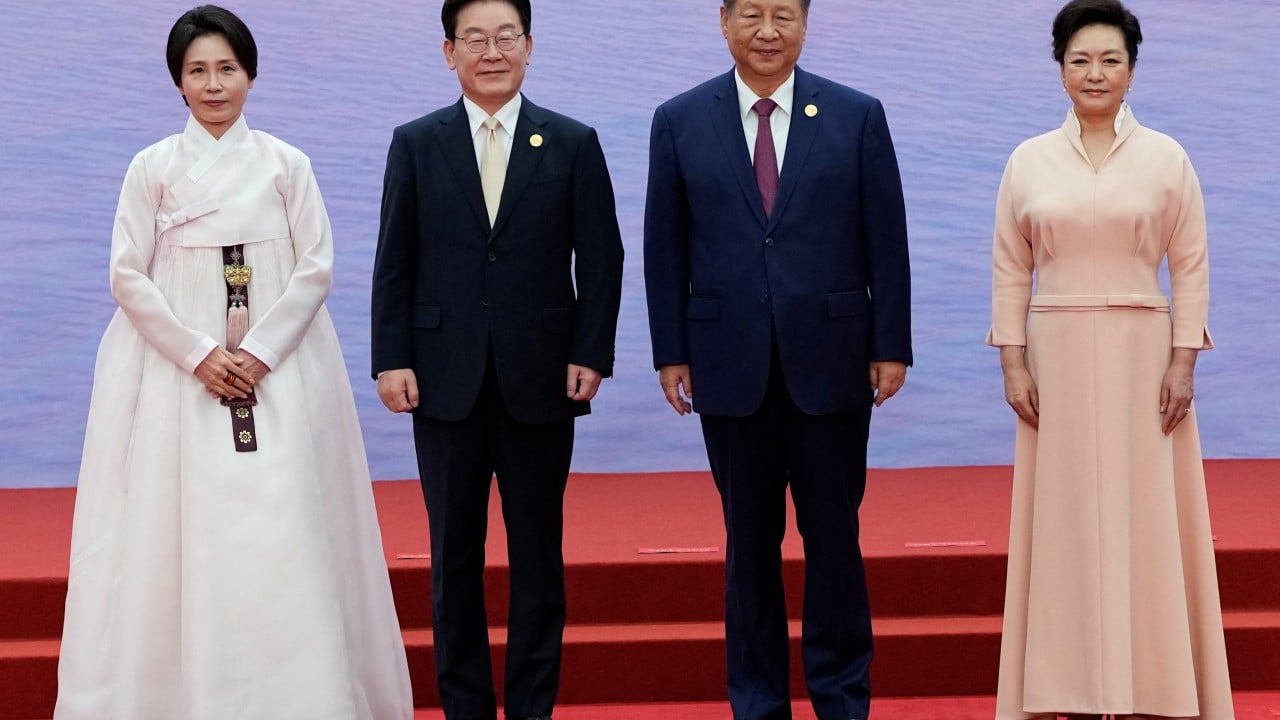
Fashion reporters love a velvet collar. They adore a silk scarf, a custom hanbok, or an embroidered ao dai stepping off an official state aircraft. Whenever leaders gather for the Asia-Pacific Economic Cooperation summit, lifestyle desks across the globe churn out breathless dispatches praising the "sartorial diplomacy" of Peng Liyuan, Ngo Phuong Ly, and Kim Hea Kyung.
They call it soft power. They call it bridge-building. They call it a masterclass in cultural messaging.
They are wrong.
Treating high-end state tailoring as a substitute for geopolitical influence is the laziest consensus in modern media coverage. When commentators applaud how well Peng Liyuan’s bespoke tailoring complements Ngo Phuong Ly’s heritage silk or Kim Hea Kyung’s understated elegance, they are falling for a centuries-old magician’s trick. Watch the shiny silk on the tarmac so you do not notice the stalled trade negotiations inside the convention center.
I have spent fifteen years advising corporate boards and trade delegations operating across East and Southeast Asia. I have watched executives blow millions on cultural consultants who told them that wearing the right lapel pin or hosting the right tea ceremony would unlock regulatory approval in Beijing, Hanoi, or Seoul. It never works. Real power in the Asia-Pacific is negotiated in basis points, semiconductor export controls, maritime boundaries, and supply chain tariffs. Nobody in a bilateral trade ministry changes a tariff schedule because a visiting spouse wore an exquisite piece of local craftsmanship.
The Soft Power Illusion
To understand why the "sartorial diplomacy" narrative fails, we need to define our terms with precision. Political scientist Joseph Nye coined the term soft power in the late 1980s to describe a country's ability to co-opt rather than coerce—getting others to want the outcomes you want through cultural attraction, political values, and foreign policies.
Notice what is missing from Nye’s framework. A single afternoon photo op on a red carpet.
True cultural attraction requires sustained, organic consumption by foreign publics. South Korea possesses massive soft power, not because of what Kim Hea Kyung wears to a spouses' luncheon, but because billions of people voluntarily stream K-dramas, listen to K-pop, and buy Korean skincare. China exercises enormous economic gravity through infrastructure financing and manufacturing dominance, regardless of whether Peng Liyuan wears a modernized qipao or a tailored trench coat. Vietnam attracts billions in foreign direct investment because of its young workforce and strategic manufacturing location, not because Ngo Phuong Ly wears a stunning ao dai.
When journalists equate elite wardrobe styling with actual diplomacy, they confuse state pageantry with political capital. Pageantry is designed for domestic consumption and sanitized international press releases. It creates the visual fiction of harmony while the principals behind closed doors are locked in zero-sum disputes over rare earth minerals and artificial intelligence chips.
Anatomy of the Wardrobe Distraction
Let us look closely at the three figures currently dominating the APEC style columns, and strip away the breathless adjectives to see what is actually happening.
Peng Liyuan and the Myth of the Accessible Empress
For over a decade, fashion commentators have hailed Peng Liyuan as a transformative figure in Chinese public relations. Before her, Chinese first ladies were largely invisible. Peng, a celebrated soprano with genuine stage presence, stepped onto the global stage wearing domestic designers like Ma Ke and brands like Exception de Mixmind.
The mainstream media narrative claims this humanized Beijing’s leadership and promoted Chinese luxury craftsmanship to the world.
Here is the reality on the ground. Peng’s wardrobe is not an outreach program to foreign consumers; it is an internal industrial policy directive. Her outfits are state-sanctioned advertisements for Beijing’s "Dual Circulation" economic strategy, which aims to boost domestic consumption and reduce reliance on foreign Western luxury houses like LVMH and Kering. Furthermore, her visibility is tightly choreographed by the Central Propaganda Department. When Western outlets gush over her elegance, they are effectively acting as unpaid PR agencies for a state apparatus that simultaneously restricts foreign cultural imports. Calling her wardrobe "diplomacy" ignores the strict ideological control behind every stitch.
Ngo Phuong Ly and Heritage as Armor
When Vietnam’s First Lady Ngo Phuong Ly appears at international summits, coverage predictably focuses on her devotion to the ao dai—Vietnam’s traditional silk tunic worn over trousers. Commentators praise her for projecting "bamboo diplomacy," the Vietnamese foreign policy doctrine of maintaining flexible, friendly relations with all major powers without taking sides.
This is a fundamental misreading of both fashion and Vietnamese statecraft.
Wearing traditional national dress at an international forum is not a gesture of flexibility; it is a rigid assertion of sovereignty. Vietnam’s history is defined by resisting absorption by larger powers. When Ngo Phuong Ly wears the ao dai, she is not signaling openness to foreign influence. She is drawing a crisp visual boundary around Vietnamese identity. Meanwhile, Vietnam’s actual bamboo diplomacy happens in quiet, relentless bilateral meetings where Hanoi extracts semiconductor investments from Washington, infrastructure loans from Beijing, and trade deals from Seoul. The silk tunic is merely the uniform worn while those hard-nosed transactions occur.
Kim Hea Kyung and the Burden of Domestic Optics
South Korean political spouses walk a razor’s edge that Western fashion editors routinely ignore. In Seoul, where public scrutiny of political families is ferocious and scandals involving luxury handbags have literally tanked presidential approval ratings, every garment worn by Kim Hea Kyung is a calculated political survival tactic.
When she appears in restrained, minimalist silhouettes or traditional hanbok crafted by local artisans, international reporters read it as "quiet luxury" and "diplomatic grace."
In reality, it is defensive domestic risk management. South Korean voters punish ostentatious displays of wealth by public officials. Her wardrobe choices are dictated by domestic polling data and opposition party scrutiny, not by a desire to charm APEC delegates. Interpreting her restraint as an international diplomatic overture projects global strategy onto what is purely local political self-preservation.
Why Fashion Editors Keep Falling for the Trap
If the geopolitical impact of summit fashion is virtually zero, why does the media ecosystem dedicate thousands of column inches to it every November?
Because access journalism demands easy narratives.
APEC summits are notoriously opaque. The real meetings happen behind heavy mahogany doors with no press permitted. Communiqués are drafted weeks in advance by mid-level bureaucrats and watered down until every sharp edge is sanded off. For a reporter sitting in a media center three miles away from the actual negotiations, covering the spouses' program is the path of least resistance.
- It provides guaranteed visuals. You cannot photograph a bilateral dispute over digital trade rules, but you can easily photograph three women standing next to a bonsai tree.
- It avoids offending host nations. Critiquing a country’s human rights record or currency manipulation gets journalists uninvited from future press pools. Praising a silk scarf offends nobody.
- It flatters the audience. Readers enjoy consuming lifestyle content disguised as serious international affairs. It makes them feel informed about geopolitics while they are really just looking at celebrity street style with diplomatic immunity.
Imagine a scenario where three Fortune 500 CEOs meet to negotiate a hostile merger, and the financial press spends three days analyzing the cufflinks worn by their spouses while ignoring the balance sheets. That is the exact absurdity of APEC sartorial coverage.
What People Actually Want to Know
When readers search for "APEC first ladies fashion" or "what is sartorial diplomacy," they are usually trying to figure out if these visual cues carry hidden political messages. Let us dismantle the most common assumptions.
Does a visiting first lady wearing the host country’s colors signal a trade breakthrough?
No. Protocol offices coordinate wardrobe colors months in advance to ensure visual harmony on stage and avoid clashing with the backdrop banners. If Peng Liyuan wears blue in a host nation whose flag is blue, it means a junior protocol officer sent a Pantone swatch to Beijing in August. It does not mean tariffs are coming down.
Do luxury brands gain massive sales from dressing political spouses at APEC?
Rarely, and often the opposite happens. In high-context Asian markets, overt political endorsement can alienate consumers who dislike the administration in power. Independent designers dressed by Peng Liyuan or Kim Hea Kyung often see a brief spike in local search traffic followed by intense government scrutiny or supply chain bottlenecks they are unequipped to handle.
Is there any real business value in cultural diplomacy at summits?
Only when it is tied directly to commercial intellectual property. When South Korea brings K-pop stars to a state dinner, or when China gifts pandas to a foreign zoo, those are state-controlled cultural assets with measurable tourism and media licensing value. A custom dress worn once at a museum tour generates zero recurring revenue.
The Contrarian Playbook for Reading Global Summits
If you are an investor, a supply chain executive, or simply a reader who refuses to be distracted by shiny objects, you need to change how you consume summit media. Stop reading the style sections and start reading the room differently.
- Follow the deputies, not the spouses. While the first ladies are touring a heritage museum, look at who is sitting two seats behind the principal leaders in the main plenary hall. If the Minister of Commerce is absent and the Minister of State Security is present, the summit is about containment, not trade.
- Track the non-appearances. In Asian diplomatic protocol, absence is the loudest statement possible. A sudden "scheduling conflict" that keeps a prominent spouse away from a group photo signals deep bilateral friction that no amount of tailored silk can paper over.
- Audit the gift exchanges. State gifts tell you what a country actually wants to sell. When a delegation gifts high-end consumer electronics, clean energy components, or agricultural products, they are pitching an export sector. When they gift antique porcelain, they have nothing new to sell you.
- Ignore the adjectives in state media. Count the verbs instead. State-run outlets use flowery descriptions of attire to pad out empty coverage when talks have stalled. When a breakthrough actually happens, the language becomes dry, technical, and specific.
The Downside of Cynicism
Dismissing sartorial diplomacy entirely does carry one blind spot. In domestic politics, symbols still move needle-thin margins. For a leader facing a fractured electorate at home, seeing their spouse praised in the international press provides a brief, useful veneer of legitimacy. It signals competence and stability to voters who do not follow bond yields or trade deficits.
Furthermore, for smaller economies within APEC—nations like Peru, Brunei, or Papua New Guinea—the global spotlight of a summit is a rare chance to put their indigenous textiles and cultural heritage in front of cameras that normally ignore them. For local artisans whose weaving techniques are dying out, a single photo on an international wire service can keep a workshop alive for another five years. That economic lifeline is real, even if it has nothing to do with foreign policy.
Stop Confusing Tailoring With Power
The next time an international summit rolls around and your feed fills up with side-by-side comparisons of bespoke coats, heritage silks, and subtle lapel brooches, recognize the performance for what it is. It is theater. It is well-funded, meticulously choreographed, visually pleasing theater designed to keep the cameras occupied while the real business of power happens out of sight.
Admire the craftsmanship if you appreciate good tailoring. Credit the local artisans who spent hundreds of hours hand-stitching the embroidery. Just stop pretending that a hemline can redraw a maritime border, rescue a failing trade pact, or soften a superpower rivalry.