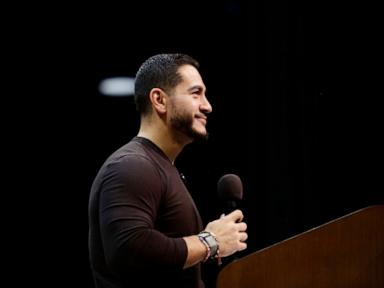
Political consultants love a staged handshake. Put Abdul El-Sayed and Haley Stevens on the same podium, snap a few photos for the evening news, and declare the party healed.
It makes for great press releases. It also ignores basic political gravity.
The mainstream press treats a joint appearance between Michigan’s progressive standard-bearer and its suburban moderate heavyweight as an automatic win for Democrats. The lazy consensus assumes that party unity equals voter turnout. If the leaders hold hands, the voters will automatically follow them to the ballot box.
That assumption has cost campaigns hundreds of millions of dollars over the last decade.
In a razor-thin battleground state like Michigan, forced cohesion does not multiply enthusiasm. It flattens it. When two politicians with fundamentally opposing economic worldviews pretend their differences were just a minor misunderstanding, voters do not feel inspired. They feel managed.
The Illusion of the Big Tent Photo-Op
I have sat in war rooms where senior strategists burned through seven-figure ad budgets trying to manufacture "unity" after a bruising primary. They hire message doctors to sand down the sharp edges of both candidates until the resulting platform reads like oatmeal. Nobody hates oatmeal, and nobody drives through a November sleet storm to vote for it.
To understand why the El-Sayed and Stevens dynamic is so volatile, you have to look at what they actually represent in Michigan politics.
Haley Stevens built her brand in Oakland County—the affluent, educated, historically moderate suburbs north of Detroit that flipped blue during the Trump era. Her political currency is institutional stability, manufacturing pragmatism, and kitchen-table centrism. Abdul El-Sayed, a former Detroit health director and progressive firebrand, draws his power from a completely different ecosystem: young voters, Arab American communities in Dearborn and Hamtramck, and working-class progressives who view corporate-friendly centrism as the root problem.
When you put those two on stage together under the banner of "unity," you are not merging two voter bases. You are highlighting the exact ideological fault lines that divide them.
What Political Operatives Get Wrong About Coalition Building
In political science, there is a vast difference between coalition alignment and message homogenization.
- Coalition alignment means two distinct groups agree to defeat a common opponent while keeping their separate identities and demands intact.
- Message homogenization means erasing those demands to create a single, inoffensive campaign slogan.
Traditional party operatives always default to homogenization because it is easier to manage from a headquarters in Lansing or Washington. They want one talking point, one logo, and one unified rally.
Look at the historical data in Michigan. In 2016, Hillary Clinton ran a textbook "unity" campaign after a bitter primary against Bernie Sanders. Sanders campaigned hard for her across the Midwest. The rallies were packed. The optics were unified. Yet turnout in Detroit dropped significantly compared to 2012, and Clinton lost Michigan by 10,704 votes. The endorsements happened at the top, but the mechanical transfer of trust at the bottom never occurred.
Why Voters Punish Manufactured Harmony
Voters are cynical, and in Michigan, they have earned the right to be. Between the collapse of the domestic auto sector, the Flint water crisis, and decades of broken trade promises, the Michigan electorate has a hair-trigger sensitivity to political theater.
Imagine a scenario where a 24-year-old union apprentice in Ypsilanti watches El-Sayed and Stevens share a microphone. That voter backed El-Sayed because he demanded systemic healthcare reform and aggressive corporate accountability. Watching him smile next to a moderate lawmaker who spent years courting business chambers does not make the apprentice love Stevens. It makes the apprentice suspect that El-Sayed just sold out.
Conversely, imagine a 58-year-old swing voter in Rochester Hills. She voted for Stevens because she wants predictable governance and moderate fiscal policy. Seeing Stevens embrace a progressive populist does not make her excited about the Democratic ticket. It hands Republican opposition researchers the exact B-roll footage they need to run thirty-second attack ads calling Stevens a radical.
This is the classic crossover penalty. When you try to occupy two opposing ideological lanes simultaneously, you end up alienating the core supporters of both while convincing the undecided middle that you stand for nothing at all.
The Dearborn Factor Nobody Wants to Touch
You cannot talk about Michigan Senate math without addressing the elephant in the room: foreign policy and the Arab American vote.
Michigan is home to the largest concentration of Arab Americans in the United States. In recent election cycles, this bloc moved from a reliable Democratic cornerstone to a fiercely independent swing constituency. For many of these voters, policy disagreements with the Democratic establishment are not abstract ideological debates; they are deeply personal moral lines.
El-Sayed holds genuine credibility in these communities. Stevens represents the traditional party apparatus that many in Dearborn actively blame for ignoring their voices.
A single joint appearance does not bridge that chasm. In fact, staging a unity event without concrete, public policy concessions risks insulting the intelligence of the very voters Democrats desperately need to win back. When politicians treat deep-seated policy grievances like a PR problem that can be solved with better stagecraft, voters stay home.
Dismantling the "Unity Equals Victory" Myth
If you search for coverage of the Michigan Senate race, you will find endless variations of the same tired questions. Let us look at what people are actually asking—and why the premises are completely flawed.
Does a joint appearance actually transfer votes from one candidate to another?
No. Endorsements and joint rallies are trailing indicators, not leading catalysts. Research from political scientists like Steven Greene and Ryan Enos has repeatedly shown that elite cues—politicians telling voters who to like—have a negligible impact on independent or disaffected voters. Voters take their cues from their immediate social networks, local community leaders, and tangible economic conditions, not from a podium in downtown Detroit.
Isn't party unity better than public infighting?
Only if the unity is built on an honest negotiation rather than a forced truce. Public friction forces candidates to sharpen their arguments and prove they are actually fighting for their constituents. In 2008, Barack Obama and Hillary Clinton fought a brutal, prolonged primary that lasted into June. Party elders panicked, warning that the division would hand the presidency to John McCain. Instead, the friction registered millions of new voters, pressure-tested the messaging, and created an unstoppable grassroots machine. Sanitizing the conflict early kills the energy that drives voter registration.
Won't Republican attacks exploit any division between Stevens and El-Sayed?
Republican strategists are going to attack Democrats as either "out-of-touch elites" or "dangerous socialists" regardless of what happens on stage. Trying to preempt GOP attack ads by hiding your internal debates is a defensive crouch. You do not beat an aggressive opponent by apologizing for your own party's ideological diversity. You beat them by letting each faction fight aggressively on its own turf.
The Counter-Intuitive Playbook That Actually Wins Michigan
If the standard unity tour is a trap, what is the alternative?
Smart campaigns stop trying to blend their factions into a single gray paste. Instead, they run parallel, asymmetric operations.
- Keep the brands completely separate. Stevens should never try to sound like El-Sayed, and El-Sayed should never dilute his rhetoric to make Stevens comfortable in the suburbs. Let Stevens dominate the Rotary Clubs, business roundtables, and moderate suburban town halls. Let El-Sayed lead fiery, unapologetic organizing drives on college campuses, union halls, and urban neighborhoods.
- Trade policy concessions, not photo-ops. If the party wants El-Sayed’s base to show up in November, the establishment needs to adopt two or three specific, non-negotiable planks from his platform—and put them in writing. Voters respect a transactional deal far more than a vague promise of camaraderie.
- Weaponize the contrast. Instead of hiding their differences, Democrats should openly brag about them. The pitch to Michigan voters should be simple: We are a coalition big enough to hold both a suburban pragmatist and an urban progressive, because both of them agree that working families are getting squeezed. That frames internal tension as democratic strength rather than party dysfunction.
The Risk of Strategic Friction
To be clear, running parallel campaigns instead of a unified front carries real operational danger.
When you allow two distinct wings of a party to campaign independently without a unified script, things get messy. Surrogates go off-message. Local organizers clash over resource allocation. Cable news pundits will spend weeks writing breathless segments about "Democrats in Disarray" every time Stevens and El-Sayed disagree on tax policy or healthcare administration.
It requires a campaign manager with iron nerves to ignore the media chatter and let the friction burn. Most political operatives lack the stomach for it. They would rather lose with a neat, disciplined, poll-tested message than win with a chaotic, loud, unpredictable coalition.
Stop Managing the Optics and Start Doing the Math
Elections in Michigan are not won by the party with the prettiest press photos. They are won by the party that turns out its specific, idiosyncratic pockets of support in Wayne, Oakland, Macomb, Washtenaw, and Kent counties.
Those counties do not want the same thing. They do not talk the same way. They do not respond to the same messengers.
Putting Abdul El-Sayed and Haley Stevens on the same stage is an attempt to pretend that Michigan is a monolith. It is a comforting bedtime story for nervous donors in Washington who want to believe the hard work of persuasion is already over.
It isn't. If Democrats mistake a polite handshake for a winning strategy, they will spend November wondering why the crowd cheered at the unity rally and disappeared on Election Day.