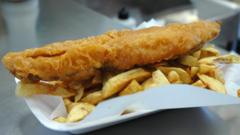
The great British public is currently in the middle of a collective meltdown because a few chippies had the audacity to swap Atlantic Cod for Vietnamese Basa. The headlines scream "fraud." The food inspectors are sharpening their pens. The pearl-clutching over the "traditional fish supper" has reached a fever pitch.
Here is the truth that nobody in the industry wants to admit: your obsession with cod is a sentimental death trap for the oceans and a financial anchor around the neck of small businesses. If you actually cared about quality, sustainability, or the survival of the high street, you would be thanking your local fryer for making the switch.
The outrage is built on a foundation of culinary ignorance and an outdated maritime identity that died thirty years ago.
The Myth of the Sacred Cod
We have been conditioned to believe that cod and haddock are the only "real" choices for a chippy tea. This isn't based on flavor; it is based on historical proximity. We ate what was in the North Sea until we emptied it. Now, we're importing frozen blocks from the Barents Sea and the Pacific, burning massive amounts of carbon to maintain the illusion of a "local" tradition.
Compare this to Pangasius—commonly known as Basa or catfish. While the media treats it like a bottom-feeding interloper, Basa is actually a structural marvel for deep frying.
- The Texture Gap: Cod is flaky but fragile. When subjected to the brutal heat of a 180°C fryer, it often releases moisture that turns the internal batter into a soggy, grey paste. Basa has a tighter protein structure. It holds its shape, stays moist without weeping, and provides a much more consistent bite.
- The Flavor Void: Let’s be honest. You don’t eat a fish supper for the nuanced notes of the Atlantic. You eat it for the salt, the vinegar, and the crunch of the batter. Cod is a neutral carrier. Basa is also a neutral carrier. If you can’t tell the difference through a half-inch of golden flour and a dousing of Sarson’s, the "fraud" is purely psychological.
The Economics of Honesty
The "fraud" narrative ignores the brutal reality of inflation. The price of white fish has skyrocketed. Between post-Brexit trade friction, fuel surcharges for trawlers, and dwindling quotas, the cost of "traditional" cod has become a luxury.
If a chip shop owner sells you a Cod supper for £7.50, they are either losing money or selling you a piece of fish the size of a bookmark. By substituting Basa, they can offer a substantial, filling meal that keeps the lights on.
The mistake isn't the fish; it's the labeling. But let's look at why they hide it. When a shop puts "Basa" on the menu, sales tank. Not because the food is worse, but because the consumer is a snob. We demand premium species at bargain-bin prices, then act shocked when the supply chain bends to meet our impossible expectations.
I have consulted for independent takeaways that tried to go "honest." They sourced sustainable, local hake and pollack. They labeled everything clearly. Their customers walked out and went to the guy down the road who was selling "Cod" (which was actually Basa) because the customer prefers a comfortable lie to an unfamiliar truth.
The Environmental Hypocrisy
The loudest voices complaining about "catfish" are often the same people who claim to support "saving our seas."
Cod stocks are a geopolitical nightmare. While some fisheries have recovered, the pressure on global whitefish stocks is relentless. Basa, conversely, is one of the most efficient forms of aquaculture on the planet. It has a remarkably low feed-conversion ratio. It grows fast. It doesn't require the massive fuel burn of deep-sea trawling.
If we actually wanted to be "green," the traditional fish supper would be retired entirely. Replacing it with responsibly farmed catfish is the compromise that keeps the industry alive without scouring the seabed into a desert.
Dismantling the "Poor Man’s Fish" Stigma
The term "catfish" is used as a slur in British culinary circles. This is a bizarre form of class-based food snobbery. In the United States, catfish is a celebrated staple of Southern cuisine. In Southeast Asia, it is a primary protein source prepared with immense skill.
Only in the UK do we treat a perfectly good white fish as if it were toxic waste simply because it didn’t come from a cold-water trench.
This isn't just about fish; it's about our inability to adapt. We are clinging to a 19th-century menu in a 21st-century resource crisis. The industry insiders who are actually making money aren't the ones fighting for cod quotas; they are the ones diversifying. They are using hake, they are using coley, and yes, they are using Basa.
The Actionable Truth for the Consumer
Stop asking for "Cod." Start asking for "White Fish."
If you want the industry to survive, give the fryers the breathing room to use what is fresh, affordable, and sustainable. When you demand a specific species, you force the owner into a corner where they have to choose between going bust or lying to you.
The "traditional" fish supper has changed a dozen times in the last century. We used to fry in beef dripping; now most use vegetable oil. We used to wrap in newspaper; now we use cardboard. The fish is just the next evolution.
If it’s white, flaky, hot, and wrapped in crispy batter, it’s a fish supper. Everything else is just branding.
The next time you’re at the counter, don't look for the word "Cod." Look for the temperature of the oil and the cleanliness of the glass. That’s where the real quality lies.
Stop being a victim of a name. Eat the Basa.