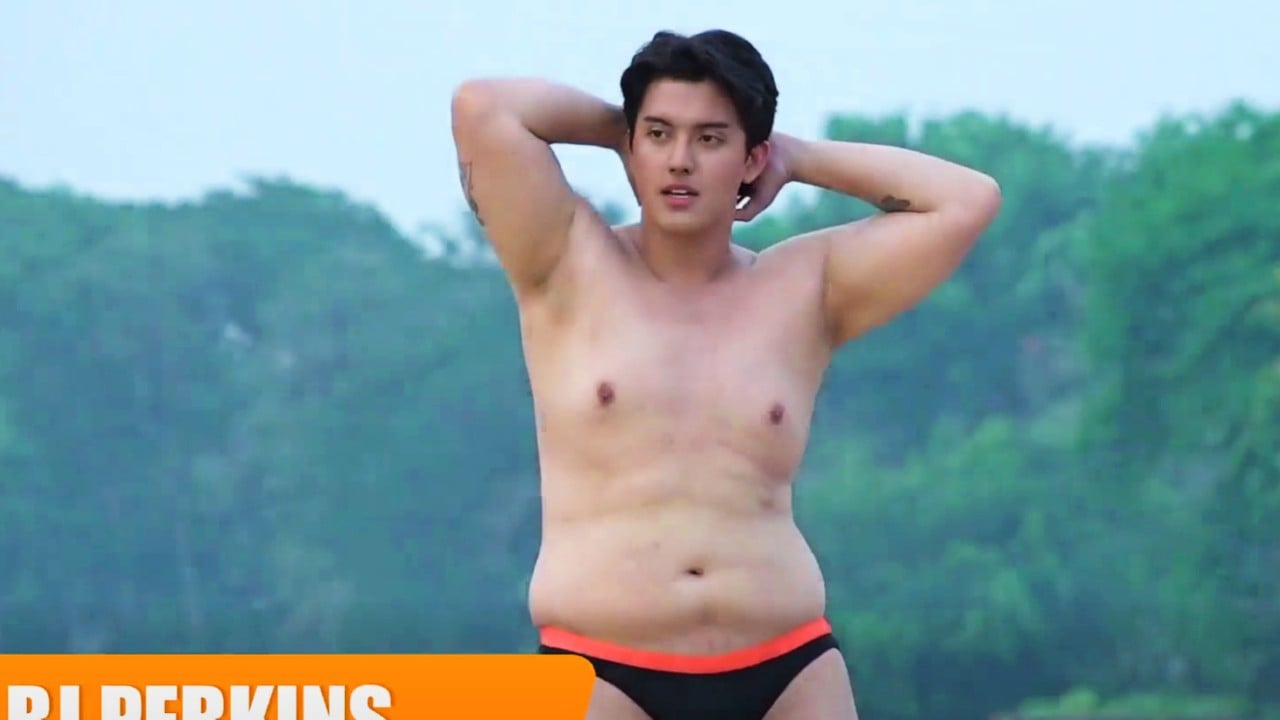
The internet is currently having a collective meltdown over a male pageant contestant in the Philippines who dared to walk a runway without a six-pack. The "viral swimsuit walk" sparked a predictable cycle of outrage: half the comments section is screaming about "unhealthy standards," while the other half is busy "body-shaming" a guy who probably has a better metabolic profile than the keyboard warriors attacking him.
The mainstream media is feeding you a lazy narrative. They want you to believe this is a binary choice between "toxic masculinity" and "body positivity." They are wrong. Both sides are missing the point. For an alternative perspective, check out: this related article.
We aren't witnessing a crisis of body image. We are witnessing the death of the Specialist.
The Myth of the Relatable Athlete
The "lazy consensus" suggests that seeing a "normal" body on a pageant stage is a win for mental health. It’s a lie. People don't tune into pageants, professional sports, or high-fashion runways to see their neighbor. They tune in to see the Apex. Further reporting on this trend has been published by The Hollywood Reporter.
When a contestant steps onto a stage in a swimsuit, they are entering a contract with the audience. That contract states: "I have done the work you are unwilling to do." Whether that work is aesthetic, intellectual, or performance-based, the value lies in its scarcity. By celebrating "relatability" in a space defined by "exceptionalism," we aren't being inclusive. We are being mediocre.
If you want relatability, go to a grocery store. If you want a pageant, you want the spectacle of the extreme.
Biology Doesn't Care About Your Trends
Let's talk about the actual mechanics of the "Dad Bod" vs. the "Chiseled Aesthetic."
In the fitness industry, we see a recurring error in logic regarding $Body Fat Percentage$. The general public assumes a low body fat percentage—specifically the sub-10% range required for visible abdominal definition—is "unnatural."
From a physiological standpoint, maintaining $BF < 10%$ for a male is certainly a stressor. It requires a precise manipulation of macronutrient ratios and a high level of discipline. However, the counter-argument—that carrying excess visceral fat is "natural" and therefore "healthy"—is a dangerous fallacy.
Imagine a scenario where we stop judging pageant contestants on their physical peaks. We aren't just lowering the bar for the contestants; we are lowering the bar for the viewer's expectations of excellence. The argument that "representation" fixes "body dysmorphia" is scientifically flimsy. Research on social comparison theory suggests that humans will always compare themselves to the visible standard. If you change the standard to "average," you don't cure the comparison; you just remove the inspiration.
The Filipino Pageant Industrial Complex
The Philippines treats pageantry like a blood sport. It is a multi-billion peso industry that functions as a legitimate path to social mobility. When a contestant goes viral for a "soft" physique, it isn't a fluke; it's a marketing pivot.
I’ve seen talent managers orchestrate "controversies" like this for years. They know that a perfect 10/10 physique is boring. It doesn't get clicks. But a "brave" contestant who challenges the norm? That generates "engagement," "shares," and "think pieces."
You are being played by the very industry you think you are "disrupting" with your supportive comments. The pageant organizers don't care about the contestant's health or your feelings about your own stomach. They care about the $CTR$ (Click-Through Rate) on the video of the walk.
The False Equality of Body Positivity
The "Body Positivity" movement has been hijacked. It started as a way to ensure people with genuine disabilities or unchangeable physical traits were treated with dignity. Now, it’s used as a shield for anyone who didn't feel like hitting the gym for three months before a national competition.
Professionalism is about meeting the requirements of the job.
- A pilot must have 20/20 corrected vision.
- A jockey must maintain a specific weight.
- A pageant contestant in a swimsuit segment must showcase physical preparation.
If you show up to a math competition and complain that the questions are too hard because you didn't study, nobody calls it "intellectual shaming." They call it being unprepared. Why do we treat the physical arts any differently?
Stop Asking if it's "Healthy" and Ask if it's "Good"
The most common question in the "People Also Ask" section of this debate is: Is it healthy to have a six-pack?
That is the wrong question. The right question is: Is it the contestant's job to be a visual outlier?
The answer is yes.
When we prioritize "comfort" over "discipline," we lose the very essence of why we watch these events. The thrill of the pageant—or the Olympics, or the concert stage—is the realization of human potential.
If we remove the pressure to perform, we remove the value of the performance.
The Actionable Truth
If you are a man looking at these viral clips and feeling better about your own lack of fitness, you are falling into a trap.
- Discipline is the only true currency. External validation from a "body positive" crowd is temporary and shallow.
- Aesthetics are a byproduct of function. Don't train for a six-pack to satisfy a judge. Train for the $Power-to-Weight Ratio$ that allows you to move through the world effectively.
- Ignore the "Relatability" Trap. In your career and your life, aim to be the person who cannot be easily replaced by a "relatable" version of yourself.
The crowd cheering for the "normal" body on stage will be the first to forget that contestant's name next week. They don't love his body; they love that his presence makes them feel less guilty about their own choices. That isn't support. That's a parasite-host relationship.
Stop looking for yourself on the stage. Start looking for the version of yourself that could actually win.
Hit the gym. Put down the chips. Stop asking the world to lower its standards so you can feel taller.
Standards exist for a reason. They give us something to reach for. Without them, we’re just a bunch of people standing in a room, waiting for a participation trophy that doesn't mean a damn thing.