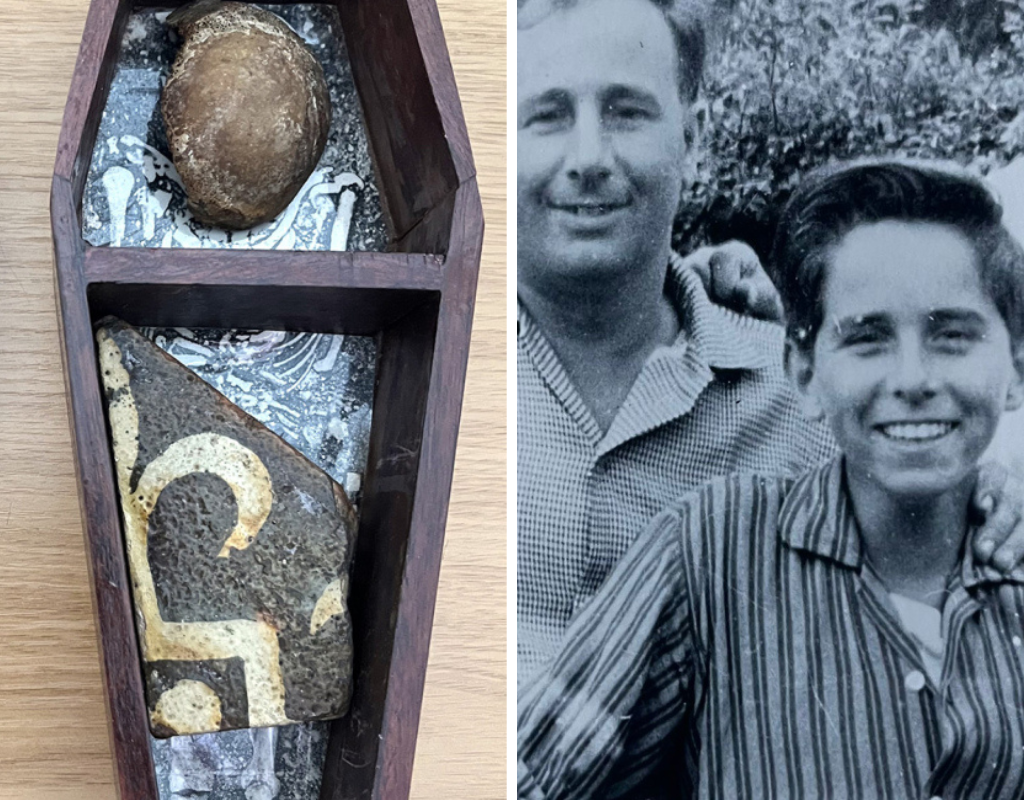
We are currently watching a bizarre cultural performance where modern people project their contemporary therapy-speak onto seventh-century and thirteenth-century corpses. The latest installment involves the ceremonial return of Abbot Thomas's kneecap. Stolen seven centuries ago from a grave at Jervaulx Abbey, this lonely piece of bone has been shipped back with all the solemn gravity of a state funeral. Politicians posed for photographs. Church officials offered pious platitudes about restitution. Academics nodded sagely about decolonizing the past.
It is theatre. And it is completely absurd.
The lazy consensus says this is a victory for justice. The lazy consensus argues that human remains belong where they were originally dropped, that desecration requires a matching act of modern penance, and that returning a stray patella heals some ancestral wound.
Let us look at the actual data. Abbot Thomas was a human being who died around the year 1200. He did not leave a will demanding his kneecap remain unmolested for eternity. He decomposed. His bones became objects of veneration, curiosity, and eventually, academic or souvenir hoarding. The person who took that bone in the nineteenth or twentieth century—or whenever the extraction actually occurred—was operating under a completely different set of cultural rules regarding antiquity and relic collection.
By treating this as a human rights violation, we are not respecting history. We are sanitizing it. We are rewriting the past to make ourselves feel morally superior in the present.
The Fetishization of Dirt
The core fallacy behind the repatriation of ancient bones is the belief that dirt has a proprietary claim on calcium phosphate.
We act as though human remains possess a continuous, sentient awareness of geography. We believe Abbot Thomas's knee cares whether it sits in a cardboard box in a university basement, a glass case in a regional museum, or six feet under the Yorkshire dirt. It does not. Bone is structural material. Once the soft tissue is gone, what remains is an archive.
When institutions hand over relics under public pressure, they are rarely doing it for science or ethics. They are doing it for risk mitigation. Public relations departments look at a repatriation request and calculate the cost of bad press versus the utility of a bone nobody was looking at anyway.
I have spent years watching cultural institutions buckle under the weight of retroactive moral panic. I have seen curators hand over centuries-old artifacts to committees that have zero lineage connection to the dead, simply because it is easier to surrender a collection than to explain provenance to a mob on social media.
This is not preservation. It is abandonment disguised as virtue.
Why Relics Matter More Than Dirt
Let us look at what a relic actually is. In medieval terms, bodies were never meant to stay in one place. Saints were dismembered. Their fingers, skulls, and ribs were distributed across Europe as diplomatic gifts, spiritual currency, and architectural anchors. Cathedrals were built around stolen bones.
The theft of Abbot Thomas’s kneecap is part of a centuries-old tradition of bodily fragmentation. To pretend that this single bone was stolen in the modern sense—like a television set or a car—is a fundamental category error. You cannot steal something from a person who has been dead for eight hundred years using property laws invented for the industrial revolution.
When we lock everything away in a local churchyard to satisfy modern sentimentalism, we destroy the physical record of how our ancestors actually interacted with the dead. Medieval people did not view graves as static, untouchable sanctuaries. They viewed them as quarries of power and memory.
By burying the debate alongside the bone, we learn nothing.
The Real Cost of Performative Ethics
Every time a museum hands back an unprovenanced bone to appease modern sensibilities, two things happen.
First, research stops. Once human remains enter the repatriation pipeline, destructive analysis, DNA sequencing, isotopic testing, and pathological examination grind to a halt. We trade hard scientific data for a warm, fuzzy headline in the local newspaper. We choose ignorance because ignorance feels kinder.
Second, we create a dangerous precedent where history is judged exclusively by the standards of an iPhone-wielding generation. If we apply current ethical frameworks retroactively to the Middle Ages, we have to tear down half the cathedrals in Europe, return every piece of Roman marble to Italy, and empty the Vatican archives.
History is messy, violent, and transactional. It was built on displacement, conquest, and the recycling of material culture. Pretending otherwise doesn't fix the past. It blinds us to the present.
Leave the bones where they can teach us something, or keep them locked away in archives where researchers can map the diseases, diets, and migrations of the people who built our world. But stop pretending that shipping a seven-century-old kneecap back to Yorkshire is going to save anyone’s soul.
Your guilt is not a historical preservation strategy.
Stop burying the evidence.