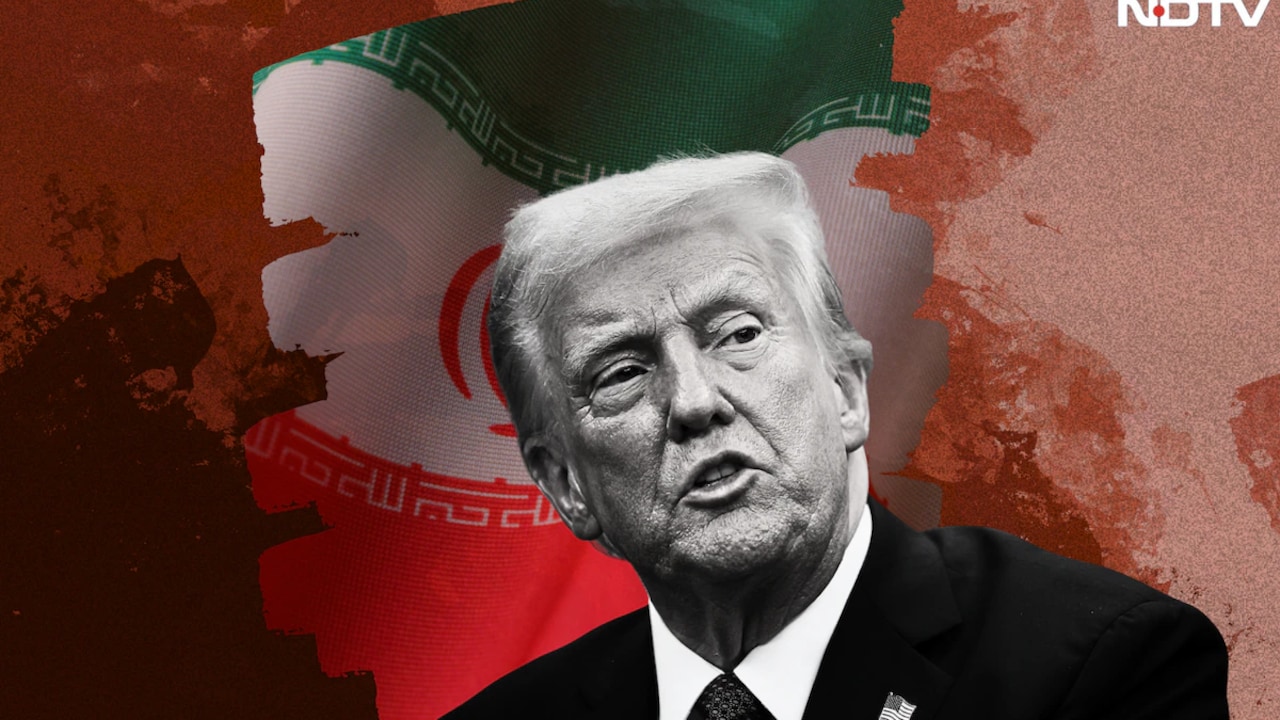
Washington pundits love a binary choice. Bomb Fordow or fold. Launch the Tomahawks or lose the Persian Gulf.
That framing is lazy, outdated, and entirely detached from how modern coercive statecraft actually operates.
Every foreign policy analyst in the Beltway is currently recycling the same tired playbook from 2003 and 2019, debating whether Donald Trump’s post-midterm window leaves him boxed in with "limited military options" against Tehran. They count carrier strike groups in the Arabian Sea. They measure the blast radius of GBU-57 Massive Ordnance Penetrators. They treat a kinetic bombing campaign as the only metric of American resolve.
They are asking the wrong question.
While think-tank fellows argue over sortie rates and bunker-buster physics, the real war against the Islamic Republic is being fought—and won—without dropping a single 30,000-pound bomb on Natanz. If you still believe the White House’s primary dilemma is "to bomb or not to bomb," you are looking at the decoy while the heist happens in plain sight.
The Myth of the "Limited Options" Trap
Let’s dismantle the core premise of the conventional wisdom. The standard DC consensus argues that once the domestic political pressure of the midterm elections clears, a president faces a narrowing corridor: either accept a threshold nuclear Iran or initiate a catastrophic regional war that spikes oil to $150 a barrel and torpedoes the global economy.
I have sat in enough defense planning briefings and risk-modeling rooms to know this binary is a phantom. Decision-makers who fall for the "bomb or bust" trap end up burning billions in operational readiness while achieving zero strategic permanence.
Airstrikes do not erase knowledge. You can collapse every centrifuge hall buried beneath the Zagros Mountains, and Iranian nuclear scientists will still possess the blueprints, the metallurgy expertise, and the enrichment math in their heads. Bombing buys you eighteen to twenty-four months of delay at the cost of uniting an otherwise fractured Iranian populace behind a besieged regime. Even worse, it hands Tehran the exact justification it needs to sprint openly for a weapon, kick out every remaining international monitor, and turn the Strait of Hormuz into a shooting gallery.
Trump knows this. His instincts—transactional, risk-averse toward endless ground entanglements, yet ruthless when applying asymmetric pressure—are fundamentally misaligned with the neoconservative fantasy of a "clean" surgical air campaign.
The notion that his options are "limited" confuses a lack of appetite for a shooting war with a lack of offensive capability.
Why Kinetic Strikes Are the Weakest Card in the Deck
To understand why bombing is actually the inferior option, you have to look at the mechanics of modern deterrence and economic strangulation. In military doctrine, coercive diplomacy relies on altering an adversary’s cost-benefit calculus without triggering their existential survival instinct. Once you cross the kinetic threshold with a massive air campaign, you destroy the bargaining table. The adversary stops calculating economic pain and starts calculating regime survival.
Consider the actual vulnerabilities of the Islamic Republic right now:
- Currency Collapse and Hyperinflation: The Iranian rial is not merely weak; it is structurally broken. Domestic purchasing power has evaporated, turning basic staples into luxury goods for the middle class.
- Energy Infrastructure Fragility: Despite sitting on massive oil and gas reserves, Iran suffers from chronic domestic power blackouts and gasoline shortages due to decades of deferred maintenance, corruption, and sanctions-induced parts starvation.
- Proxy Overextension: Tehran’s "Axis of Resistance" has absorbed devastating blows to its command structures, supply lines, and financial networks. Maintaining those proxy payrolls drains hard currency that the regime desperately needs at home.
- Succession Anxiety: The supreme leadership faces an imminent, high-stakes generational transition. Internal factions within the Islamic Revolutionary Guard Corps (IRGC) are jockeying for post-transition economic control, making the regime brittle under targeted pressure.
Dropping bombs on military bases solves none of these problems for Washington—and actually solves one massive problem for Tehran by giving the IRGC a foreign invader to blame for decades of domestic mismanagement.
The Four Pillars of the Non-Kinetic Chokehold
Instead of playing into Tehran’s preferred asymmetric battlefield—where cheap drones, ballistic missiles, and maritime mines can bleed Western navies—the true strategic play relies on four interlocking levers that inflict far more permanent damage than airstrikes ever could.
1. Secondary Financial Quarantine
Direct sanctions are old news; Iranian front companies have spent forty years learning how to launder money through shell entities in the Gulf, East Asia, and Europe. The real kill switch is aggressive secondary enforcement targeting the clearinghouses, maritime insurers, and port operators that touch Iranian crude. When you threaten major foreign banks and refineries with immediate exclusion from the US dollar clearing system, compliance departments do the Pentagon’s job for free. Oil exports plummet without a single shot fired.
2. Cyber and Industrial Sabotage
Why risk American pilots over heavily defended airspace when malicious code can quietly wreck centrifuge cascades, disrupt fuel distribution networks, and blind radar installations? Historical precedents—from the Stuxnet operation that physically destroyed centrifuges at Natanz to mysterious explosions and grid failures across Iranian industrial hubs—prove that covert sabotage degrades capability while maintaining plausible deniability. Tehran cannot rally the United Nations or justify a regional war over a "software glitch" or an "industrial accident."
3. Supply-Chain Interdiction at the Micro-Level
Modern missile and nuclear programs do not run on raw steel alone; they require specialized maraging steel, high-precision CNC machine tools, carbon fiber, and specific chemical precursors. By choking off the illicit procurement networks that smuggle dual-use components into Iran, intelligence agencies force Iranian engineers to rely on inferior domestic substitutes. That leads to higher failure rates on the test stand, delayed timelines, and spiraling production costs.
4. Diplomatic Isolation via Regional Architecture
The deepest strategic blow to Tehran is not an American aircraft carrier; it is an integrated regional security and economic framework connecting Israel, Saudi Arabia, the UAE, and other Gulf states. When Iran’s neighbors share early-warning radar data, coordinate air defenses, and build trade corridors that bypass Iranian waters entirely, Tehran is boxed into permanent geopolitical irrelevance.
Answering the Questions Beltway Pundits Get Wrong
When readers search for what happens next between Washington and Tehran, the most common questions are built on flawed premises. Let’s break them down honestly.
Can airstrikes permanently stop Iran’s nuclear program?
No. Anyone telling you otherwise is selling you a fantasy. Military force can destroy physical infrastructure, but it cannot bomb away institutional knowledge. Unless you are prepared to invade and occupy a mountainous country of nearly 90 million people—a non-starter for any US administration—airstrikes are strictly a temporary delay mechanism.
Does avoiding a bombing campaign make the US look weak?
Only to people who confuse noise with power. Look at the historical track record of major geopolitical shifts: the Soviet Union collapsed without a single NATO tank crossing the Elbe, crushed by economic stagnation, an unsustainable arms race, and internal illegitimacy. True strength is forcing your adversary to bleed out economically while you keep your own forces intact and your economy humming.
What if Iran crosses the nuclear threshold anyway?
This is the real risk—and the strongest counterargument to a purely non-kinetic strategy. Critics of the shadow-war approach rightly point out that economic strangulation and covert sabotage take time, whereas a sprint to enrich weapons-grade uranium at an underground facility like Fordow could happen in weeks. If intelligence confirms an active, irreversible breakout toward a deliverable warhead, the non-kinetic clock runs out. That is the genuine downside of holding fire: you gamble that internal pressure and covert friction will break the regime’s will before its engineers cross the finish line.
The Strategic Reality Nobody Wants to Admit
Here is the uncomfortable truth that ruins both the hawkish fantasy of a quick victory and the dovish fantasy of a grand diplomatic bargain: there is no "clean" resolution to the Iran crisis.
Trump’s post-midterm posture is not defined by a lack of options. It is defined by a refusal to choose between two bad conventional choices when an asymmetric war of attrition works heavily in Washington’s favor. The United States has the world’s largest economy, energy independence, reserve currency dominance, and unmatched cyber and intelligence reach. Iran has a collapsing currency, an aging leadership, an alienated youth population, and an economy dependent on illicit oil smuggling.
In a contest of endurance, you do not trade your structural advantages for a coin-flip kinetic escalation that spikes global inflation and traps American troops in another Middle Eastern quagmire.
Stop watching the flight paths of B-2 bombers to figure out who is winning this conflict. Watch the exchange rate of the rial in Tehran, the tanker tracking data in the Strait of Malacca, and the sudden, unexplained blackouts across Iran’s industrial grid. The war is already underway, and the bombs aren't even loaded.


