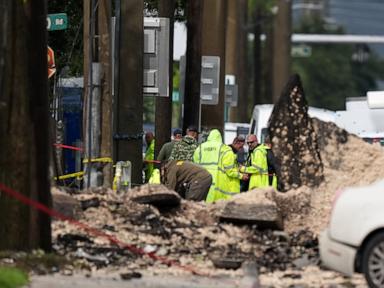
Every time a jet goes down, the media plays the exact same script.
First come the tragic casualty counts. Next comes the breathless, hour-by-hour obsession with the "black box." When investigators pulled the cockpit voice recorder from the wreckage of that Florida jet crash that killed nine people, the headlines practically celebrated. We found it. Now we will know what happened. Discover more on a similar topic: this related article.
That narrative is comfortable, dramatic, and dangerously misleading.
Treating a cockpit voice recorder (CVR) like a crystal ball that solves aviation tragedies is the laziest consensus in modern journalism. It creates an illusion of certainty where none exists. Worse, it trains the public—and sometimes even seasoned industry watchers—to look for a single, dramatic human failure in the final seconds of a flight while ignoring the systemic, silent rot that actually brought the aircraft down months or years earlier. Additional analysis by USA Today highlights related views on the subject.
The Illusion of the Smoking Gun
You hear a pilot gasp on an audio loop. You hear a master caution chime. You hear the crunch of metal or the sudden hiss of static. To a newsroom editor, that is gold. To an experienced accident investigator, it is merely the last 30 seconds of a story that started long before the engines ever spooled up.
A cockpit voice recorder does not record why a maintenance supervisor signed off on a fatigued component three inspections ago. It does not capture the corporate pressure exerted on a charter crew to fly into deteriorating weather because a high-paying client had a meeting in Miami. It certainly does not record the subtle aerodynamic compromises baked into an aging airframe during a rushed avionics upgrade.
I have sat in briefing rooms where legal teams and PR flacks tried to pin an entire multi-million-dollar hull loss on a pilot's vocal inflection during a high-workload approach. They wanted a neat, tidy villain. A dead pilot cannot defend their tone of voice, and an audio clip makes for an easy scapegoat.
When you hyper-focus on the CVR, you mistake symptoms for root causes. A pilot sounding confused on tape is not the cause of a crash; the cause is whatever system, training gap, or mechanical failure put an experienced aviator into a position where their mental model of the aircraft completely shattered.
What a Cockpit Voice Recorder Actually Captures (And What It Misses)
Let us strip away the Hollywood mythology. The "black box" is actually painted bright international orange to aid recovery, and in modern business and commercial jets, it is usually two distinct units—or one combined unit—housed in the empennage, the tail section most likely to survive an impact.
- The Flight Data Recorder (FDR): Tracks physical parameters—airspeed, altitude, vertical acceleration, control surface positions, engine thrust, and flap settings.
- The Cockpit Voice Recorder (CVR): Captures audio from the pilots' headsets, the cockpit area microphone, and radio transmissions.
Here is the dirty secret the general public rarely hears: legacy CVRs only record on a two-hour loop.
Read that again. Under historical Federal Aviation Administration (FAA) standards—rules that the National Transportation Safety Board (NTSB) has fought tooth and nail for years to upgrade to 25-hour recording minimums—if a flight lasts three hours, the first hour is wiped clean. If an aircraft sits on the tarmac with electrical power applied after an incident, the loop keeps running and erases the accident itself.
Even when the audio survives intact, the cockpit area microphone is an indiscriminate beast. In a noisy flight deck during an emergency, turbine whine, wind rush, rattling trim wheels, and blaring acoustic warnings can turn critical verbal exchanges into unintelligible mush. Investigators at the NTSB audio laboratory spend weeks using spectral analysis just to separate a pilot's voice from the sound of a failing hydraulic pump.
And what about aircraft size and operational tier? Depending on the exact weight, seating configuration, and the regulatory part under which a jet operates—whether scheduled commercial service under Part 121 or private/charter operations under Part 91 or Part 135—the data recording requirements vary wildly. Many private and charter jets operating out of Florida airports carry older-generation recorders with a fraction of the parameters required on a Boeing 737 or Airbus A320. Recovering the box is step one. Discovering the box only recorded two hours of muffled audio and eleven basic flight parameters is a reality investigators face far too often.
The "Human Error" Trap
When the preliminary NTSB report eventually drops—usually within two to three weeks of a crash like the one in Florida—the public expects answers. They will not get them. A preliminary report only states verified facts: weather conditions, flight plan, wreckage distribution, and whether the CVR and FDR were recovered and sent to Washington, D.C., for readout.
The final report takes 12 to 24 months. By the time it is published, the news cycle has moved on a hundred times over.
Because the public only pays attention during the first 72 hours, the early leaks or speculation surrounding the voice recorder become permanent truth in the public mind. And almost inevitably, that early speculation leans toward "pilot error."
The aviation industry loves the phrase "pilot error" because it protects everyone else.
- Manufacturers love it because it means the airframe and software are blameless.
- Operators love it because it shifts liability away from scheduling practices and maintenance budgets.
- Regulators love it because it implies existing oversight rules are sufficient, provided the humans follow them.
In reality, pure, unprovoked pilot negligence is exceedingly rare in turbine aviation. Most fatal accidents are the result of organizational accidents, a concept pioneered by psychologist James Reason and famously illustrated by his "Swiss Cheese Model." Every layer of defense—design, maintenance, training, regulation, cockpit procedures—has holes. A crash happens only when the holes align momentarily, allowing a trajectory of failure to pass straight through.
The voice recorder sits right at the final slice of cheese. By the time the CVR captures a crisis, four or five other layers have already failed silently.
Why Florida Charter and Private Aviation Carries Unique Pressures
Look at the geography of this tragedy. Florida is the undisputed capital of private, corporate, and on-demand charter aviation in the United States. The sheer volume of turbine traffic moving between Teterboro, Opa-locka, Naples, Boca Raton, and Fort Lauderdale Executive creates an operational tempo unlike anywhere else in the world.
With high volume comes intense commercial friction.
In scheduled airline operations (Part 121), dispatchers share legal operational control with the captain. If the weather is garbage or a maintenance item is sketchy, an airline captain can delay or cancel a flight without worrying about losing their job or offending a billionaire sitting ten feet behind them.
In private and on-demand charter flying (Part 91 and Part 135), the dynamic changes completely. The passengers are often the owners of the airplane or high-value repeat clients. They are standing right there on the ramp. The subtle, unspoken pressure to "get the job done" is immense.
Furthermore, Florida's convective weather—rapidly building cumulonimbus towers, microbursts, and sudden visibility drops—leaves zero margin for poor energy management or rushed approaches. When you combine high-performance jets, tight turnarounds, complex airspace, and the economic pressure of private aviation, you create an environment where small compromises compound rapidly.
None of that economic pressure shows up on a CVR transcript. You will not hear the chief pilot's subtle warning from three weeks prior about "keeping clients happy." You will only hear two pilots trying to fly an airplane out of a corner they were backed into long before takeoff.
Dismantling the Myths: What People Actually Need to Know
If you want to understand what really happens after a fatal jet crash, stop reading sensationalist headlines about black box recoveries and ask sharper questions.
"Does recovering the voice recorder mean investigators know what caused the crash?"
No. Recovering the CVR only means investigators have a better chance of reconstructing the sequence of events inside the cockpit. Knowing what happened (e.g., the aircraft rolled steeply to the left at 800 feet) is completely different from knowing why it happened (e.g., an asymmetric flap deployment caused by a worn actuator or an uncommanded autopilot trim runaway).
"Why does it take over a year to release the cockpit audio?"
First, federal law prohibits the NTSB from ever releasing the actual audio recording to the public—only a written transcript is released, and only after a specialized group of investigators, manufacturers, and pilot union representatives agree on every single word. Second, audio without context is toxic. Releasing a transcript before matching it millisecond-by-millisecond against radar tracks, engine teardown data, metallurgical analysis, and maintenance logs would spark baseless lawsuits and ruin reputations based on incomplete facts.
"Are private and charter jets as safe as commercial airlines?"
Statistically, no. While modern business jets are built to extraordinary engineering standards, the regulatory framework governing private Part 91 flights and smaller Part 135 charter operators is far less stringent than Part 121 commercial airlines. Differences in crew rest rules, simulator training frequency, dispatch oversight, and mandatory safety management systems (SMS) create a measurable safety gap.
The Nuance Critics Miss: Why We Still Need Better Recorders
Attacking the media's obsession with the CVR does not mean recorders are useless. In fact, my argument is the exact opposite: the recorders we currently rely on are dangerously inadequate.
For over a decade, the NTSB has pushed the FAA to mandate Cockpit Image Recorders—ruggedized video cameras mounted in the flight deck that show instrument displays, switch positions, and crew hand movements.
Think about how absurd our current standard is. If an engine fails and a pilot accidentally shuts down the good engine in the heat of the moment—a classic, documented failure mode—a voice recorder only captures them saying, "Shutting down number two." It cannot show whether their hand reached for the wrong fuel cutoff switch, whether glare washed out a display screen, or whether a warning light failed to illuminate.
Yet pilot unions and industry lobbying groups have fought cockpit video for years, citing privacy concerns and fears that footage would leak to the press or be used punitively by management.
They have a point about leaks. In an era where sensationalism drives clicks, keeping sensitive crash footage off the internet is notoriously difficult. However, protecting crew privacy is a solvable legal and technical problem—encryption and strict statutory bans on public release already work for CVR audio. Refusing to record visual data in a modern cockpit because of PR fears is like a surgeon refusing to use an X-ray because they do not like how the photo looks.
How to Read the Next Aviation Crash Report Like an Insider
When the next headline breaks about a recovered recorder from a fatal crash, ignore the drama and look for three specific indicators in the subsequent NTSB updates:
- The Teardown Location: Pay attention to where the engines and flight controls are sent. If engines are shipped back to the manufacturer's facility under NTSB supervision, investigators suspect a powerplant anomaly, fuel starvation, or bird strike. If the wreckage goes to a secure hangar for full layout reconstruction, they are looking at structural failure, flight control jamming, or in-flight breakup.
- The Maintenance Log Audit: Watch for mentions of recent heavy maintenance, avionics installations, or deferred maintenance items (Minimum Equipment List entries). Crashes disproportionately cluster shortly after an aircraft comes out of a major inspection.
- The Training and Pairing History: Look at how many hours the captain and first officer had flown together, and how many hours they had in that specific make and model. High total flight time means very little if a pilot has fewer than 50 hours in a complex, high-speed jet with unfamiliar avionics.
The voice recorder recovered in Florida will give grieving families and investigators a window into the final moments of nine lives. It deserves respect, meticulous analysis, and somber attention.
What it does not deserve is to be treated as the whole truth. Real aviation safety is not forged in the dramatic final seconds captured on an orange box in the mud. It is forged in the boring, unglamorous, expensive decisions made on the ground when nobody is recording.


