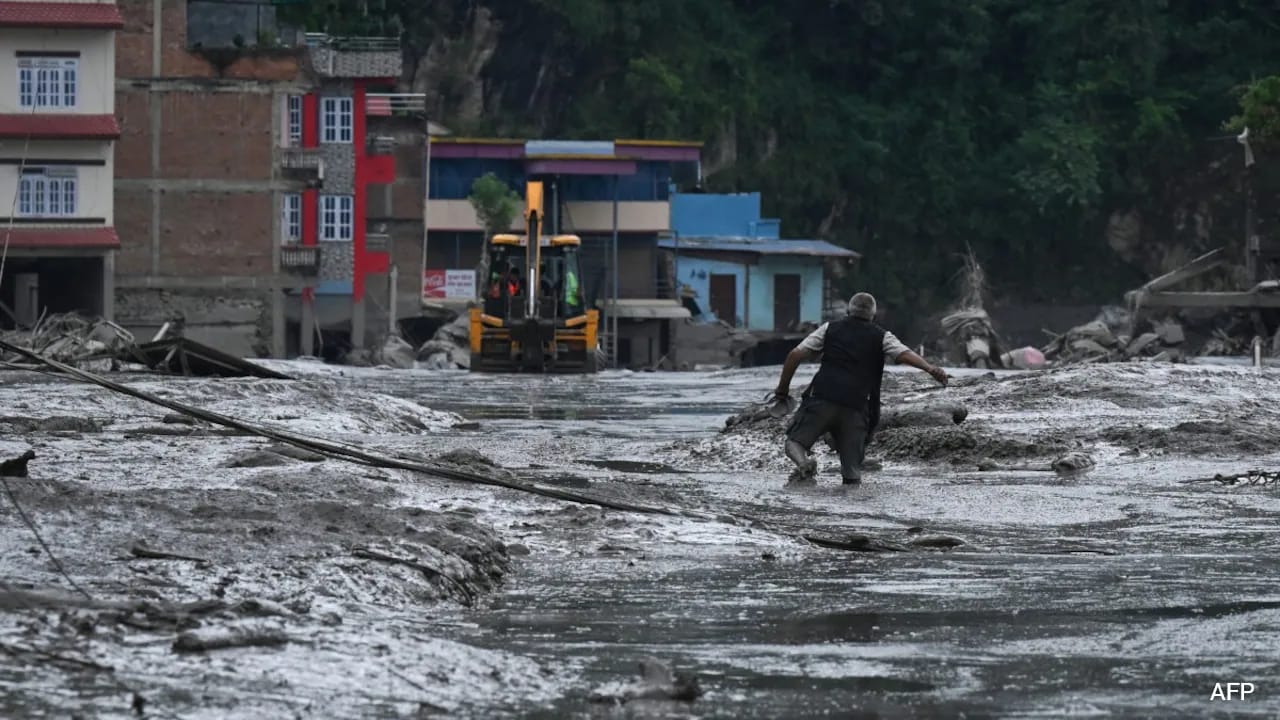
The headlines flash the standard panic. Two hundred and eighty-eight Indians uncontactable. Twenty-one rescued. The Ministry of External Affairs sets up a helpline, diplomats scramble, and prayer chains light up social media.
It is the predictable script of disaster reporting. A sudden flash flood hits the Bhotekoshi river basin near the Nepal-China border, communication towers go dark, and New Delhi updates its tally like an accountant of tragedy. You might also find this connected coverage insightful: Why Keiko Fujimori Will Never Win And Why That Makes Her Dangerous.
Everyone wants to talk about the missing pilgrims on the Kailash Mansarovar route and the stranded workers at the Trishuli power project. Everyone wants to point fingers at uncooperative weather patterns or bad luck in the Himalayas.
They are asking the wrong questions. As highlighted in latest coverage by The Guardian, the implications are worth noting.
This is not a natural disaster story. It is a systemic engineering and geopolitical failure disguised as an act of God. We do not have a rescue crisis; we have an institutional refusal to admit that building massive infrastructure and pushing unregulated mass tourism into active seismic fault lines is a slow-motion homicide pact.
The Myth of the Unforeseeable Mountain
Every time a Himalayan valley flushes itself clean of human intrusion, experts hide behind the same excuse. They call it a freak cloudburst. They talk about glacial lake outburst floods as if they are lightning strikes—random, unpredictable, and impossible to plan for.
This is nonsense.
I have watched state planners and private contractors treat fragile gorges as infinite profit margins for decades. They look at the steep, unstable topography of Rasuwa and the Trishuli corridor and see cheap labor, easy hydropower, and high-altitude adventure tourism. They cut tunnels into unstable rock faces, crowd hundreds of workers into vulnerable riverbanks, and run pilgrimage caravans through narrow defiles that have been carving themselves out of the earth for millions of years.
When the inevitable happens—when a wall of water, mud, and debris tears down the valley—the state acts shocked.
Let us be precise. A communication blackout is not an act of God; it is the direct result of putting critical infrastructure in a hydraulic death zone without redundant, hardened communication relays. If you place seventy-three workers on a major hydro project right next to a volatile riverbed without an isolated, satellite-backed emergency alert system, you have not built a project. You have built a trap.
The Tourism Industrial Complex Does Not Care About Your Safety
Look closely at the demographics of the missing. They are workers from West Bengal, corporate-contracted engineers, and pilgrims from Tamil Nadu moving through high-risk terrain managed by commercial tour operators who treat safety briefings as a bureaucratic checkbox.
The lazy consensus says we need better coordination between Kathmandu and New Delhi during crises. Sure, better coordination helps. But focusing purely on post-disaster rescue operations is like praising a hospital for its morgue management while ignoring the cholera in the water supply.
Imagine a scenario where tour operators and infrastructure developers were held personally and financially liable for every single life lost to predictable seasonal hazards. Suddenly, those cut-rate pilgrimage packages through border ravines would vanish. Suddenly, hydro projects would face mandatory real-time hydrological monitoring and automated evacuation triggers that do not rely on a cell tower staying upright during a mudslide.
Instead, we rely on helpline numbers and reactive diplomacy. The Ministry of External Affairs opens a 24x7 control room because that is what governments do when they are caught flat-footed. It creates an illusion of action while the structural rot remains untouched.
Dismantling the Rescue Theatre
We need to stop treating these events as anomalies to be managed with temporary shelters and sympathy statements.
- Classify High-Altitude Corridors as Permanent Danger Zones: Stop issuing mass permits for fragile eco-regions during peak monsoon windows. The mountains do not care about your spiritual calendar.
- Mandate Off-Grid Infrastructure Redundancy: If a corporation wants to extract energy from a Himalayan gorge, they must fund hardened, satellite-linked emergency evacuation protocols that function independently of local cellular grids.
- Criminalize Negligence in Disaster Planning: Treat the absence of functional early-warning systems on commercial projects not as a regulatory oversight, but as criminal endangerment.
Until we stop hiding behind the word tragedy, the mountains will keep collecting the bill for our collective arrogance. Stop asking how many are missing. Ask why we sent them there in the first place.