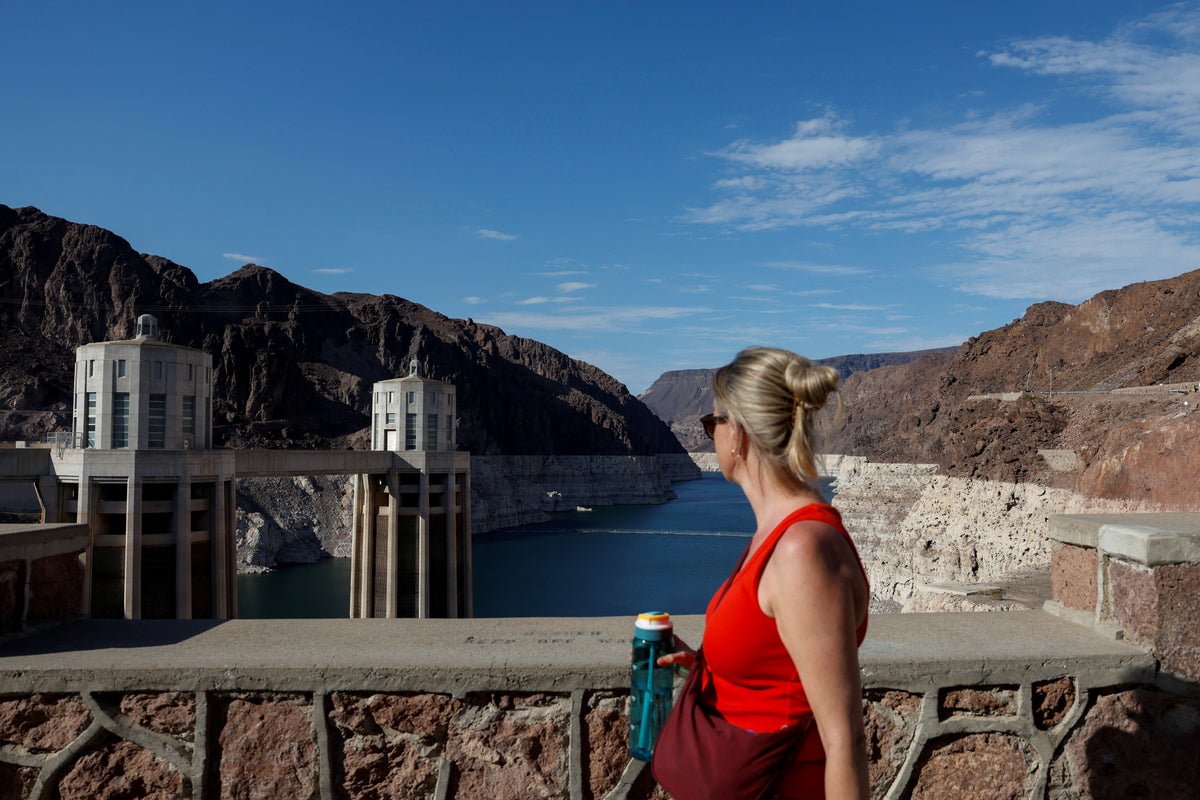
Every summer, the headline returns like clockwork. Lake Mead water has hit a new historical low with no signs of improvement. The media wheels start spinning. Panic porn floods the screens. Armchair hydrologists dust off their credentials and warn that Las Vegas is seconds away from turning into a dust bowl, Phoenix will dry up like an old sponge, and the entire American Southwest is headed for a Mad Max sequel.
It is lazy, exhausted, and fundamentally wrong.
I have spent years watching regional water managers panic over bathtub rings while ignoring the structural plumbing of the entire Colorado River basin. The lazy consensus says that a dropping water level equals an impending apocalypse. The reality is far more clinical, less dramatic, and radically more efficient than the doomsayers want to admit. Lake Mead is not failing. It is shrinking because we are finally being forced to stop treating an arid desert like a Midwestern golf course, and that is the best thing that could happen to it.
The Myth of the Static Reservoir
Let us start with basic physics and engineering history. Lake Mead was never meant to be a permanent, stable inland sea. It is a massive concrete-and-earth bucket designed to capture spring snowmelt and smooth out the violent boom-and-bust hydrology of the Colorado River.
When Hoover Dam went online in the 1930s, planners looked at a historically wet twentieth century and used those artificially inflated numbers as the baseline for the Law of the River. They carved up more water than the river actually produced on average. For nearly a century, we treated a line of credit like a checking account, overdrawing year after year and acting surprised when the statements turned red.
A lower reservoir level is not a malfunction. It is a correction.
When people hyperventilate about historical lows, they are mourning a peak capacity that was born out of statistical anomalies and political fantasy. Imagine a scenario where a corporate CFO budgets based on a single blowout sales quarter from twenty years ago, and then screams that the company is collapsing when revenues normalize to historical averages. That is what every panic piece about Lake Mead looks like. The reservoir is finding its true equilibrium point based on actual, modern precipitation and evaporation realities.
The Las Vegas Paradox That Drives Environmentalists Crazy
If you want to understand how broken the mainstream narrative is, look at Las Vegas.
The standard storyline paints the city as a water-guzzling villain neon signs sucking the Colorado River dry while tourists splash in mega-resort pools. I have walked through the backrooms of Southern Nevada water authorities, and the truth is the exact opposite. Las Vegas is actually a masterclass in urban conservation.
While the population of the Las Vegas Valley exploded by over two million people over the last few decades, its total consumptive water use actually went down. Read that again. More people, less water diverted.
How? Because Southern Nevada built one of the most ruthless, closed-loop urban water systems on the planet. Indoor water use in Las Vegas is essentially recycled. Sinks, showers, and washing machines drain into municipal treatment plants, get purified to near-drinking standards, and are piped right back into Lake Mead via the Las Vegas Wash. Every drop used indoors goes back to the system.
The real enemy in the basin has never been the glittering Strip. It is flood-irrigation agriculture in the desert, propped up by nineteenth-century water rights that reward waste. Under the prior appropriation doctrine, farmers use the "use it or lose it" rule, dumping millions of acre-feet of water onto thirsty crops grown in the blazing sun simply to preserve their legal allocations for the next year.
Blaming Las Vegas for Lake Mead dropping is like blaming a guy sipping a straw for draining an Olympic swimming pool while a massive hose runs unchecked next to him.
The Dead Pool Fantasy
Let us address the buzzword that every journalist loves to drop into their copy: the dead pool.
The narrative goes that once Lake Mead drops below elevation 895 feet, water can no longer flow through the Hoover Dam outlet works, the turbines stop spinning, hydroelectric power generation flatlines, and the taps run dry for millions downstream.
It makes for great Hollywood fiction, but it ignores the actual engineering reality of the modern infrastructure investments made in the basin.
Back in 2020, as the water levels kept dropping, the Southern Nevada Water Authority finished building a massive third intake tunnel deep beneath the lake bed. It sits at elevation 860 feet. Even if the lake drops past the historic gravity-flow limits, that deep-straw intake can pull water out of the reservoir long before the mythical dead pool is reached.
Furthermore, the federal government and the basin states have spent the last few years hammering out mandatory cuts. Arizona, California, and Nevada have agreed to leave hundreds of thousands of acre-feet of water in the lake voluntarily. Mother Nature is not doing this alone; human policy adjustments are actively stabilizing the drop. The system is adapting precisely because the crisis forces hard choices that politicians previously lacked the spine to make.
What Real Water Efficiency Looks Like
If you want to fix the Colorado River basin, stop listening to people who suggest painting lawns green or taking shorter showers. Those are psychological pacifiers designed to make citizens feel virtuous while moving a microscopic fraction of the needle.
Real efficiency requires structural, cold-blooded changes:
- Priced-Based Rationality: Water must be priced to reflect its true scarcity. When low-value, water-intensive crops like alfalfa are heavily subsidized and grown in the middle of a desert for export to foreign livestock, the market is broken.
- Systemic Infrastructure Overhaul: Open-air irrigation canals lose massive percentages of their water to evaporation and seepage every single day. Lining those canals or piping them underground saves more water than every household conservation campaign combined.
- Abandoning Bad Pacts: The 1922 Colorado River Compact split water between the Upper Basin and Lower Basin based on optimistic flow estimates that haven't existed for decades. Re-allocating those quotas based on actual scientific data rather than political clout is the only long-term fix.
The hand-wringing over Lake Mead’s historical lows misses the forest for the trees. The water crisis is not a sudden catastrophe; it is a long-overdue reckoning with bad math. The drop in water levels is the alarm clock ringing to wake us up from a century-long delusion.
Let the reservoir find its baseline. Stop trying to engineer a bailout for an unsustainable status quo. The panic ends the moment we accept that water in the desert is a finite commodity, not an infinite right.