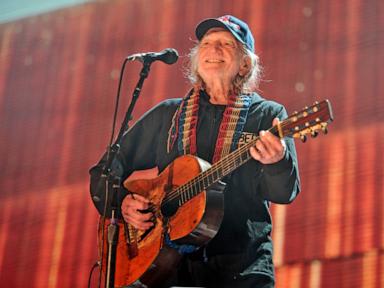
Mainstream entertainment journalism has a predictable, suffocating habit whenever a cultural icon crosses ninety. They wrap the subject in cotton wool, dim the lights, and turn every conversation into a soft-focus eulogy.
The coverage surrounding Willie Nelson’s recent press tour—specifically the interviews touching on his near-death experiences, his lifelong bond with Dolly Parton, his vocal backing of Texas state representative James Talarico, and his book The Last Leaf—falls straight into that trap. Reviewers and profile writers want you to read these moments as a charming, sentimental Victory Lap. They frame a brush with mortality as a cute anecdote, his friendship with Parton as mere country-music royalty fan service, and his political commentary as the harmless eccentricity of an elder statesman. Discover more on a related topic: this related article.
That consensus is lazy. Worse, it fundamentally misunderstands how cultural power actually operates at the end of a historic career.
I have spent two decades watching legacy artists, publicists, and major publishing houses bungle the final act of massive careers. They almost always default to safe, museum-grade nostalgia because nostalgia sells predictable units without offending anyone. Willie Nelson is doing the exact opposite. When you strip away the folksy delivery and the warm lighting, what Nelson is executing right now is a masterclass in unsentimental leverage, strategic coalition-building, and stark mortality management. Additional journalism by Entertainment Weekly highlights comparable perspectives on this issue.
The Myth of the Gentle Near-Death Experience
The standard media narrative treats a celebrity’s near-death experience as a spiritual Hallmark card. The subject stares into the abyss, sees a bright light, and returns to tell everyone to love one another.
Read between the lines of how Nelson actually discusses his health scares and physical fragility, and a much harder edge emerges. Surviving multiple respiratory crises, collapsed lungs, and the cumulative toll of decades on the road is not poetic. It is brutal arithmetic. When you have stared down actual organ failure in your late eighties and early nineties, sentimentality is the first thing to die. What replaces it is ruthless prioritization.
In publishing and talent management, we call this mortality compression—the behavioral shift that occurs when an artist stops optimizing for a ten-year brand horizon and starts optimizing exclusively for immediate truth. Most publicists panic when a client enters this phase because the filter disappears. The artist stops caring about alienating a quadrant of their demographic.
That is what is actually happening in The Last Leaf and the surrounding press. Nelson isn't looking backward because he is stuck in the past; he is clearing the ledger. There is a massive difference between reminiscing to comfort an audience and documenting survival to settle accounts with your own history. The former is passive entertainment. The latter is an assertion of ownership over your narrative before the biographers and estate lawyers get their hands on it.
Why Publishing Houses Get Late-Career Books Wrong
If you look at the standard celebrity memoir template, the final chapter is almost always ghostwritten pap designed to reassure the reader that the star is at peace. Publishers push for this because they believe aging audiences want reassurance, not confrontation.
I have sat in editorial meetings where executives stripped out an artist’s sharpest political and personal observations in the final manuscript pass, terrified it would depress Q4 sales. They killed the very thing that made the subject worth reading. By refusing to sanitize the reality of physical decline or soften his worldview, Nelson bypasses the commemorative-plate market entirely and maintains actual artistic pulse.
Dolly Parton Is Not a Nostalgia Prop
Whenever Willie Nelson and Dolly Parton share a headline, entertainment writers immediately reach for the same tired tropes: two sweet old friends, living legends, American treasures.
This framing erases the sheer industrial calculation that kept both of them alive and sovereign in an industry designed to chew up songwriters and spit them out broke.
To understand the Nelson-Parton dynamic, you have to understand publishing sovereignty. Both Nelson and Parton came up in a Nashville studio system that routinely robbed artists of their master recordings and songwriting royalties. Both made career-defining, high-risk bets to retain ownership of their intellectual property—Parton famously turning down Elvis Presley’s manager Colonel Tom Parker when he demanded half the publishing on "I Will Always Love You," and Nelson fleeing Nashville for Austin in the early 1970s to seize creative and financial control from RCA.
When Nelson talks about Dolly Parton today, it is not casual small talk between peers. It is the mutual recognition of two ruthless survivors who beat the house.
| Narrative Element | The Lazy Media Consensus | The Operational Reality |
|---|---|---|
| The Parton Bond | Sweet, nostalgic friendship between aging icons | Mutual respect between two moguls who retained IP sovereignty against studio predation |
| Near-Death Stories | Gentle spiritual awakening and folksy humor | Mortality compression eliminating brand filters and forcing unvarnished honesty |
| Political Endorsements | Harmless eccentricity from a beloved elder | Deliberate deployment of cultural capital to disrupt entrenched Texas power structures |
| The Last Leaf | A sentimental victory lap for longtime fans | Preemptive narrative control before estates and biographers rewrite the record |
Treating their relationship as a cute human-interest sidebar insults both of their careers. They are the anomalies who figured out how to weaponize likability as a shield for total business independence. Every time they validate each other in the press, they reinforce a blueprint that modern artists—still trapped in predatory 360 deals and streaming-royalty basements—desperately need to study.
The James Talarico Endorsement Is Deliberate Disruption
Perhaps the biggest failure in the mainstream coverage is how lightly it treats Nelson’s vocal support for Texas state representative James Talarico.
Entertainment outlets love to treat Willie Nelson’s politics like a quirky accessory—right alongside the braids, the bandana, and the weed jokes. They act as if Texas conservatives give him a pass because he sang "On the Road Again," and progressives applaud him because he’s a familiar face.
That reads the room completely backward.
In Texas politics, cultural legitimacy is the scarcest resource on the board. For decades, the state’s political establishment has claimed a monopoly on traditional Texas identity—faith, country music, rural heritage, and populist grit. James Talarico, a former public school teacher and Presbyterian seminarian who dismantles Christian nationalist talking points using scripture and policy data, represents a direct threat to that monopoly.
When Willie Nelson lends his name and platform to a figure like Talarico, he isn't offering a polite nod. He is detonating a cultural wedge right in the middle of the Texas electorate. He is signaling to rural, faith-oriented, and independent voters that progressive economic and educational policy is not an alien coastal import—it is rooted directly in Texas populist tradition.
The High Cost of Political Candor for Legacy Artists
Let’s be honest about the downside of this move, because pretending there is no risk would be dishonest. When an artist of Nelson’s stature steps into active state-level political fights, they burn commercial goodwill.
- Regional Boycotts: Touring acts lose ticket buyers in deep-red markets the second they endorse a specific state legislator rather than sticking to safe, broad-appeal charity benefits like Farm Aid.
- Corporate Sponsorship Friction: Legacy brands looking for frictionless heritage partnerships quietly back away when an icon attaches themselves to active legislative battles over public school vouchers or religious nationalism.
- Media Pigeonholing: Once an artist takes a hard partisan stance, entertainment press stops covering their new studio work on its musical merits and frames every album review through a political lens.
Nelson knows the price tag. He has paid it before—most notably when he backed Beto O’Rourke in 2018 and weathered intense backlash from segments of his own fanbase. Doing it again at ninety-plus proves the move isn't accidental. When you no longer need the corporate sponsorships or the safe amphitheater bookings to survive, your cultural capital becomes pure ammunition. Most celebrities hoard their influence until they die, terrified of spending it. Nelson is spending his down to the last dime.
What Readers Are Actually Asking Wrong
If you look at search trends and reader questions surrounding Nelson’s recent interviews and The Last Leaf, people keep asking variations of the same flawed questions. Let’s dismantle the premises.
Is The Last Leaf Willie Nelson’s final goodbye?
Asking whether a ninety-something artist’s latest book or album is a "goodbye" misses how working musicians operate. Studio and publishing output at this stage is not a farewell tour; it is a maintenance ritual. Stopping is what kills touring lifers. The book isn't a tombstone—it is a working document from someone still actively processing their life in real time.
Why do country fans forgive Willie Nelson for his politics when they canceled the Chicks?
This question assumes country audiences are monoliths who simply "forgive" Nelson out of habit. They don't. A loud contingent of country listeners routinely attacks Nelson online every time he speaks on politics. The difference is structural: the Chicks in 2003 were entirely dependent on corporate country radio gatekeepers—Cumulus and Clear Channel—to reach their audience. Nelson spent fifty years building a direct-to-consumer touring and fanbase infrastructure that radio programmers cannot turn off. You cannot cancel an artist whose distribution channel you do not control.
How does Willie Nelson stay relevant to younger generations?
He doesn't try to stay relevant, and that is the entire secret. The fastest way for a legacy act to look pathetic is to chase contemporary production trends or beg for features on pop records. Relevance in music is a byproduct of aesthetic consistency. When an artist refuses to bend their sound, phrasing, or worldview for five decades, the cultural pendulum eventually swings back past them over and over again. Young listeners don't gravitate toward Nelson because he adapted to them; they gravitate toward him because he is an immovable object in an algorithmic economy built on disposable trends.
The Playbook for Unsentimental Longevity
Imagine a scenario where a modern tech founder or legacy entertainment executive reaches the peak of their industry and decides to write their final book. Nine times out of ten, they hire a PR firm to sand off every sharp edge, praise their former rivals, avoid naming any living politicians, and deliver a safe, forgettable victory lap. They protect their reputation at the exact moment their reputation no longer needs protecting.
If you want to understand why Willie Nelson’s late-career press hits harder than almost anyone else’s in entertainment, look at the mechanics he is actually using:
- Own the pipes before you preach. Nelson’s political and personal freedom today is the direct dividend of the business battles he and peers like Dolly Parton fought in the 1970s. Independence is a balance-sheet reality before it is a philosophical stance.
- Treat mortality as an editorial filter. Stop writing and speaking for an imaginary future audience. When you remove the compulsion to please everyone, your signal-to-noise ratio skyrockets.
- Spend your credibility on asymmetric targets. Endorsing a presidential candidate changes zero minds. Endorsing a sharp, rising state-level disruptor like James Talarico shifts real local leverage where media attention is scarce.
- Reject the museum framing. The moment an artist accepts the "living legend" pedestal, their cultural utility ends. Staying in the mud—talking about death plainly, naming political allies, and refusing to soften old scars—keeps the work alive.
Stop reading Willie Nelson’s interviews with a tissue box in your hand. He isn't asking for your nostalgia, and he isn't looking for a gentle send-off. He is showing every artist, executive, and public figure watching what it looks like to walk out of the building owning your masters, speaking your mind, and leaving nothing left in the tank.