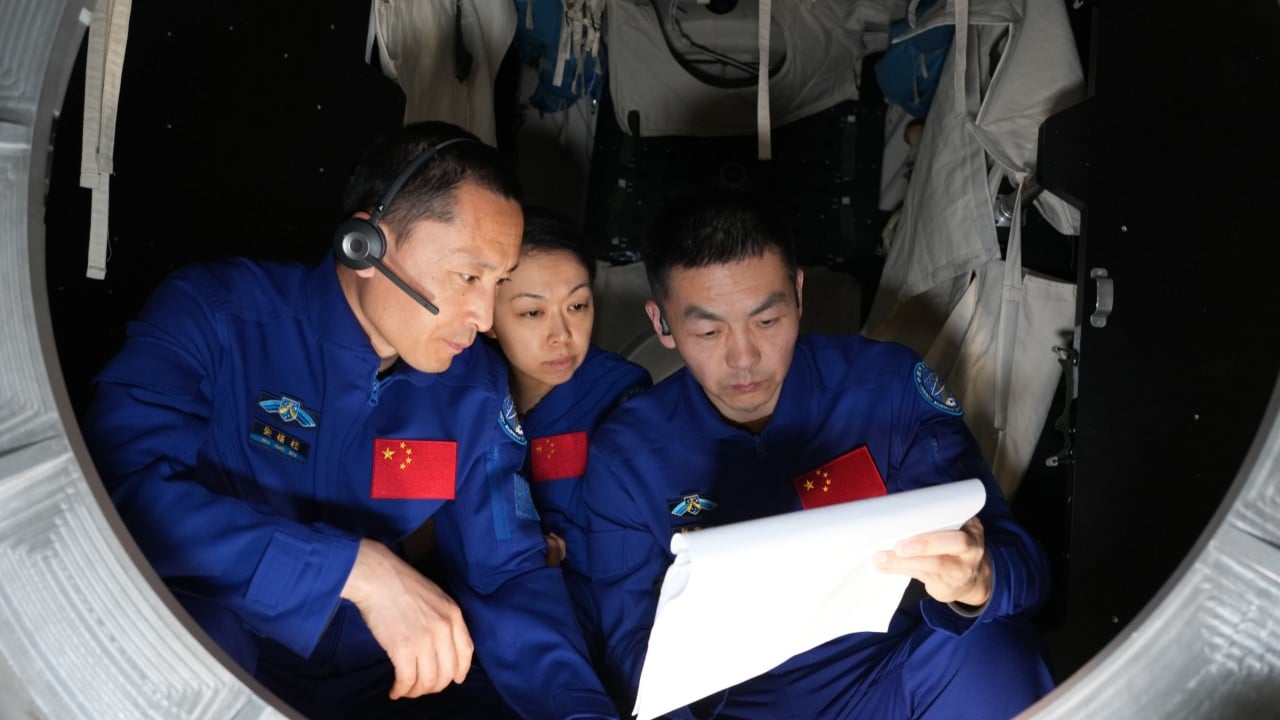
Hong Kong is throwing a collective celebration because Chief Inspector Lai Ka-ying was selected as a payload specialist for China’s space program. The media is flooded with the usual predictable commentary: op-eds demanding the city build a "space ecosystem," academic institutions begging for aerospace research grants, and politicians claiming this is the spark to turn a financial hub into a galactic tech center.
It is a beautiful sentiment. It is also completely wrong.
The lazy consensus dominating the current narrative argues that because Hong Kong produced an astronaut, Hong Kong must now build an aerospace industry. This is a classic composition fallacy. Having a citizen ride a rocket does not mean you should start manufacturing the fuel.
I have spent two decades watching regional governments burn billions of dollars trying to replicate Silicon Valley, or Shenzhen, or NASA, simply because they had a moment in the spotlight. They fail because they mistake a PR victory for a structural advantage.
The harsh reality? Hong Kong has absolutely no business building a domestic space sector. Double down on this fantasy, and we will waste capital that should be saving our actual tech economy.
The Economics of Orbit: Why Small Jurisdictions Fail at Aerospace
Space is a game of brutal, unyielding scale. To understand why Hong Kong cannot compete, we have to look at the baseline physics of aerospace economics.
The cost to develop launch capabilities or heavy aerospace infrastructure requires immense landmass, massive capital expenditure, and a tolerance for multi-decade financial losses. When nations like India or the United States succeed, they rely on vast domestic supply chains and sovereign state funding that functions independently of immediate commercial returns.
Let's look at the numbers. The global space economy is projected to reach over $1 trillion by the 2030s, but that value is concentrated in two areas:
- Heavy Launch Infrastructure and Hardware: Dominated by state-backed titans and massive aerospace conglomerates (CASC, SpaceX, Lockheed Martin).
- Downstream Data Applications: Software, analytics, and telecommunications that utilize satellite data.
Hong Kong has zero competitive advantage in the first category. We do not have the geography for a launchpad. We do not have the heavy manufacturing base required for rocket propulsion systems.
Aerospace Value Chain Allocation:
[Heavy Hardware & Launch] ---> Requires massive land, state subsidization (Not HK)
[Downstream Data & Finance] --> Requires high-density capital, legal infrastructure (HK's Sweet Spot)
Trying to force a hardware-centric "space hub" in a city with the highest real estate costs on Earth is economic suicide. If a local startup wants to manufacture satellite components in a high-rise in Kwun Tong, they are competing against Shenzhen factories that can produce the same parts for a fraction of the cost, mere miles away.
Dismantling the Premise of the "Space Ecosystem"
The common counterargument, frequently brought up in policy forums, is that Hong Kong needs to fund space tech to inspire the next generation of scientists.
This is emotional policymaking disguised as strategy. Inspiration does not pay rent. It does not retain talent.
Consider what happens when a city subsidizes an industry without a native market. You train highly specialized aerospace engineers at the University of Hong Kong or HKUST. They graduate. They look for a job. They realize that outside of a few government-funded research labs, there are no commercial rocket builders in Central.
Where do they go? They move to the mainland, or Europe, or the US.
By building a superficial space sector based on sentimentality rather than market demand, Hong Kong merely acts as an expensive talent incubator for other economies. We pay for the education; others reap the economic rewards.
Instead of asking, "How do we build a space industry?" the brutal, honest question we must ask is: What does Hong Kong actually do better than anyone else?
The answer has always been finance, logistics, contract law, and cross-border data management.
The Counter-Intuitive Blueprint: Space FinTech and Orbital Insurance
If Hong Kong wants to capitalize on Lai Ka-ying’s historic achievement, it needs to completely ignore the hardware and focus entirely on the capitalization of space.
The next phase of the global space race will not be defined by who builds the best rockets—SpaceX and China's state apparatus have already commoditized launch costs. The true bottleneck is now the financial engineering behind space missions.
Who is going to insure a constellation of 10,000 low-Earth orbit (LEO) satellites against space debris? Who is going to structure the cross-border debt financing for deep-space mining ventures? Who handles the international arbitration when private satellites collide in a neutral orbit?
This is where the real money is, and this is exactly what Hong Kong is built to handle.
1. High-Risk Orbital Insurance Underwriting
The space sector faces an unprecedented insurance crisis. As orbits become crowded, traditional insurers are pulling back. Hong Kong’s insurance sector, backed by its common law framework, should become the global capital for space risk management. We don't need to build satellites; we need to write the policies that protect them.
2. Satellite Data Tokenization and Commodity Trading
Satellites generate petabytes of hyperspectral imagery and environmental data daily. This data is the new oil for climate risk modeling and global supply chain logistics. Hong Kong should be establishing the world's first dedicated exchange for trading satellite data futures, turning raw orbital output into financial instruments.
3. Cross-Border Aerospace Arbitrage
Space law is messy. The Outer Space Treaty of 1967 is woefully outdated for commercial exploitation. With its unique position as a bilingual, dual-legal-system bridge, Hong Kong can position its courts as the primary venue for resolving commercial disputes between Western aerospace firms and Asian launch providers.
The Flawed Questions Everyone Keeps Asking
Look at the forums and the public discourse. The questions being asked show a fundamental misunderstanding of how technology ecosystems actually develop.
"How can the government incentivize local venture capital to fund space startups?"
This question assumes that local VCs are just blind to the opportunity. They aren't blind; they are rational. A local VC knows that a space hardware startup in Hong Kong has a near-zero probability of exit.
Forcing capital into an unnatural market via government mandates creates zombies—companies that exist solely on state grants without ever achieving product-market fit. Stop trying to subsidize space startups. Start deregulating the financial structures so global space companies can list on the HKEX more efficiently.
"Should we build a dedicated aerospace research institute?"
We already have world-class engineering departments. Building a standalone institute creates bureaucratic bloat. What we need is targeted commercialization of the software tools our universities already build. Our universities excel at AI, precision engineering, and materials science. Let them focus on those core pillars. The space sector will buy their software if it’s good; they don't need a "space" label slapped on the building to be useful.
The Downside to the Pragmatic Approach
To be absolutely fair, turning away from the romance of rockets has a distinct disadvantage. It lacks geopolitical glamour.
It is incredibly easy for a politician to cut a ribbon on a new satellite assembly plant and take a photo for the evening news. It is much harder to explain to the public that the city’s best contribution to space exploration is a highly complex, boring insurance policy or a cross-border legal framework.
Giving up the dream of being a physical spaceport means accepting a supporting role in the narrative. But a highly profitable supporting role is infinitely better than a catastrophic, expensive failure on the main stage.
Stop Looking Up, Look at the Infrastructure
We need to stop staring at the stars and start looking at our own balance sheets.
Lai Ka-ying's journey to the stars is an incredible individual achievement that proves the grit and capability of Hong Kong's people. But do not insult that achievement by using it to justify bad economic policy.
Hong Kong does not need a spaceport. It does not need a rocket factory. It needs to remain the hard-nosed, cynical, hyper-efficient financial engine that funds the entities building those things elsewhere.
Let Shenzhen build the hardware. Let Beijing handle the launches. Hong Kong must hold the purse strings, write the contracts, and manage the risk. Everything else is just expensive vanity.