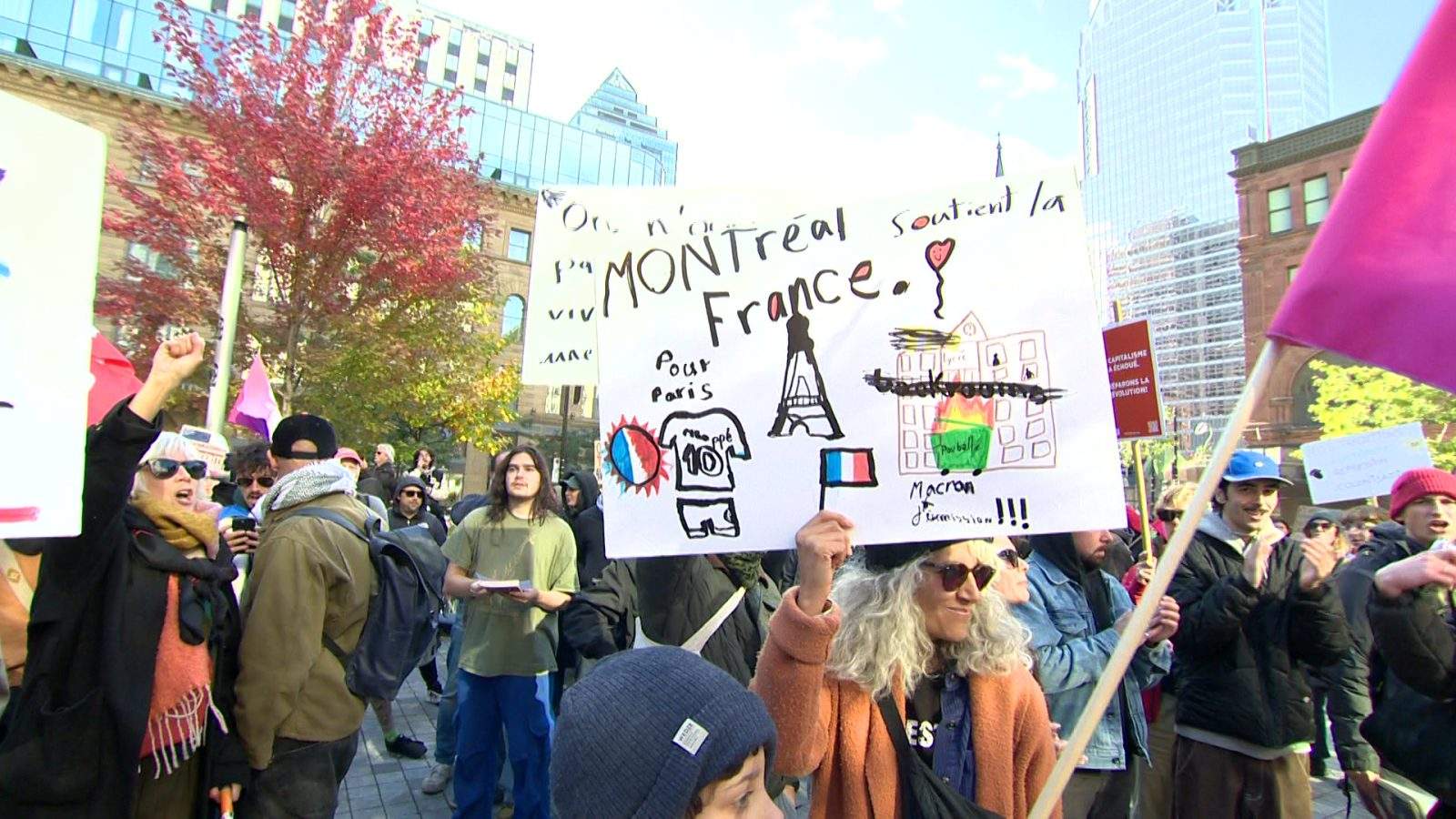
Every time a dumpster burns in the 7th arrondissement of Paris, North American media outlets scramble to find a Montrealer willing to clutch their pearls. The narrative writes itself: Parisian civic unrest serves as a cautionary tale, warning a supposedly placid Quebec metropolis about the dangers of institutional rot or political apathy. Commentators love to paint Montreal as a sleepy cousin sitting on the sidelines, waiting to catch the contagion of European fury.
It is a lazy framework built on lazy geography.
Montreal does not need to learn how to protest from France, nor is the city suffering from a dangerous lack of revolutionary fervor. The entire premise that Montrealers are sleepwalking through political life misses the fundamental engine of how power, dissent, and civic friction actually operate in this city. You cannot call a population complacent when they operate inside one of the most litigious, unionized, and perpetually mobilized urban environments in North America.
Let us dismantle the myth of Montreal complacency right now.
The Geography of Grievance
Look at the history of street-level mobilization over the last two decades. While cities like Toronto or Vancouver often default to polite municipal consultations, Montreal treats municipal administration like a blood sport. The 2012 student strike, known locally as the Maple Spring, paralyzed post-secondary education for months and brought hundreds of thousands of people into the freezing streets nightly, banging pots and pans from balconies in an acoustic rebellion that rattled every high-rise from Plateau-Mont-Royal to Westmount.
That was not a derivative of French politics. That was homegrown, stubborn, and structurally disruptive.
When commentators point to current events in France and warn Montreal to wake up, they are projecting their own unfamiliarity with local dynamics onto a population that has never stopped arguing with its leaders. The mechanisms of dissent here are simply different. They are decentralized, bilingual, heavily embedded in neighborhood assemblies, and fiercely protective of local autonomy.
Blaming Montreal for lacking Parisian-style street theater is like criticizing a chess grandmaster for not playing rugby. Both involve conflict, but the rules and objectives bear zero resemblance.
The Myth of the Apathetic Citizen
Ask any city planner, municipal councillor, or community organizer in Montreal if the populace is complacent, and you will likely get a bitter laugh. The truth is almost the exact opposite: Montreal suffers from hyper-engagement combined with institutional gridlock.
Citizens fight tooth and nail over bike lanes, gentrification, social housing, linguistic policies, and police accountability. Every square block has a citizens' committee ready to file an injunction or organize a rally at the drop of a hat. The friction is constant.
Where the lazy consensus goes wrong is equating a lack of burning barricades with a lack of care. Parisian protests are shaped by a centralized, highly Napoleonic state structure where citizens feel compelled to shake the gates of an imperial capital to get noticed. Quebec operates under a mixed legal and political tradition—part civil law, part Westminster parliamentary democracy—where structural leverage is applied through courts, municipal bylaws, union contracts, and public consultations like the OCPM.
When Montrealers want to stop a bad policy, they do not just throw cobblestones; they weaponize administrative law. They tie up projects in environmental reviews, challenge municipal decrees in Quebec Superior Court, and mobilize tenant unions with surgical precision.
Why the Comparison Fails
The urge to compare Montreal to European capitals stems from an outdated cultural inferiority complex. Editorial boards look across the Atlantic, see tear gas on BFM TV, and project a desire for similar drama onto Canadian soil.
It ignores the economic realities on the ground. Montreal faces a distinct cocktail of soaring real estate costs, wage stagnation, aging infrastructure, and linguistic debates that are entirely unique to the province. Mimicking French labor strikes makes zero tactical sense when the collective bargaining frameworks, labor laws, and provincial tax structures diverge sharply from those in the European Union.
To suggest that Montrealers need a wake-up call assumes they are asleep. In reality, they are wide awake, exhausted by endless bureaucratic friction, and navigating a complex urban landscape that requires tactical intelligence rather than performative outrage.
The Real Danger Is Not Complacency
If there is a threat to civic life in Montreal, it is not complacency. It is burnout.
When every single development project, transit expansion, and neighborhood zoning change turns into an existential trench warfare battle between developers, municipal agencies, and citizen groups, the system grinds to a halt. Burnout sets in. Grassroots organizers get tired. Neighborhood councils struggle to maintain quorum because volunteers are exhausted from fighting the city just to keep local green spaces alive or rents stable.
Pretending that the city is passive lets the real institutional culprits off the hook. It shifts the blame onto ordinary citizens for not marching enough, while ignoring systemic policy failures in housing allocation, healthcare administration, and public transit funding.
Stop looking to Paris for a script on how Montreal should fight. The city writes its own playbook every single day, usually in two languages, often in courtrooms and neighborhood halls, and always with a level of stubborn persistence that no imported protest movement could ever replicate.
Drop the narrative. Montreal was never asleep. You just refused to learn the language.