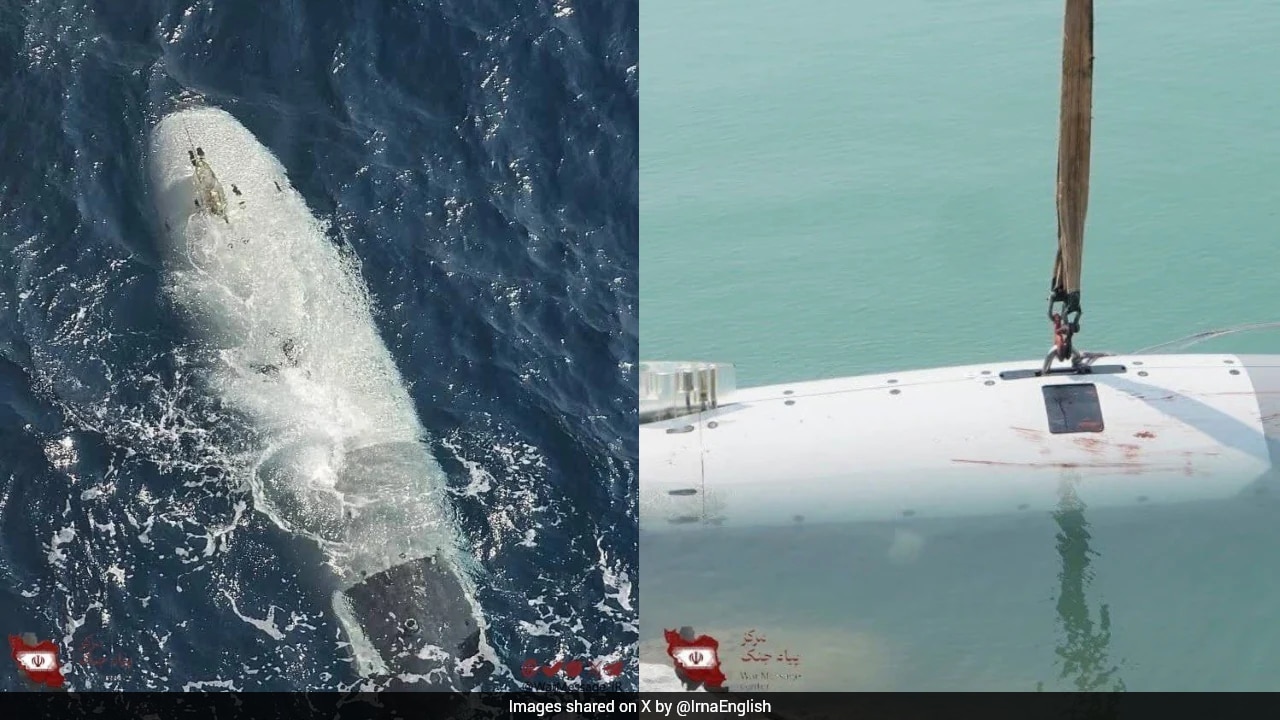
Geopolitical confrontations in maritime chokepoints rarely unfold through symmetrical combat; instead, they operate on asymmetric escalatory ladders where low-cost signaling replaces total war. When the Islamic Revolutionary Guard Corps announced the acquisition of an uncrewed underwater vehicle at the mouth of the Strait of Hormuz, state media framed the event as a major tactical coup against advanced American hardware. Simultaneously, the United States Central Command countered that the asset in question was an unclassified, malfunctioning autonomous drone that had drifted off course following a technical failure. Deconstructing this friction requires analyzing the operational reality of unmanned maritime architecture, the economic mechanics of regional energy blockades, and the strategic utility of salvaged hardware in electronic intelligence collection.
The Operational Reality of Maritime Autonomous Systems
Autonomous underwater vehicles deployed in littoral zones operate under strict design trade-offs between endurance, payload capacity, and data classification. Open-source imagery identifying the captured unit as an unclassified commercial-grade or derivative autonomous platform highlights the structural limitations placed on forward-deployed hardware. High-end strategic assets housing sensitive cryptographic or acoustic sensor suites rarely operate unescorted in contested semi-enclosed seas where adversary littoral anti-submarine warfare networks maintain active surface and subsurface surveillance.
When an uncrewed system suffers propulsion failure or navigation lock, it transitions from an active intelligence-gathering node to a stationary drifting body subject to regional hydrodynamic vectors. The Strait of Hormuz features complex tidal currents and localized gyres driven by high evaporation rates and density gradients between the Persian Gulf and the Gulf of Oman. A compromised vehicle experiencing a telemetry drop will naturally drift along predictable bathymetric lines toward shallow territorial waters or state-controlled coasts. State actors monitoring these zones maintain continuous radar and optical tracking, transforming routine mechanical recovery into a public relations victory.
The Economic Mechanics of the Hormuz Blockade
Beyond hardware skirmishes, the underlying conflict centers on the structural disruption of global energy transit. The Strait of Hormuz historically handles roughly one-fifth of global petroleum and liquefied natural gas exports. Maintaining a de facto blockade by Tehran alongside targeted retaliatory strikes on petroleum infrastructure creates an artificial supply constriction that reverberates directly through international commodity pricing.
The cost function of this blockade relies on two competing financial strains:
- The macroeconomic toll on importing nations forced to absorb higher crude benchmarks and elevated domestic fuel prices.
- The fiscal degradation of state-backed oil networks resulting from targeted interdiction and the kinetic destruction of export tankers.
When naval forces neutralize crude carriers to penalize illicit revenue streams, they alter maritime insurance risk matrices across the entire Persian Gulf. Shipowners factor the probability of kinetic strikes, counter-blockades, and port closures into voyage charter rates, driving up freight costs independently of underlying crude values. This economic friction functions as an instrument of attrition, designed to test the political resilience of consuming nations during electoral cycles without escalating into open great-power conflict.
Intelligence Exploitation and Reverse Engineering Realities
The physical capture of an intact autonomous hull provides tangible value to foreign technical intelligence divisions, though often not in the manner sensationalized by state broadcasts. Reverse-engineering an autonomous underwater vehicle yields limited tactical surprise if the core electronic components lack state-of-the-art encryption modules. However, physical possession permits a thorough examination of:
- Hull manufacturing tolerances and acoustic signature reduction materials.
- Commercial-off-the-shelf component integration and internal power distribution layouts.
- Navigation sensor redundancy and collision-avoidance algorithmic frameworks.
For regional powers seeking to upgrade indigenous uncrewed capabilities, physical inspection accelerates the development curve for domestic surface and subsurface drones. Even if the captured unit lacks classified sonar arrays, studying its mechanical assembly and ballast control systems provides direct engineering benchmarks. This structural transfer of technical knowledge represents the primary hidden dividend of seizing disabled maritime assets in contested corridors.
Strategic Forecast for Regional Maritime Friction
Continued reliance on uncrewed maritime systems for continuous littoral surveillance guarantees recurrent friction points between opposing naval doctrines. As Washington expands its operational footprint of autonomous naval assets to minimize personnel exposure, the probability of mechanical attrition intersecting with aggressive adversary patrols increases proportionally. Future escalations will likely bypass direct fleet-on-fleet engagements, manifesting instead as a high-frequency contest over data-harvesting nodes, economic shipping lanes, and salvage rights within strategic chokepoints.