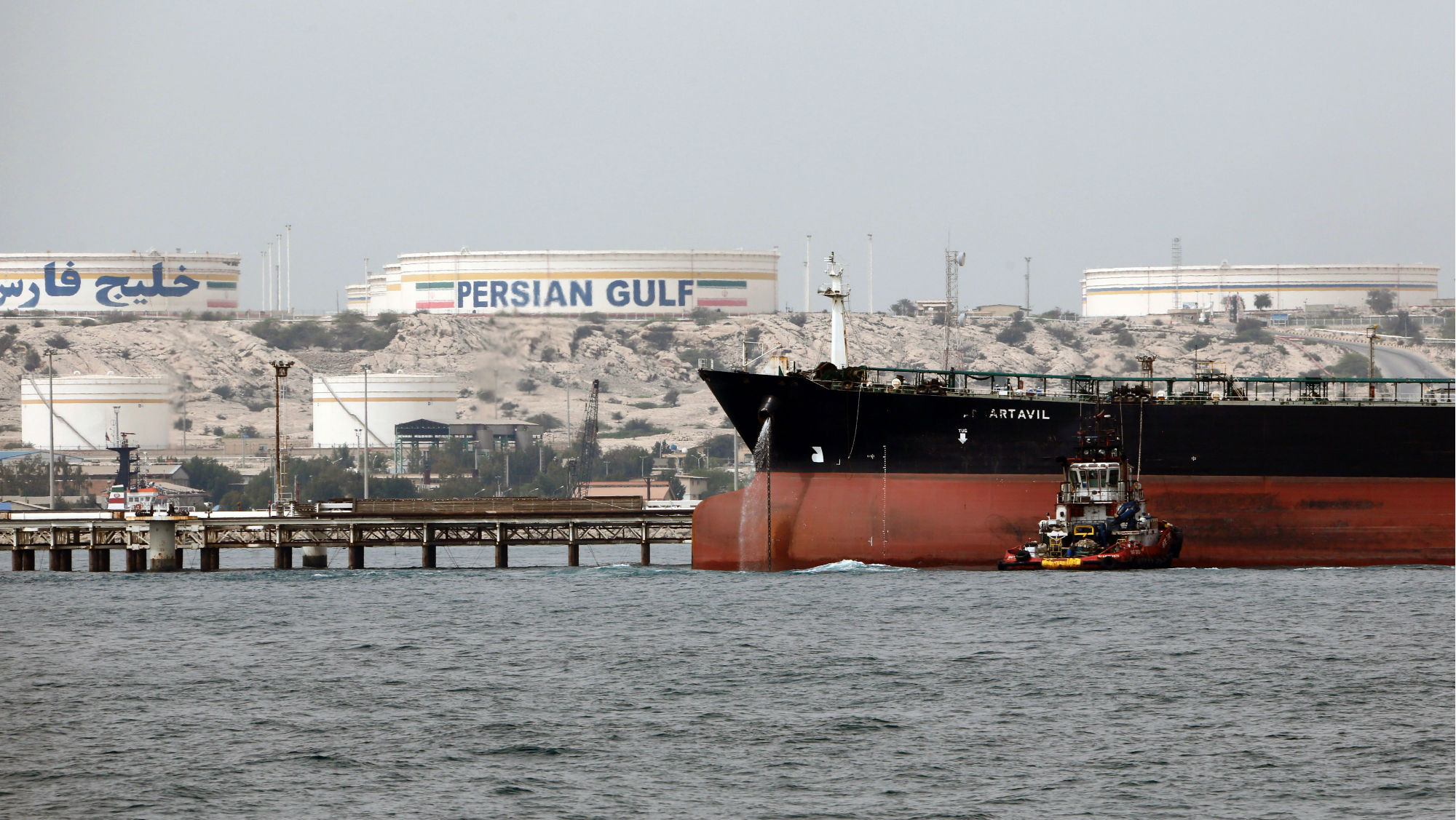
The strategic invitation by Iranian Foreign Minister Abbas Araghchi for India to utilize the Strait of Hormuz marks a fundamental shift from maritime dependency to continental redundancy. This proposal is not merely a diplomatic gesture; it is a structural reconfiguration of the International North-South Transport Corridor (INSTC) designed to mitigate the systemic risks of the Suez Canal and the volatility of the Red Sea. By shifting the transit locus to the Iranian coast, India moves from a passive user of global commons to an active architect of a proprietary trade architecture.
The Trilateral Logistic Architecture
The integration of Indian capital into Iranian infrastructure—specifically the Shahid Beheshti Terminal at Chabahar—functions as the foundational layer of this new logistics stack. This is not a simple port agreement; it is the establishment of a sovereign logistics enclave that bypasses the geographical constraints of the Pakistani landmass. The architecture relies on three distinct operational layers:
- The Maritime Transit Layer: Vessel movements from India’s western ports (Mundra, Kandla, JNPT) to Chabahar and subsequently Bandar Abbas. This layer optimizes the short-haul maritime transit time, typically reducing it to under 72 hours.
- The Multi-Modal Rail-Road Layer: The terrestrial connection from the Persian Gulf to the Caspian Sea. This is the critical bottleneck where efficiency is determined by Iranian rail gauge compatibility and the speed of customs harmonization.
- The Caspian-Nordic Layer: The final leg connecting the port of Anzali or Amirabad to Astrakhan, Russia, and onward to Northern Europe.
The strategic value of the Hormuz route is predicated on the Cost-Time-Risk Function. Conventional routes via the Suez Canal involve high insurance premiums due to the Houthi insurgency in the Red Sea and potential delays at the canal's chokepoints. The Iranian alternative aims to reduce transit time from 45 days to approximately 25 days, a 44% efficiency gain that fundamentally alters the inventory carrying costs for Indian exporters.
Quantifying the Strategic Pivot
The "Hormuz Open Door" policy articulated by Araghchi must be analyzed through the lens of Iranian domestic economic isolation and India's "Extended Neighborhood" doctrine. For Iran, India represents a vital source of Foreign Direct Investment (FDI) and a buffer against Western-led sanctions regimes. For India, the route offers a bypass to the "Malacca Dilemma" by securing a northern energy and trade corridor.
The Mechanics of Sanctions Shielding
A primary friction point in this strategic alignment is the Countering America’s Adversaries Through Sanctions Act (CAATSA) and the broader U.S. sanctions framework on Iran. The 10-year lease agreement for Chabahar Port signed in early 2024 serves as a test case for geopolitical risk insulation. India’s approach is to treat the port and its associated transit routes as a "humanitarian and regional connectivity" exception.
The mechanism for maintaining this exception involves:
- Decoupling Financial Rails: Utilizing Rupee-Rial trade mechanisms or third-party clearing houses to avoid USD-denominated transaction triggers.
- Infrastructure Carve-outs: Defining the port as a gateway for landlocked Afghanistan and Central Asian Republics (CARs), thereby aligning with broader regional stability goals that the U.S. traditionally supports.
The Bottleneck Problem: Infrastructure and Integration
While the diplomatic rhetoric is robust, the operational reality faces significant headwinds. The "Hormuz route" is only as effective as its weakest link, which currently resides in the Iranian Rail Gap. The Zahedan-Chabahar rail link remains the most significant physical impediment to seamless containerized traffic. Without this link, goods must be offloaded and trucked, a process that introduces significant "friction costs" in the form of fuel, labor, and transshipment delays.
The cost structure of the INSTC currently sits at a premium compared to the Suez route when global shipping rates are low. The economic viability of the Hormuz route is counter-cyclical; it becomes the preferred option only when:
- Suez Canal fees increase due to administrative adjustments or congestion.
- War risk insurance premiums in the Red Sea exceed the transshipment costs of the Iranian terrestrial route.
- Fuel prices (Bunker Fuel) rise to a level where the 2,000 km reduction in distance justifies the higher handling fees of a multi-modal shift.
The Digital Integration Layer
The true modernization of this route depends on the implementation of a Unified Logistics Interface Platform (ULIP) across the Indo-Iranian corridor. This would require:
- Real-time tracking of containers across disparate rail and sea systems.
- Digital Customs Pre-Clearance (DCPC) to ensure that the "dwell time" at Chabahar and Bandar Abbas does not negate the time saved at sea.
- Standardization of Bill of Lading (BoL) documents between Indian port authorities and Iranian transit agencies.
Geopolitical Realism: The China Variable
The opening of the Hormuz route to India is a calculated move by Tehran to balance the 25-year Comprehensive Strategic Partnership it signed with China. India’s presence in Chabahar acts as a direct counterweight to the Chinese-operated Gwadar Port in Pakistan, located just 170 km away.
This creates a Geographic Duopoly at the mouth of the Gulf of Oman. The competition between Chabahar and Gwadar is not merely about cargo volume; it is a competition for the loyalty of Central Asian markets. Uzbekistan, Kazakhstan, and Turkmenistan are currently evaluating which corridor offers the most reliable access to the Indian Ocean. By offering India the "Hormuz route," Iran is signaling that it prefers a multi-polar influence in its sovereign territory rather than total dependence on Beijing’s Belt and Road Initiative (BRI).
The Energy Security Calculus
The Strait of Hormuz is the transit point for approximately 21 million barrels of oil per day, or 21% of global petroleum liquids consumption. India, as one of the world's largest energy importers, has a vested interest in the "freedom of navigation" within these waters. Araghchi’s invitation implies a level of Iranian security guarantees for Indian-flagged vessels.
This creates a "Strategic Buffer Zone." If India becomes a primary stakeholder in Iranian transit infrastructure, the cost of Iranian interference with shipping in the Strait increases, as it would directly harm the economy of its most significant regional partner. This is a form of Economic Deterrence where trade interdependence serves as a stabilizer for maritime security.
Operational Limitations and Risk Profiles
The strategy is not without systemic vulnerabilities. The reliance on Iranian soil exposes Indian trade to:
- Regime Continuity Risk: Changes in Iranian leadership or shifts in the Revolutionary Guard’s (IRGC) influence could lead to sudden changes in transit tariffs or port access.
- Regional Escalation: Any kinetic conflict between Israel and Iran would likely result in the immediate closure of the Hormuz route, rendering the entire investment stranded.
- Regulatory Divergence: The lack of a common legal framework for dispute resolution in Iranian courts creates a "Trust Deficit" for private Indian logistics firms.
To mitigate these, India must push for an international treaty framework governing the INSTC, similar to the TIR (Transports Internationaux Routiers) Convention, but with specific clauses for regional security crises.
The Strategic Recommendation
The Hormuz route is not an alternative to existing maritime lanes but a contingency architecture for a de-globalizing world. India’s next moves must focus on the "hardening" of this corridor against external shocks.
- Accelerate the Zahedan-Chabahar Rail Completion: Direct government-to-government (G2G) funding or credit lines must be prioritized to eliminate the trucking bottleneck.
- Establish a Special Economic Zone (SEZ) at Chabahar: Encourage Indian manufacturing firms to set up assembly units within the port’s perimeter. This transforms the port from a transit point into a value-addition hub, making the route indispensable to Iranian industrial policy.
- Naval Coordination: While formal alliances are unlikely, "information sharing" between the Indian Navy and Iranian maritime authorities regarding piracy and localized threats will be necessary to secure the approach to the Strait.
The objective is to move from a "Project-Based" relationship to a "Systemic Integration" where the Iranian transit corridor becomes a permanent, non-negotiable feature of the Indian supply chain.