Twenty-two nations just signed a piece of paper demanding Iran stop hitting ships and reopen the Strait of Hormuz. The United States claims the threat is "degraded."
They are all lying to you. Or worse, they are lying to themselves.
The diplomatic posturing you see in the headlines isn't a strategy; it’s a funeral rite for an era of maritime security that died a decade ago. While the West clings to the fantasy that "freedom of navigation" is a switch you can flip back on with a few carrier strike groups and a strongly worded memo, the reality on the water has shifted permanently.
The "lazy consensus" suggests that if we just "degrade" enough launch sites, global trade returns to its 1990s factory settings. That is a dangerous delusion. We aren't looking at a temporary blockage. We are witnessing the birth of the Asymmetric Chokepoint, where the cost of offense has dropped so far below the cost of defense that the old rules of naval hegemony are functionally extinct.
The Mathematical Collapse of Naval Deterrence
The Pentagon loves to talk about "degrading" capabilities. It’s a clean, corporate word. It suggests a progress bar moving toward zero. But in the narrow corridors of the Persian Gulf and the Gulf of Oman, the math doesn't work in favor of the status quo.
A single $20,000 loitering munition—essentially a flying lawnmower engine strapped to a shaped charge—can effectively neutralize the commercial utility of a $200 million Suezmax tanker. To counter that $20,000 threat, a coalition destroyer must fire an interceptor that costs $2 million.
I have watched defense contractors pitch "solutions" to this for years. They talk about "layered defense" and "kinetic persistence." What they don't tell you is that the defender has to be right 100% of the time. The disruptor only has to be lucky once. When a single hit on a tanker sends insurance premiums up by 300%, the "threat" isn't degraded. The threat is the new cost of doing business.
The 22 nations urging Iran to "reopen" the Strait are asking for a return to a world that no longer exists. Iran hasn't just "blocked" a waterway; they have rewritten the ROI of global shipping.
The "Reopen" Myth: Why Geography is Now Irrelevant
The mainstream media treats the Strait of Hormuz like a physical door. If the door is open, oil flows. If it’s closed, it doesn't.
This binary thinking misses the Kinetic Radius. Modern anti-ship cruise missiles (ASCMs) and long-range drones have turned the entire region into a kill zone, not just the 21-mile-wide "neck" of the Strait.
- Fact Check: You don't need to park a navy in the middle of the channel to stop traffic.
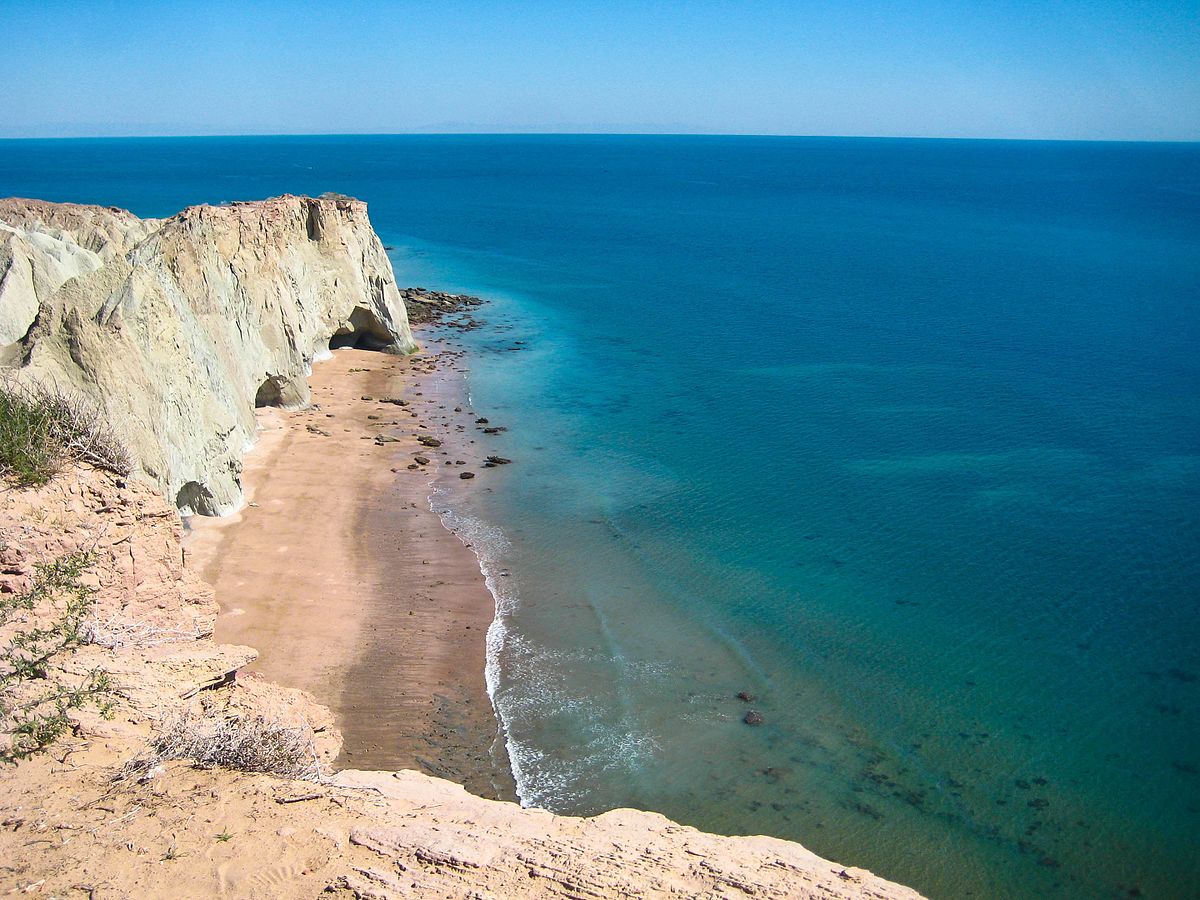
- The Reality: Mobile, truck-mounted launchers hidden in the jagged topography of the Iranian coastline can strike targets hundreds of miles away.
Asking Iran to "reopen" the Strait is like asking a sniper to put down his rifle while he’s still sitting in the bell tower. The rifle is still there. The windage is already dialed in. Even if not a single shot is fired today, the capability to fire has already priced a "risk premium" into every barrel of Brent crude that will never fully dissipate.
The US "Degradation" Fantasy
When the US military says a threat is "degraded," they mean they’ve blown up some warehouses and radar installations. This is 20th-century thinking applied to 21st-century distributed warfare.
In the old days, you sank a fleet and the war was over. Today, you are fighting a ghost. The production of the Shahed-series drones and Noor missiles isn't happening in centralized "Target A" factories that you can erase from a satellite map. It is happening in distributed, underground "missile cities" and small-scale assembly points.
You cannot "degrade" a supply chain that is built on civilian-grade components and localized manufacturing. You can only delay the inevitable. Every time the coalition "clears" the waterway, they are burning through millions in munitions to stop thousands in plywood and fiberglass.
This is an economic war of attrition where the West is hemorrhaging capital to protect a "stability" that has already evaporated.
The Insurance Shadow: The Real Admiral of the Gulf
If you want to know who actually controls the Strait of Hormuz, don't look at the flags on the warships. Look at the underwriters at Lloyd's of London.
The 22 nations can sign all the declarations they want. If the insurance markets decide that the "degraded threat" is still high enough to warrant "War Risk" surcharges, the Strait is effectively closed to anyone who cares about a profit margin.
We are seeing a bifurcated shipping world.
- The High-Risk Players: Shadows fleets and state-backed entities that self-insure.
- The Global Economy: Everyone else who is currently paying a "geopolitical tax" on every gallon of fuel.
The consensus view says "stability is coming back." The contrarian reality is that we are entering an era of Permanent Volatility. The Strait of Hormuz is no longer a reliable artery; it is a speculative asset.
Stop Trying to "Fix" the Strait (Do This Instead)
The obsession with "reopening" the Strait is a sunk-cost fallacy. We are spending billions to preserve a 1970s energy architecture.
If you are a logistics lead or an energy trader waiting for "peace in the Gulf," you are failing your shareholders. The smart money isn't betting on the US Navy's ability to "degrade" threats. The smart money is betting on redundancy and bypass.
We see it in the rapid acceleration of the East-West Pipeline in Saudi Arabia and the rise of the Northern Sea Route. The era of the "Mega-Chokepoint" is ending because it has to. No sane civilization hitches its entire economic engine to a 21-mile strip of water that can be held hostage by a teenager with a remote control.
The Brutal Truth About "Global Cooperation"
Those 22 countries? Most of them couldn't deploy a single rowboat to the Gulf if they had to. Their "urging" is a performance for domestic audiences to show they are "doing something" about energy prices.
In reality, the power dynamic has flipped.
- China is watching, learning that a few cheap drones can paralyze the "indomitable" Western naval power.
- Regional Powers are realizing that the US security umbrella is full of holes, not because of a lack of will, but because of the sheer physics of modern weaponry.
You’ve been told that the "international community" is standing firm. They aren't. They are standing on a pier, screaming at a tide that doesn't care about international law.
The New Energy Map
The status quo is a corpse. The Strait of Hormuz will never be "safe" again in the way we understood it in the 2000s.
We are moving toward a world of Energy Localism and Hard-Point Security. If you can't protect your energy source within your own borders or through a pipeline that doesn't cross a "kill zone," you don't actually have energy security. You have a prayer.
Stop looking at the headlines about "reopening." Start looking at the build-out of desalination plants, nuclear modular reactors, and trans-continental pipelines. The world isn't trying to save the Strait; it’s learning how to live without it.
The US says the threat is degraded. They’re right—if you define "threat" as a 1940s-style navy. But the threat isn't a navy. It’s the democratization of destruction.
Accept the volatility. Price in the chaos. The era of cheap, safe passage is over.
Move your assets. Change your routes. Stop waiting for a "return to normal" that is buried at the bottom of the Gulf.