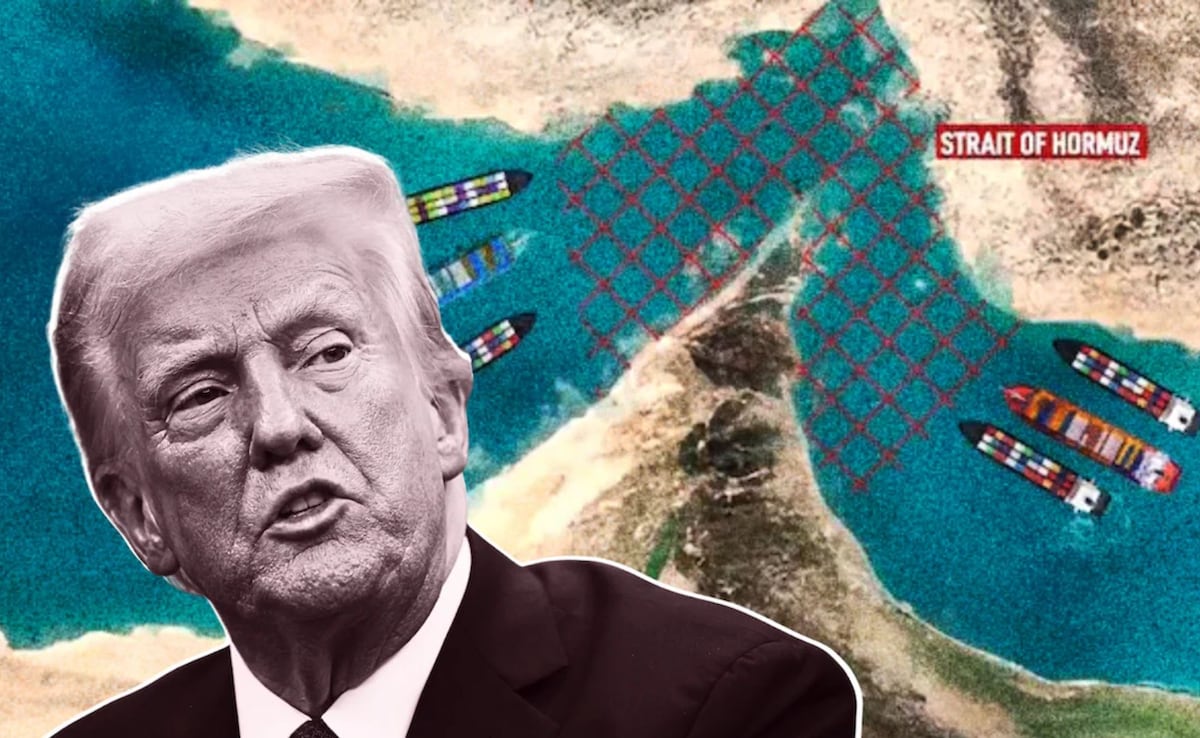
The maritime world just hit a flashpoint that Washington spent decades trying to avoid. Iran has begun enforcing a $2 million "transit fee" on vessels passing through the Strait of Hormuz, a move that effectively turns one of the world’s most vital energy arteries into a private toll road. While political rhetoric in the United States quickly devolved into a finger-pointing match—most notably with Senate leadership blaming the previous administration’s exit from the nuclear deal—the reality is far more clinical and dangerous. This isn't just a diplomatic spat. It is a calculated dismantling of the "freedom of navigation" principle that has underpinned global trade since the end of World War II.
For decades, the U.S. Navy served as the guarantor of the Strait. That era is over. By imposing a direct tax on commercial shipping, Tehran is testing a theory: that the cost of challenging the fee is higher than the cost of paying it. For a massive tanker carrying 2 million barrels of crude, a $2 million fee adds roughly $1 to the price of a barrel. It is an expensive nuisance, but it is cheaper than a kinetic confrontation, an impounded ship, or a skyrocketing insurance premium. Iran knows this. They are betting on the pragmatism of the ledger.
The Mechanics of a Maritime Shakedown
To understand how we got here, you have to look past the televised outrage and into the technicalities of maritime law and insurance. Iran isn't calling this a "ransom." They are framing it as an "environmental and security surcharge," citing the need to protect the Persian Gulf from the ecological impact of heavy traffic. It is a clever, if transparent, legal shield.
When a ship enters the Strait, it often passes through Omani or Iranian territorial waters because the navigable channels are narrow. Under the United Nations Convention on the Law of the Sea (UNCLOS), ships enjoy the right of "transit passage." This right is supposed to be unimpeded and free. However, Iran—which signed but never ratified UNCLOS—has long argued that this right only applies to nations that are also party to the treaty. Since the United States has also failed to ratify UNCLOS, the legal ground is a swamp of ambiguity.
The $2 million figure wasn't pulled from thin air. It is carefully calibrated. It sits just below the threshold where a shipping company would demand a military escort, which brings its own set of logistical nightmares and delays. If a captain refuses to pay, the Iranian Revolutionary Guard Corps (IRGC) has shown it is more than willing to fast-rope onto a deck and divert the vessel to Bandar Abbas.
The Insurance Shadow Market
The real power play isn't happening on the water, but in the Lloyd’s of London boardrooms. Insurance underwriters hate uncertainty. The moment Iran announced the fee, "War Risk" premiums for the Gulf didn't just tick upward; they shifted into a new category of permanent volatility.
- Primary Coverage: Standard hull and machinery insurance.
- War Risk Surcharge: A floating fee triggered by perceived threats in specific zones.
- The Compliance Gap: If a shipowner pays the $2 million to avoid seizure, does that constitute "paying a terrorist organization" under U.S. sanctions law?
This is the trap. If the shipping companies pay, they risk the wrath of the U.S. Treasury. If they don't pay, they risk losing a $100 million hull and a $200 million cargo. Washington has yet to provide a clear "safe harbor" provision for these payments, leaving the private sector to navigate a geopolitical minefield with no map.
Blame as a Distraction from Capability
The current political finger-pointing in the U.S. Senate is a masterclass in missing the point. Domestic critics argue that the "Maximum Pressure" campaign of 2018 broke the status quo, while others argue that the current administration’s perceived hesitation has invited aggression. Both sides are treating a systemic shift like a campaign slogan.
The uncomfortable truth is that the U.S. Fifth Fleet, based in Bahrain, is facing a math problem. You cannot escort every single tanker. There are roughly 2,000 large-scale tanker transits through the Strait every year. Attempting to provide a continuous military umbrella for that volume of traffic would require a naval presence that the U.S. simply cannot sustain while also trying to pivot toward the Pacific.
Iran has spent twenty years building an "asymmetric" navy. They don't need billion-dollar destroyers. They have thousands of fast-attack craft, sea mines, and shore-based anti-ship missiles. They have turned the Strait into a kill zone where the traditional advantages of a blue-water navy are neutralized by geography. The $2 million fee is the financial manifestation of that tactical reality.
The Role of Global Commodities
Energy markets are currently in a state of "suppressed panic." While oil prices haven't tripled yet, the "Hormuz Risk Premium" is now a permanent line item.
- Crude Oil: Approximately 20% of the world's liquid petroleum passes through this 21-mile-wide choke point.
- LNG: Qatar’s massive liquefied natural gas exports are entirely dependent on this passage.
- The China Factor: China is the primary buyer of Iranian oil and a major user of the Strait. Tehran is unlikely to charge Chinese-flagged vessels the same rate, or at all. This creates a tiered system of global trade where Western-aligned nations pay a "democracy tax" that their competitors do not.
Why Escorts Aren't a Simple Solution
There is a loud contingent in the Pentagon and on Capitol Hill calling for Operation Earnest Will 2.0—a reference to the 1980s tanker war where the U.S. reflagged Kuwaiti tankers and provided direct naval protection.
But the 1980s are gone. Modern tankers are larger, more automated, and fly "flags of convenience" from nations like Liberia or the Marshall Islands. Reflagging them as American vessels is a legal and bureaucratic nightmare that takes months, if not years. Furthermore, a military escort doesn't stop a coastal state from imposing "legal" fines for alleged environmental violations. If Iran claims a ship leaked oil and "arrests" it in their waters, a U.S. destroyer commander faces a grim choice: fire the first shot and start a regional war, or watch the ship be towed away.
The IRGC has mastered the art of "Gray Zone" warfare. This is the space between peace and war where they can inflict maximum economic pain with minimum risk of a full-scale military response. The $2 million fee is the ultimate Gray Zone tactic. It’s an invoice, not a torpedo.
The Failure of Regional Alliances
Where are the Gulf allies? Saudi Arabia and the United Arab Emirates have spent hundreds of billions on their own militaries, yet they remain remarkably quiet about the toll.
There is a burgeoning realization in Riyadh and Abu Dhabi that the U.S. security guarantee is no longer absolute. Following the 2019 attacks on Abqaiq and Khurais, which temporarily knocked out half of Saudi oil production with zero U.S. military retaliation, the regional players began their own hedging strategies. They are talking to Tehran. They are joining BRICS. They are looking at a future where the Persian Gulf is an Iranian-managed lake, and they are making their peace with that reality.
This leaves the U.S. in a lonely position. If Washington wants to break the toll, it will likely have to do it alone, or with a very small "coalition of the willing" that lacks the local infrastructure to sustain a long-term presence.
The Economic Ripple Effect
If the toll becomes a permanent fixture, expect a fundamental shift in global logistics.
- Pipeline Investment: Renewed interest in bypass pipelines across Saudi Arabia to the Red Sea.
- Alternative Energy: Accelerated shifts in Europe and Asia away from Gulf-dependent hydrocarbons.
- Inflation: A direct pass-through to the consumer at the pump and in the price of any plastic-based good.
The Strategic Bankruptcy of the Current Policy
The U.S. is currently operating on a policy of "reactive indignation." We wait for Iran to seize a ship or announce a fee, and then we issue a sternly worded statement and move an aircraft carrier group. This is not a strategy; it is a reflex.
Iran is playing a much longer game. They are looking at a world that is multipolar and increasingly transactional. In their view, if the U.S. can use the SWIFT banking system to "tax" the world through sanctions, then Iran can use the Strait of Hormuz to tax the world through geography. It is a crude but effective form of symmetry.
To break this, the U.S. would need to do more than just blame a previous president or threaten a few more sanctions. It would require a total reimagining of maritime security, perhaps involving a new international body that manages the Strait with a neutral peacekeeping force—an idea that has zero chance of success in the current climate of the UN Security Council.
The $2 million fee isn't an act of "insanity." It is a cold, calculated move by a regime that has realized the "Leader of the Free World" is currently distracted, overextended, and politically divided. Every day that a tanker pays that fee and moves on is a day that the old rules of the ocean die a little more.
The next step isn't a Senate hearing or a new round of sanctions. The next step is the shipping industry deciding that the U.S. Navy is no longer the most relevant force in the Gulf—the Iranian tax collector is. When the private sector stops looking to the Pentagon for protection and starts looking to their accountants to price in the cost of surrender, the battle for the Strait of Hormuz is already lost.
You cannot defend a global principle with a divided domestic house. As long as the U.S. views this as a partisan talking point rather than a systemic collapse of the maritime order, the "Hormuz Toll" will only go up.
Check the daily transit logs. Watch the insurance adjustments. The data tells a story that the politicians won't: the price of peace in the Middle East has just been set at $2 million per trip, and for now, the world is paying it.