The headlines are screaming about a "global crisis" because Russia and China blocked a UN resolution to reopen the Strait of Hormuz. Pundits are dusting off their 1970s oil shock playbooks, predicting $200 barrels and the collapse of Western civilization. They are wrong. They are looking at a 20th-century bottleneck with a 20th-century mindset.
This veto isn't a diplomatic failure. It is a market-cleansing event.
The "consensus" view—the one you’ll find in every dry geopolitical briefing—claims that a closed Strait is a death sentence for the global economy. They tell you that 21 million barrels of oil a day staying trapped in the Persian Gulf will trigger a systemic meltdown. I’ve sat in the rooms where these projections are made. They rely on linear models that assume the world is a static machine. It isn't. The world is a living organism that adapts to trauma.
By blocking this resolution, Russia and China didn't just play a cynical power move; they inadvertently accelerated the death of the "Chokepoint Economy."
The Myth of the Essential Chokepoint
Every time a tanker gets stuck or a navy flexes its muscles in a narrow strip of water, the world panics. Why? Because we have built a fragile global supply chain around the idea that energy must be cheap, offshore, and incredibly far away.
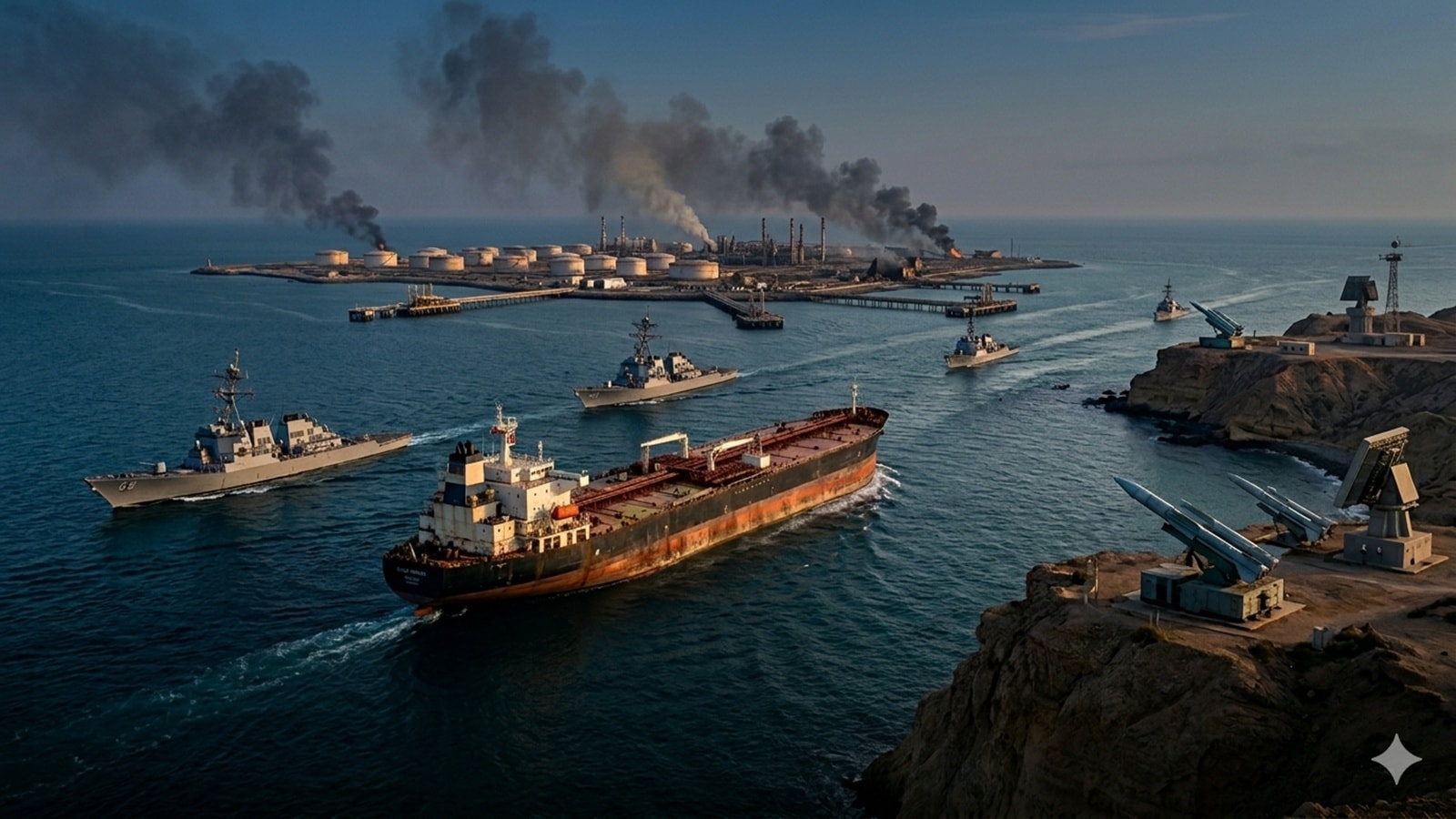
The Strait of Hormuz is the ultimate symbol of this fragility. It’s a 21-mile-wide anxiety attack. For decades, the US and its allies have spent trillions of dollars—yes, trillions—subsidizing the security of this waterway. When you look at the "low cost" of Middle Eastern oil, you are ignoring the massive military overhead required to keep the taps flowing.
The veto forces the world to stop relying on the UN to play lifeguard. It forces a brutal, necessary decoupling.
When the Strait closes, the "invisible hand" of the market doesn't just sit there. It starts swinging. We are about to see an explosion in pipeline infrastructure across the Arabian Peninsula that bypasses Hormuz entirely. We are going to see a rapid-fire shift toward domestic production and alternative energy dense-tech that no "incentive program" or "green initiative" could ever achieve.
Necessity isn't just the mother of invention; it’s the executioner of inefficiency.
Why Russia and China Actually Did Us a Favor
Russia and China didn't veto out of some shared love for maritime chaos. They did it because they understand the leverage of geography better than the West does.
Russia wants higher prices to fund its internal machinery. China wants to prove that the US-led "Rules Based Order" is a paper tiger. But in their attempt to squeeze the West, they are triggering the one thing they should fear most: The Great Energy Pivot.
If the Strait stays closed, the following things happen, and they happen fast:
- The Premature Death of Brent Crude: The world stops pricing energy based on what happens in a single volatile region.
- Nuclear Acceleration: Countries like Japan, Germany, and South Korea—nations that have been flirting with energy suicide by shuttering plants—will have no choice but to go all-in on fission.
- The Onshoring Miracle: Logistics managers are currently realizing that "just-in-time" delivery from halfway across the globe is a fantasy. The cost of shipping is no longer a line item; it’s a risk factor.
I’ve seen energy traders lose their shirts betting on "stability." Stability is a lie sold by people who want to keep the status quo profitable. This veto is the volatility we need to break our addiction to 1940s-era logistics.
Dismantling the UN’s Usefulness
The UN resolution was never going to work anyway. Let’s be real. A piece of paper signed in New York doesn't clear mines or stop drone swarms.
The PAA (People Also Ask) crowd wants to know: "How will the UN fix the Hormuz crisis?" The answer is: It won't. The UN is a forum for theater, not a tool for engineering. By vetoing the resolution, Russia and China simply stripped away the illusion of a collective solution. They’ve forced the players involved—Saudi Arabia, the UAE, Iran, and the buyers in Asia—to deal with the reality of their own geography without a Western security blanket.
This is what "adulting" looks like in geopolitics. It’s messy. It’s expensive. And it’s the only way to build a resilient system.
The Mathematical Reality of the Veto
Let’s look at the numbers the "crisis" reporters ignore.
The global economy currently carries a massive surplus of latent capacity in areas that don't rely on the Strait. The US Permian Basin, the Canadian oilsands, and the pre-salt fields in Brazil are not just "alternatives." They are the new bedrock.
Imagine a scenario where the Strait stays closed for twelve months.
- Month 1-3: Price spike. Panic. Short-term inflation.
- Month 4-8: Massive capital reallocation. Projects that were "too expensive" at $70 oil become gold mines at $120.
- Month 9-12: New trade routes solidify. The Strait of Hormuz becomes a secondary concern.
By the time the "diplomats" finally agree on a new resolution, the world will have already moved on. We will have built the workarounds. This is the "Nuance of Resilience." The more you try to protect a fragile point, the more fragile you make the whole system. By letting the point break, you force the system to evolve.
The Cost of the "Safe" Path
The critics say we need the UN to intervene to "save the global poor" from rising energy costs. This is the most disingenuous argument of all.
The global poor are the ones most screwed by our reliance on long-distance, chokepoint-heavy energy. They are the ones who suffer when a regional conflict 5,000 miles away doubles the price of their cooking fuel.
True energy security isn't a cleared Strait; it's decentralized production. It’s modular nuclear reactors. It’s localized grids. It’s getting the hell out of the Persian Gulf.
The veto is a shock to the system, but some systems need a shock to stop them from flatlining.
Stop Asking for "Normal"
I’ve spent twenty years watching markets react to Middle Eastern drama. Every time, the cry is "When will things go back to normal?"
"Normal" was a historical fluke. "Normal" was a period where a single superpower could guarantee the safety of every merchant vessel on the planet. That era ended years ago; we’re just now seeing the receipt.
The veto in the Security Council is the final signature on the death certificate of the 20th-century energy model. If you’re waiting for the UN to "fix" this so you can go back to 2015, you are going to go bankrupt.
Instead of mourning the "diplomatic failure," look at the opportunity. The premium on local energy has never been higher. The value of true sovereignty has never been clearer.
The Strait of Hormuz is a ghost. It’s a haunted hallway we’ve been walking through because we were too lazy to build a new house. Russia and China just slammed the door shut.
Good.
Now we can finally stop pretending that 21 miles of water should hold the world hostage.
Quit whining about the veto. Buy the volatility, invest in the bypass, and accept that the map has changed. The "crisis" is actually an exit ramp from a century of strategic stupidity.
Take it. Or stay trapped in the Gulf with the rest of the dinosaurs.