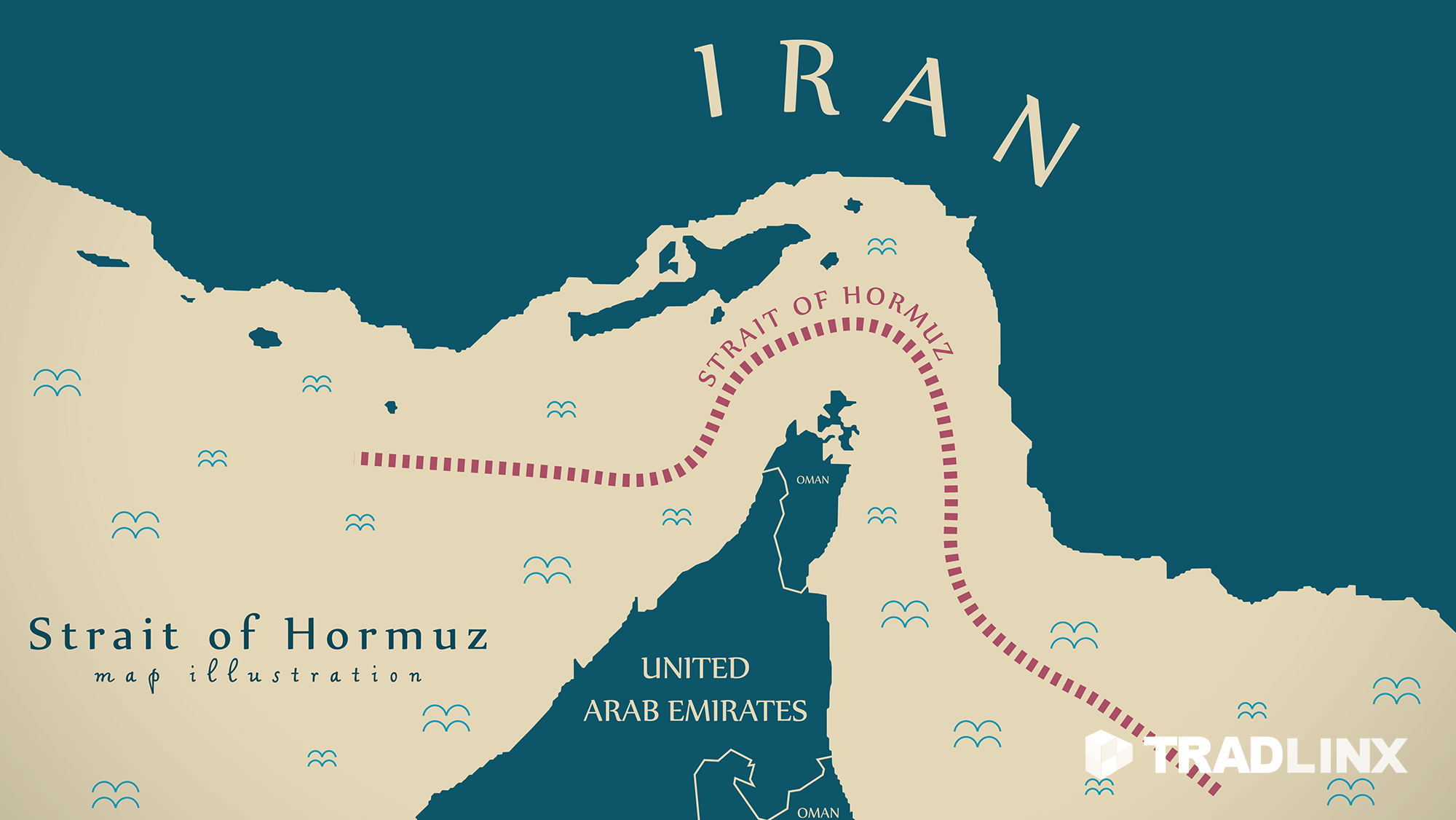
The Western media is currently vibrating with the same tired indignation it has recycled since the Cold War. The narrative is predictably binary: Russia and China are "obstructionists" or "rogue actors" for blocking a UN Security Council resolution aimed at securing the Strait of Hormuz. We are told this is a blow to international law and a threat to global energy security.
It is time to stop reading the script and start looking at the stage.
What the mainstream analysis misses—partly out of laziness and partly out of a refusal to accept the death of unipolarity—is that the veto isn't about blocking "safety." It is about dismantling the Western monopoly on defining what "safety" means. For Russia and China, this wasn't an act of aggression. It was a calculated move to prevent the UN from being used as a legal laundromat for Western naval expansion.
The Myth of the Neutral Global Commons
The fundamental premise of the failed resolution was that the Strait of Hormuz is a "neutral global common" that requires a multilateral security framework—usually shorthand for a US-led maritime task force.
I have spent decades watching how these "security frameworks" actually function. They are never neutral. In the boardrooms of global shipping giants and the halls of maritime insurance firms, we know the truth: international law is often just a sophisticated way to subsidize the military overhead of one side of a conflict.
By vetoing the resolution, Moscow and Beijing are asserting a hard-nosed reality: Security is not an abstract virtue. It is a commodity tied to sovereignty.
To the Kremlin and Zhongnanhai, a UN-sanctioned presence in the Strait isn't about protecting tankers. It is about establishing a legal precedent for the West to monitor and potentially throttle the energy exports of any nation that doesn't align with the G7. They aren't blocking "peace"; they are blocking a surveillance state on the water.
Why the Market Doesn't Care as Much as the Headlines Do
If this were truly the existential crisis the pundits claim, Brent crude would be trading at $150 a barrel right now. It isn't.
The market understands something the State Department refuses to acknowledge: The Strait of Hormuz is governed by the Law of Necessity, not the Law of New York.
- The Insurance Paradox: When the UN fails to act, insurance premiums for tankers spike. This is the "cost" people complain about. However, these spikes are temporary and manageable. What is unmanageable for global trade is a permanent military escalation in a choke point that handles 20% of the world's petroleum.
- Bilateral Backchannels: China is the largest buyer of Iranian oil. Do you truly believe Beijing would let the Strait close? They don't need a UN resolution to keep the oil flowing. They use direct, bilateral diplomacy that bypasses the cameras. The "chaos" of a vetoed resolution is actually a preference for private deals over public posturing.
- The Tanker War Lessons: History shows that even during the "Tanker War" of the 1980s, global energy markets adapted. Modern logistics are even more resilient. The threat of a total shutdown is the great ghost story of the energy sector—scary in the dark, but rarely manifesting in the light of day.
Sovereignty Is the New Global Currency
The competitor's take focuses on the "failure" of the UN. This assumes the UN is a machine designed to solve problems. It isn't. It is a theatre designed to manage power.
Russia and China are currently the only actors being honest about the state of the world. They are signaling that the era of "International Standards" (read: Western-dictated rules) is over. We are moving into an era of Regional Policing.
Russia's logic is simple: if the West can freeze their central bank assets and use international financial systems as a weapon, why should Russia vote to give the West more control over maritime choke points?
China’s logic is even more surgical: their "Belt and Road" logic dictates that they provide their own security. They don't want a UN flag over their energy routes; they want a Chinese flag, or at least a host-nation flag they can influence directly.
The High Cost of the "Rules-Based Order"
We need to stop pretending that every UN resolution is a moral imperative.
Most of these resolutions are written to be rejected. They are designed to create a "moral high ground" for the proposer and a "moral deficit" for the blocker. It’s a PR game.
The proposed resolution likely contained "poison pills"—clauses about boarding rights or cargo inspections—that were specifically included to trigger a veto. This allows the West to say, "We tried to save the Strait, but the autocrats stopped us."
Meanwhile, the actual problem—tension between regional powers—remains unaddressed. You don't solve a centuries-old territorial and religious rivalry in the Persian Gulf with a 10-page document drafted in a glass tower in Manhattan.
The Truth About Freedom of Navigation
Let’s define our terms with the precision the "experts" avoid. "Freedom of Navigation" is a military term of art. It doesn't mean "everyone gets to sail everywhere." It means "we have the power to ensure our ships aren't stopped."
When the US or its allies talk about Freedom of Navigation in the Strait of Hormuz, they are talking about their ability to project power right up to the territorial waters of Iran. When Russia and China veto a resolution supporting this, they are effectively saying that Iran's sovereignty (and by extension, their own) is more important than a Western concept of "global access."
Is this dangerous? Yes. Is it "wrong"? That depends on which side of the naval gun you’re standing on.
For a global trader, the veto is actually a signal of stability. It means the status quo—where local powers have to negotiate with each other to keep the oil moving—remains in place. It prevents a new, unpredictable variable (a UN-mandated fleet) from entering an already crowded and volatile room.
Stop Asking the Wrong Question
The media asks: "Why did they block it?"
The better question is: "Why did the West think this would work?"
If you're a CEO or a strategist, you don't bet on the UN. You bet on the reality that no one—not Russia, not China, not Iran, and certainly not the West—actually wants the Strait of Hormuz to close. The closing of the Strait is the "Nuclear Option" of trade. It is the end of the game for everyone.
Therefore, the veto isn't a threat of closure. It is a refusal to let one side hold the keys to the gate.
The Tactical Advantage of Gridlock
Gridlock at the UN is often the only thing preventing a full-scale regional war.
Imagine if the resolution had passed. The West would have begun aggressive patrols. Iran would have viewed this as an act of war. Incidents of "harassment" would have escalated into kinetic exchanges.
By blocking the resolution, Russia and China have maintained a delicate, albeit tense, balance. They have forced the West to continue using diplomacy and backchannels rather than relying on a UN-sanctioned mandate to escalate.
This isn't "obstruction." it is a pressure valve.
The Bottom Line for Energy Markets
If you are waiting for a UN-sanctioned peace to stabilize your energy hedges, you are going to go broke.
The "controversial" truth is that the world functions better when the big powers are forced to negotiate outside the UN. The veto forces everyone back to the table—not the big table with the nameplates and the microphones, but the small tables in backrooms where the real deals are made.
The Strait of Hormuz will remain open because the physical reality of global survival demands it, not because a piece of paper in New York says so. Russia and China didn't "block" security. They blocked a fantasy.
The next time you see a headline about a UN veto, don't mourn the "failure of international cooperation." Celebrate the fact that someone is finally being honest about how power actually works.
Go long on regional realism. Short the "rules-based order."