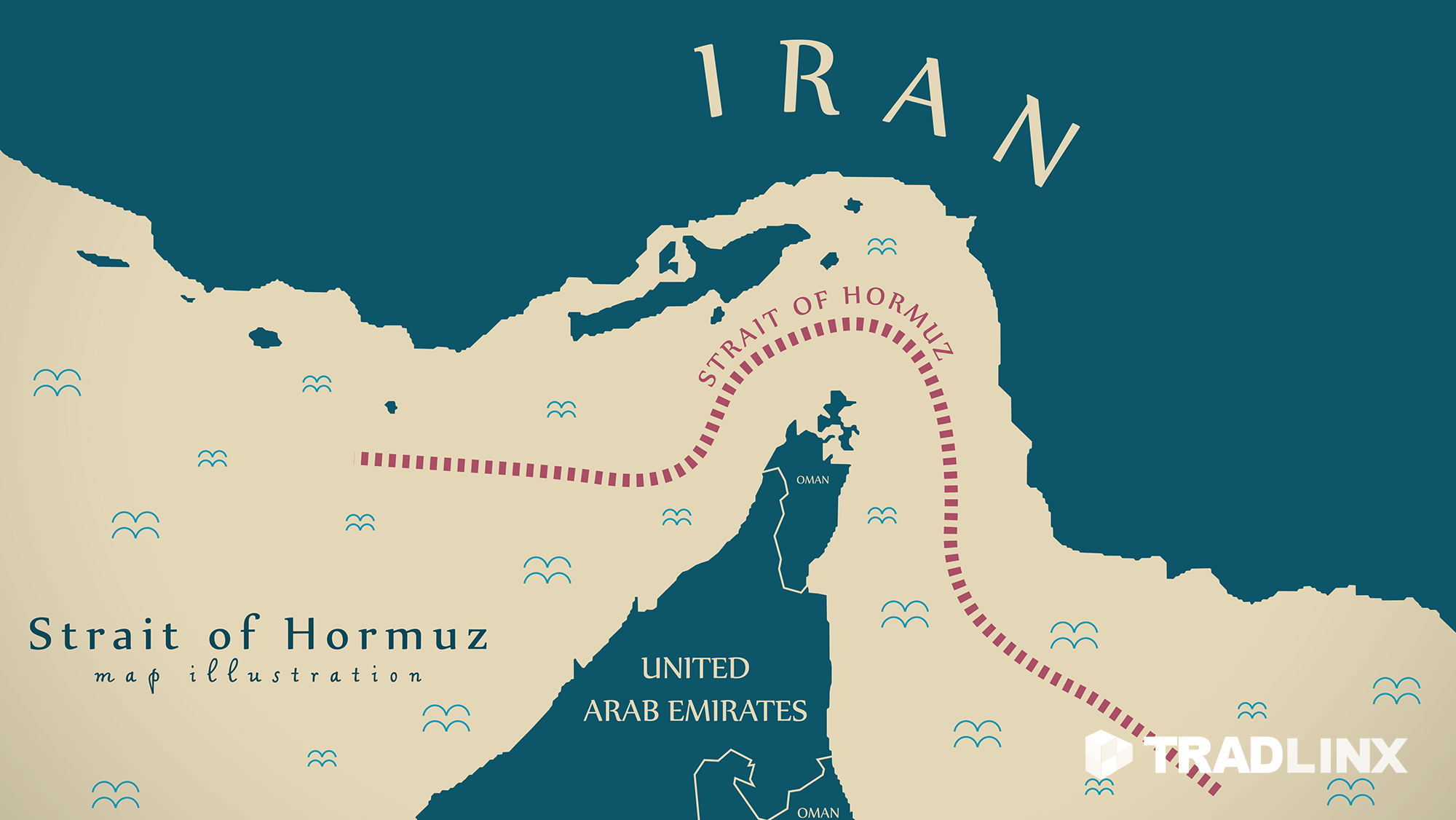
The headlines are screaming about a "global security crisis" because China and Russia blocked a UN resolution to reopen the Strait of Hormuz. The consensus in Washington and London is predictable: authoritarian regimes are sabotaging the world economy to protect a rogue actor in Tehran. This narrative isn't just tired; it’s dangerously shallow.
If you believe this is about "freedom of navigation" or "upholding international law," you’re being sold a fairytale. This wasn't a failure of diplomacy. It was a calculated move by Beijing and Moscow to expose the fact that the West no longer owns the keys to the world's most critical energy chokepoint.
The Western press treats the Strait of Hormuz like a public highway that Iran has arbitrarily blocked. In reality, the Strait is a geopolitical pressure valve. By vetoing the resolution, China and Russia didn't just back Iran—they signaled that the era of the U.S. Navy acting as the world’s unpaid security guard is over, and they aren't interested in helping Washington fix a mess it helped create.
The Myth of the Global Energy Meltdown
Every time a tanker gets harassed in the Persian Gulf, analysts start shaking their pens about $200-a-barrel oil. They claim a closed Strait of Hormuz is an existential threat to the global economy.
They’re wrong.
China is the world's largest importer of crude oil. If the Strait stays closed, China loses the most. Why would they veto a resolution to reopen it? Because Beijing understands something Western hawks refuse to acknowledge: energy security is no longer about keeping the water open; it’s about who controls the alternative.
While the U.S. focuses on "freedom of navigation" operations ($FONOPs$), China has spent the last decade building a land-based energy architecture. Between the Power of Siberia pipelines and the burgeoning overland routes through Central Asia, Beijing is hedged. They aren't terrified of a closed Strait because they’ve built the bypasses.
By vetoing the resolution, China forces the West to expend massive amounts of political and military capital to manage the Gulf, while China simply pivots to its terrestrial suppliers. The "crisis" for the West is a "containment exercise" for the East.
Why the UN Resolution was a Trap
The proposed resolution wasn't about clearing mines or escorting tankers. It was a Trojan horse designed to codify a permanent Western military presence in Iranian territorial waters.
Under the 1982 United Nations Convention on the Law of the Sea (UNCLOS), ships have the right of "transit passage" through straits used for international navigation. However, this right is conditional. Iran, which has signed but not ratified UNCLOS, argues that it only owes "innocent passage" to nations that haven't ratified the treaty (like the United States).
The vetoed resolution sought to bypass these legal nuances and grant an international mandate for a naval coalition to operate with impunity. Russia and China didn't veto because they love the Iranian regime; they vetoed because they refuse to create a legal precedent where the UN can override the sovereignty of a coastal state to serve the interests of a specific military bloc.
If you allow the UN to "force" the Strait of Hormuz open today, you’re giving them the blueprint to "force" the South China Sea or the Northern Sea Route open tomorrow. Moscow and Beijing are playing the long game of sovereign immunity. The Strait is just the theater for the week.
The Intelligence Failure of Sanctions
The "lazy consensus" dictates that Iran is a cornered animal, lashing out because of economic pressure. The reality is far more clinical.
Tehran has realized that the threat of closing the Strait is more valuable than the act of closing it. By maintaining a state of "perpetual friction," they drive up insurance premiums for Western shipping while their own "ghost fleet" continues to move oil to Asian markets under the radar.
The Cost of "Security"
Consider the math of a naval escort. To protect a single VLCC (Very Large Crude Carrier), you need a destroyer or a frigate.
- A modern Arleigh Burke-class destroyer costs roughly $80,000 per hour to operate.
- A transit through the Strait takes several hours.
- The logistical tail required to keep a carrier strike group in the region runs into the billions per month.
Iran achieves the same strategic result with a few $20,000 drones and some fast boats. This is asymmetric warfare at its most efficient. Russia and China recognize that the more the West tries to "fix" the Strait via the UN, the more resources the West drains into a sinkhole that doesn't actually produce anything.
Dismantling the "People Also Ask" Delusions
"Why doesn't the UN just send a peacekeeping force?"
Because "peacekeeping" in a maritime chokepoint is an oxymoron. You cannot "keep peace" between a coastal battery and a supertanker. Any UN force would effectively be a target, and neither Russia nor China will contribute troops to protect Western oil interests.
"Will this lead to a total blockade?"
No. A total blockade is an act of war that Iran cannot win. But they don't need a blockade. They need uncertainty. Uncertainty is a tax on the West. By blocking the resolution, Russia and China ensured that the uncertainty remains, keeping Western markets on edge while they negotiate favorable, "secure" long-term energy contracts behind the scenes.
The Hard Truth for Investors and Policy Makers
Stop waiting for a "return to normal" in the Persian Gulf. There is no "normal" coming back. The veto at the UN wasn't a glitch; it was the final nail in the coffin of the post-WWII maritime order.
If you are a logistics firm or an energy trader, basing your strategy on the hope that the UN or the U.S. Navy will "stabilize" the region is a recipe for bankruptcy.
- Diversify away from the Gulf. If your supply chain relies on the Strait of Hormuz, you are a hostage to a three-way geopolitical chess match you aren't invited to play.
- Accept the "Sovereignty Premium." Insurance rates aren't going down. The "security" that used to be provided for free by the U.S. is now a private cost.
- Follow the pipelines. The real power shift isn't happening in the water; it’s happening in the dirt. Every mile of pipe laid through Russia or Pakistan makes the Strait of Hormuz less relevant to the people who actually have the power to close it.
The West is playing checkers, trying to move pieces back to where they were in 1995. China and Russia are playing Go, surrounding the entire board while the West argues about the rules of the first move.
The Strait is "closed" not because of mines or missiles, but because the collective will to enforce a single global standard has evaporated. The veto was just the formal notification.
Stop looking at the water. Look at the map. The game has already moved inland.