The Structural Impossibility of Dual-Theater Deterrence
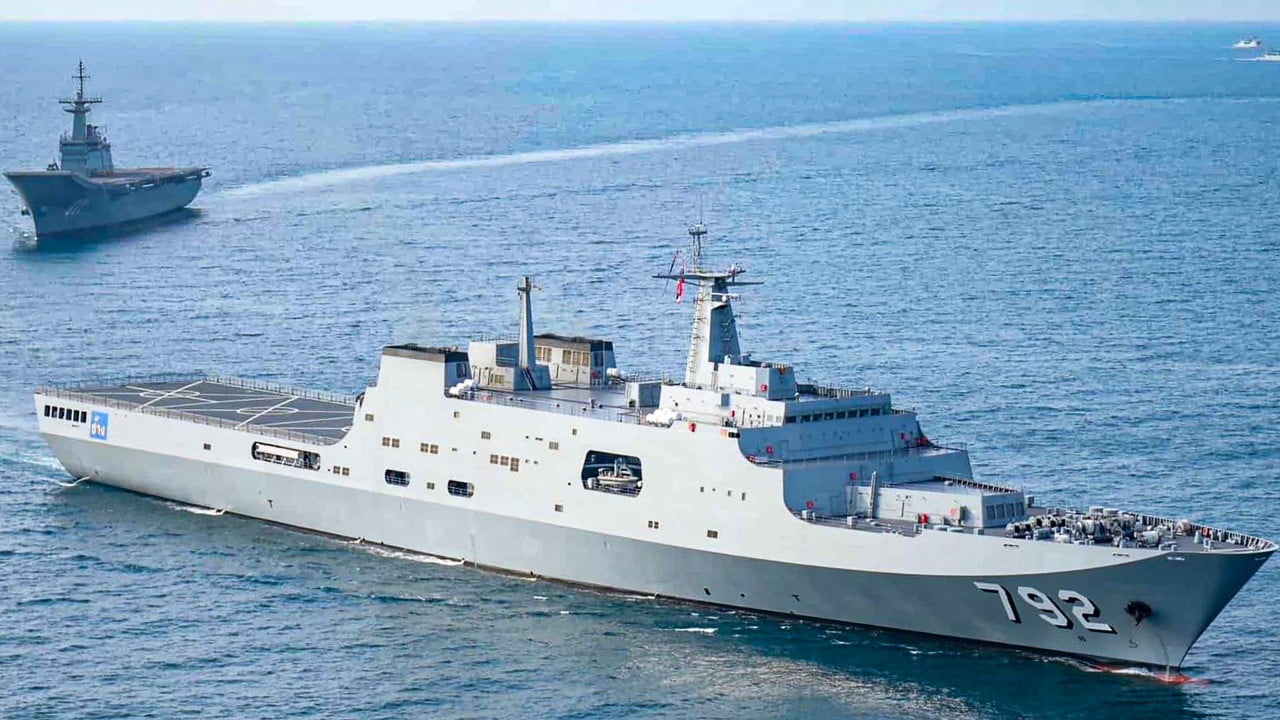
The Royal Thai Navy faces a structural crisis born not merely from a lack of funds, but from a fundamental mismatch between geographic reality and capital allocation. Thailand is geographically bifurcated, requiring a naval presence in two distinct, non-contiguous bodies of water: the Gulf of Thailand and the Andaman Sea. Operating a "Twin-Sea" naval doctrine requires either a massive surface fleet capable of independent operations in both theaters or a highly mobile, technologically superior force that can project power across the Malacca Strait bottleneck.
Currently, the Royal Thai Navy possesses neither.
When budget cuts hit a military branch, the standard response is to delay procurement or reduce maintenance cycles. In a dual-theater navy, however, budget cuts do not cause linear declines in readiness; they cause exponential failures in deterrence. A surface fleet divided between two seas loses its operational synergy. If the Gulf fleet is weakened, the Andaman fleet cannot reinforce it quickly without leaving the western maritime border completely exposed. This dynamic transforms Thailand's naval strategy from a proactive defense posture into a reactive, fragmented coast guard capability.
The core vulnerability stems from three interrelated structural bottlenecks:
- The Fleet Bifurcation Multiplier: Splitting a fixed number of frigates and patrol vessels across two coastlines means neither theater ever achieves a critical mass of hull availability for sustained high-intensity conflict.
- The Modernization-Maintenance Trap: As procurement budgets shrink, funds are diverted to keep aging hulls operational. This creates a death spiral where older ships consume the capital required to buy modern automated platforms, increasing long-term labor and maintenance costs.
- The Anti-Submarine Warfare Deficit: The lack of a viable undersea warfare capability leaves both theaters highly vulnerable to regional neighbors who are rapidly expanding their submarine fleets.
The Economics of Maritime Suffocation
Naval power is fundamentally a capital-intensive enterprise defined by long procurement cycles and high fixed operating costs. To understand how budget cuts undermine Thailand's maritime security, one must examine the operational cost function of a modern navy.
A naval budget is generally split into three distinct categories: personnel, operations and maintenance, and capital procurement. When the overall budget is reduced, personnel costs remain largely fixed due to civil service structures and institutional inertia. Therefore, the cuts fall disproportionately on procurement and maintenance.
Total Naval Budget = Fixed Personnel Costs + Variable Maintenance Costs + Capital Procurement
When Capital Procurement approaches zero, the existing fleet begins to age at an accelerated rate. The Royal Thai Navy currently operates an eclectic mix of vessels sourced from various nations, including the United States, China, and Western Europe. This lack of platform standardization creates a logistical nightmare during budget crunches.
The Multi-Source Logistics Bottleneck
Operating a fleet with diverse origins means that supply chains for spare parts are fragmented. A components failure on a US-built frigate requires different procurement channels, technical expertise, and import protocols than a failure on a Chinese-built vessel. When maintenance budgets are slashed, the navy cannot achieve economies of scale in its supply chain.
The second limitation of this multi-source fleet is the integration of Command, Control, Communications, Computers, Intelligence, Surveillance, and Reconnaissance (C4ISR) systems. Merging Chinese hardware with Western datalinks requires expensive, custom-built middleware or forces the navy to operate isolated tactical networks. In a dual-sea conflict scenario, the inability to share real-time targeting data between the Andaman and Gulf fleets reduces overall operational efficiency to the level of the least capable platform.
The Submarine Procurement Vacuum
The most glaring manifestation of Thailand's budget crisis is the prolonged stagnation of its undersea warfare program. The decision to halt or delay the acquisition of conventional diesel-electric submarines from China fundamentally alters the balance of power in Southeast Asia.
A navy lacking submarines lacks underwater deterrence. Regional neighbors, including Vietnam, Indonesia, and Singapore, operate modern, highly capable undersea fleets. Without a submarine capability, the Royal Thai Navy is forced to rely entirely on surface-based Anti-Submarine Warfare (ASW) assets.
However, surface ASW is highly resource-intensive. Detecting a single modern diesel-electric submarine operating on air-independent propulsion requires multiple surface combatants, maritime patrol aircraft, and dipped sonar helicopters working in tight coordination. By stripping the navy of the budget to acquire submarines, the state effectively mandates that a disproportionate percentage of the remaining surface fleet must be dedicated solely to defensive ASW patrols, further reducing the hulls available for general sea control duties.
The Strategic Asymmetry of the Twin Seas
The Gulf of Thailand and the Andaman Sea represent two entirely different tactical environments, each requiring distinct platform configurations and operational doctrines. A singular budget cut impacts these two theaters in radically asymmetrical ways.
The Gulf of Thailand: Shallow-Water Vulnerability
The Gulf of Thailand is a shallow, semi-enclosed body of water with an average depth of only 58 meters. This environment presents specific tactical challenges:
- Acoustic Complexity: The shallow depth, combined with variable thermal layers and high river runoff, creates a challenging acoustic environment for sonar operations. Surface-ship sonar ranges are severely degraded.
- Chokepoint Constraints: The entrance to the Gulf is relatively narrow, making commercial shipping lanes highly vulnerable to mining and anti-ship missile baskets deployed from coastal positions or small combatants.
- Littoral Density: The high volume of commercial traffic and fishing vessels complicates the generation of an accurate Common Operational Picture, increasing the risk of miscalculation during a crisis.
In this theater, budget cuts mean the navy cannot field enough small, fast, well-armed missile corvettes and coastal defense systems to effectively police and secure these chokepoints. Instead, the navy is forced to deploy larger, expensive frigates that are unsuited for shallow littoral operations and represent high-value targets for asymmetric adversaries.
The Andaman Sea: Deep-Water Isolation
Conversely, the Andaman Sea features deep waters that open directly into the wider Indian Ocean. The operational parameters here are defined by vast distances and deep-water acoustic profiles.
The primary challenge in the Andaman theater is long-range maritime domain awareness and power projection. The islands belonging to Thailand in this region require a sustained blue-water presence. Budgetary constraints directly translate to reduced days-at-sea for major surface combatants. When patrol frequencies drop, illegal, unreported, and unregulated fishing increases, maritime smuggling routes open up, and foreign research vessels can map the undersea topography unchallenged.
This creates a dangerous strategic vacuum. If the Royal Thai Navy cannot maintain a credible presence in the Andaman Sea, it invites external powers to expand their influence near the western approaches to the Malacca Strait, directly undermining Thailand’s sovereignty and leverage in regional maritime forums.
Tactical Reconfiguration: A Blueprint for Resource-Constrained Maritime Defense
When capital is constrained, continuing to pursue a traditional, hull-heavy blue-water doctrine is a recipe for systemic failure. The Royal Thai Navy must abandon the ambition of maintaining a conventional, symmetrical fleet across two seas and instead pivot toward an asymmetric, area-denial framework.
The following three tactical reconfigurations outline how a medium-sized naval force can maximize its defensive output within a strict budgetary ceiling.
1. Hardening the Littoral Zone via Land-Based Anti-Ship Missile Bastions
Instead of investing scarce billions into high-target-value surface hulls that require expensive air-defense screens, capital should be shifted toward mobile, land-based anti-ship cruise missile (ASCM) batteries deployed along the coastlines of both the Gulf and the Andaman Sea.
- Operational Mechanism: Utilizing highly mobile transporter-erector-launcher units equipped with long-range anti-ship missiles creates an overlapping canopy of risk for any hostile surface actor entering Thailand’s Exclusive Economic Zone. These units can be hidden within coastal terrain, making them far more survivable than a frigate.
- Resource Efficiency: Land-based missile units require a fraction of the personnel and maintenance budgets of a surface combatant. They do not require dry-docking, marine fuel, or complex hull maintenance cycles, allowing the navy to sustain a lethal strike capability during prolonged economic downturns.
2. Prioritizing Unmanned Maritime Systems for Domain Awareness
The requirement for continuous presence in two seas can be decoupled from expensive crewed vessels by aggressively integrating unmanned surface vehicles (USVs) and long-endurance unmanned aerial vehicles (UAVs).
- Sensor-to-Shooter Networking: Low-cost, solar- or wave-powered USVs equipped with passive acoustic arrays and radar transponders can be deployed in semi-permanent picket lines across the entrances to the Gulf and around the Andaman islands. These platforms feed data back to a centralized command center via satellite.
- Target Acquisition: When an anomaly or potential threat is detected by an unmanned asset, a crewed fast-attack craft or a land-based missile battery can be queued to intercept. This eliminates the need for large frigates to burn fuel conducting routine, monotonous patrol patterns across thousands of square miles of ocean.
3. Specialization of the Two Fleets
The fiction that the Royal Thai Navy can maintain identical, balanced fleets in both theaters must be discarded. The navy must specialize its forces based on the specific geographic realities of each sea.
The Gulf of Thailand fleet should be reconfigured entirely for littoral defense, mine warfare, and shallow-water interdiction. This requires small, stealthy corvettes, fast-attack missile craft, and robust land-based surveillance integration.
The Andaman Sea fleet must be specialized for deep-water patrol and long-range search and rescue. This force should rely on highly efficient Offshore Patrol Vessels (OPVs) that prioritize range, endurance, and helicopter operational capabilities over heavy, expensive missile loadouts. By stripping the Andaman fleet of the requirement to fight high-intensity surface battles independently, procurement costs drop significantly, allowing the available budget to cover a larger number of highly enduring hulls.
The ultimate limitation of this strategy is that it surrenders the capability to project offensive power far beyond Thailand's territorial waters. It is a strictly defensive posture. However, in an era of fiscal austerity, attempting to maintain an underfunded offensive capability merely ensures that the navy will fail at both offense and defense when a crisis occurs. Focusing resources on high-yield, land-linked, and unmanned defensive systems is the only mathematically viable path to maintaining maritime sovereignty across two seas.