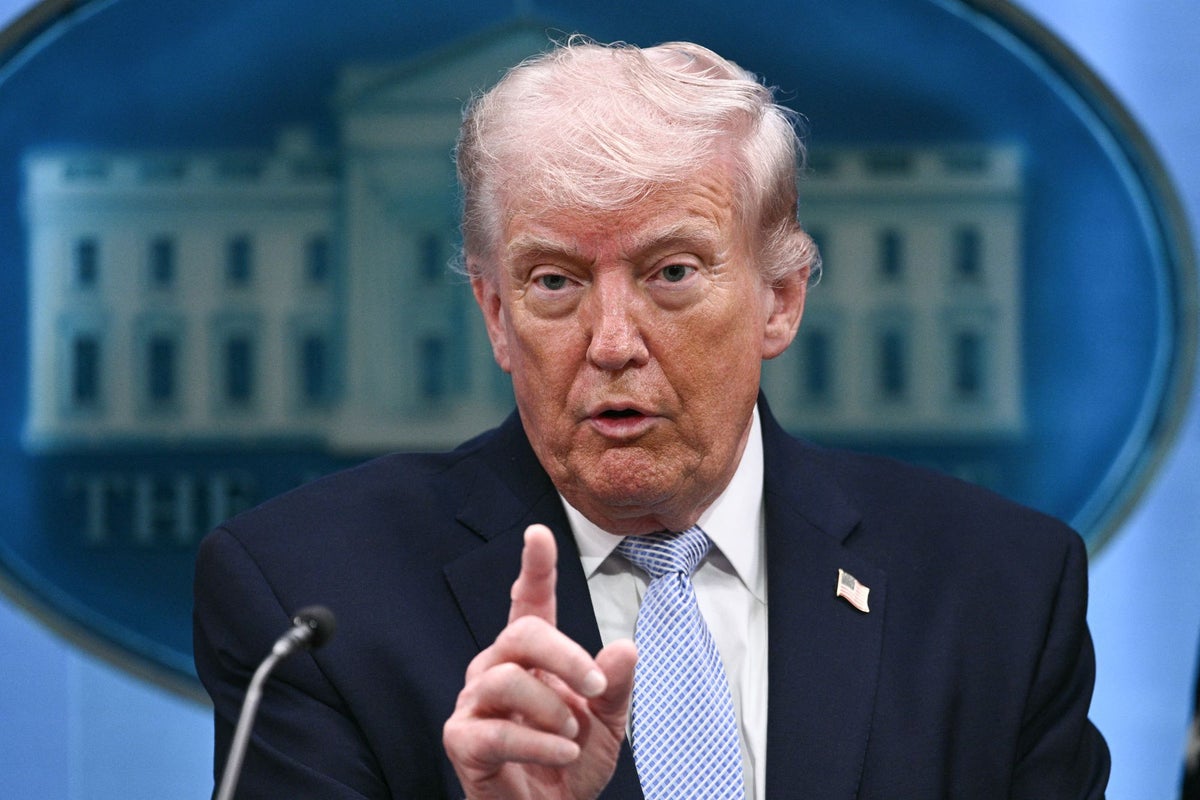
The ultimatum issued regarding Iran’s nuclear and regional activities represents a shift from containment to strategic compellence—a psychological and economic maneuver designed to force a change in behavior through the credible threat of total systemic collapse. Unlike standard diplomacy, which seeks incremental concessions through mutual exchange, this framework operates on a binary: compliance or the dismantling of the target state's industrial and technological infrastructure. The phrase "back to the stone ages" is not merely rhetorical; it describes the literal degradation of a modern nation’s energy, communication, and financial grids through a combination of kinetic strikes and total economic isolation.
The Architecture of Strategic Compellence
Strategic compellence requires three specific variables to function effectively. If any variable is weak, the entire strategy reverts to a state of ineffective friction.
- Credible Capability: The actor must possess the military and economic means to execute the threat. For the United States, this involves a combination of global financial hegemony (the ability to lock any nation out of the SWIFT system) and unmatched conventional strike capabilities.
- Perceived Will: The target must believe the actor is prepared to endure the costs—diplomatic, economic, or physical—of following through. Rhetoric serves to increase this perceived probability.
- Clear Off-Ramp: The target must understand precisely which actions will stop the escalation. Without a defined path to safety, the target chooses the "rationality of irrationality," opting to fight a losing war rather than surrender unconditionally.
The current deadline acts as a forcing function, intended to prevent Iran from utilizing "salami slicing" tactics—small, incremental provocations that stay below the threshold of a major response but cumulatively change the status quo. By compressing the timeline, the U.S. removes the target's ability to negotiate from a position of developing leverage.
The Economic Attrition Matrix
The threat of returning a nation to a "stone age" state begins with the systematic removal of the target's ability to participate in the 21st-century economy. This process follows a predictable sequence of degradation.
Phase I: Monetary Asphyxiation
This involves the total blockage of central bank assets and the secondary sanctioning of any third-party entity that facilitates trade with the target. The goal is to induce hyperinflation. When a currency loses value at an exponential rate, the internal social contract begins to fray. The state loses its ability to pay security forces, and the middle class is liquidated.
Phase II: Critical Infrastructure Denial
Modern states depend on specialized, often foreign-made, software and hardware to maintain power plants, water treatment facilities, and telecommunications. A total embargo on dual-use technology and high-end spare parts creates a "technological decay rate." Over time, the grid becomes unreliable not due to bombs, but due to the inability to replace a single proprietary chip or turbine blade.
Phase III: The Kinetic Threshold
If economic pressure fails to trigger an internal policy shift, the strategy moves to targeted kinetic strikes against "high-value industrial nodes." This includes oil refineries, enrichment facilities, and military command centers. The intent is not occupation, but the destruction of the fixed capital required to function as a regional power.
The Cost Function of Regional Escalation
Any strategy of maximum pressure carries a significant cost function that the initiator must manage. This is not a risk-free endeavor.
- Global Energy Volatility: Iran’s position on the Strait of Hormuz allows it to threaten approximately 20% of the world’s liquid petroleum gas and oil consumption. A disruption here triggers an immediate price spike, which acts as a regressive tax on the global economy.
- Asymmetric Retaliation: Because a target state cannot win a conventional conflict, it shifts to asymmetric domains—cyberwarfare against Western financial institutions, proxy attacks in neighboring states, and maritime harassment.
- The Hub-and-Spoke Diplomatic Strain: Unilateral ultimatums often alienate traditional allies who prefer a multilateral, treaty-based approach. This creates opportunities for rival superpowers, such as China or Russia, to provide "sanction-busting" lifelines, thereby diluting the effectiveness of the pressure.
Analyzing the 120-Day Deadline Logic
The imposition of a specific deadline changes the game theory of the region. In a standard negotiation, time is a shared resource. In a compellence scenario, time is a weapon wielded by the stronger party.
By setting a hard date, the administration is attempting to bypass the "negotiation fatigue" that characterized previous nuclear deals. The logic suggests that Iran’s internal economic pressures—high unemployment and a devaluing Rial—create a closing window of stability. The U.S. is betting that the Iranian leadership will prioritize the survival of the regime over its regional ambitions or its nuclear program.
The risk of this approach is the "Cornered Rat" syndrome. If the Iranian leadership perceives that the U.S. goal is regime change rather than behavioral change, they have no incentive to meet the deadline. From their perspective, giving up their nuclear leverage without a guaranteed security architecture is a form of managed suicide.
Strategic Realignment of Middle Eastern Alliances
This ultimatum is not happening in a vacuum. It is the centerpiece of a broader regional realignment involving the Abraham Accords and the hardening of the "Sunni Block" against Iranian influence.
- Intelligence Sharing: Regional partners like Israel and Saudi Arabia provide the "ground-truth" data necessary to make sanctions and kinetic threats precise.
- Burden Sharing: The U.S. expects regional allies to take a lead role in maritime security and missile defense, reducing the direct cost to the American taxpayer while maintaining the pressure.
- Economic Substitution: For the threat of "stone age" isolation to work, the global market must be able to absorb the loss of Iranian oil. Increased production from OPEC+ members is the necessary prerequisite for a credible threat of total Iranian energy decoupling.
The Technological Barrier to Compliance
A significant hurdle in these negotiations is the "irreversibility of knowledge." Unlike a tank or a ship, nuclear expertise cannot be unlearned. Even if Iran dismantled every centrifuge tomorrow, the human capital and data gathered during the enrichment process remain.
Therefore, any successful agreement resulting from this ultimatum must include a "Deep Verification" protocol. This requires access not just to declared sites, but to the individuals and digital archives of the program. This level of intrusion is often viewed as a violation of sovereignty, making it the primary friction point in meeting the deadline.
Predictive Modeling of the Outcome
Based on historical precedents of maximum pressure campaigns, three likely scenarios emerge following the expiration of the deadline.
Scenario A: The Tactical Pivot (45% Probability)
Iran offers a "freeze-for-freeze" proposal—halting enrichment in exchange for partial sanctions relief. This allows both sides to claim a win without solving the underlying structural conflict. It buys time but does not remove the "stone age" threat.
Scenario B: The Kinetic Flashpoint (30% Probability)
The deadline passes without a deal. The U.S. or its allies conduct a limited strike on a symbolic facility to prove "Perceived Will." Iran responds via proxy in Iraq or Syria. The conflict enters a cycle of calibrated escalation.
Scenario C: Internal Collapse or Capitulation (25% Probability)
The economic pressure reaches a tipping point where the risk of internal revolution outweighs the risk of diplomatic surrender. The regime accepts a "Grand Bargain" that severely limits its regional footprint in exchange for total economic reintegration.
The current administration is leaning heavily into Scenario C, utilizing the "stone age" rhetoric to maximize the psychological weight of the economic sanctions. However, the success of this strategy depends entirely on the airtightness of the sanctions regime. If China continues to purchase Iranian crude through "ghost fleets" and third-party transfers, the deadline loses its teeth.
The strategic play here is not the military strike itself, but the creation of an environment where the target views compliance as the only path to physical and political survival. The "stone ages" comment serves as the boundary marker for that environment. To move forward, the focus must shift from the rhetoric of the threat to the mechanics of the enforcement. This involves a hyper-aggressive crackdown on the financial intermediaries in Dubai, Turkey, and Singapore that currently allow the Iranian economy to breathe. Without cutting these secondary arteries, the ultimatum remains a political statement rather than a strategic reality. Total financial decoupling is the only mechanism that can bridge the gap between a verbal warning and a changed geopolitical status quo.