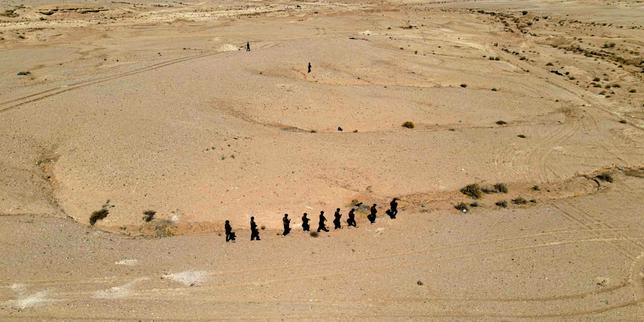
The recent reports regarding a clandestine Israeli military presence in Iraq represent more than a localized security breach; they signal a fundamental shift in the regional intelligence-gathering architecture. When reports emerge of a "secret base," the focus typically drifts toward sensationalism. A rigorous analysis, however, demands we examine the Triad of Operational Necessity: localized signal collection, kinetic latency reduction, and the geopolitical cost-benefit function of deniability.
The existence of such a facility is not a random occurrence but a calculated response to the technical limitations of satellite reconnaissance. While orbital assets provide high-resolution imagery, they cannot replace the persistent, low-latency electronic intelligence (ELINT) and human intelligence (HUMINT) capabilities provided by a physical ground presence. In the theater of modern asymmetric warfare, the proximity of the sensor to the target determines the utility of the data collected.
The Technical Infrastructure of Proximity
The primary driver for establishing a physical footprint in a hostile or semi-hostile environment like Iraq is the physics of signal propagation. Modern communication encryption and frequency-hopping techniques used by state and non-state actors require intercept points within a specific geographic radius to maintain high-fidelity data capture.
- Line-of-Sight Limitations: High-frequency communications used by tactical units often require ground-based receivers to bypass the curvature of the earth and terrain masking.
- Latency in the Kill Chain: For time-sensitive targets, the delay between signal detection and kinetic response must be minimized. A base in Iraq reduces the signal-to-decision loop by seconds that are critical when tracking mobile missile launchers or high-value personnel.
- Signal Density Management: Satellite-based sensors often struggle with "noise" in densely populated or technologically cluttered environments. Ground-based stations allow for directional antenna arrays that can isolate specific communication nodes with surgical precision.
This infrastructure is not merely about listening; it is about establishing a Forward Operating Node that can facilitate clandestine entries, serve as a logistical waypoint for special operations, and act as a hard-wired link into local telecommunications grids that are otherwise air-gapped from global networks.
Geopolitical Friction and the Deniability Framework
The revelation of such a base creates an immediate surge in "strategic friction"—the resistance encountered when political realities collide with covert military objectives. The Iraqi government’s reaction is a mandatory performance within the Sovereignty Validation Loop. Baghdad must condemn these reports to maintain domestic legitimacy and satisfy its alignment with regional partners, regardless of whether elements within the Iraqi security apparatus were complicit or aware.
The logic of deniability rests on three pillars:
- Plausible Ignorance: The host nation can claim the facility was established via shell companies or under the guise of commercial enterprise.
- Operational Siloing: Intelligence activities are often partitioned so that only a fraction of the local administration is aware of the true nature of the site.
- The Burden of Proof: In international relations, a rumor or a leaked report does not constitute a legal casus belli. Without a formal, transparent investigation—which Iraq is unlikely to conduct for fear of what it might find—the base remains in a state of "functional ambiguity."
This ambiguity serves Israel’s broader strategy of Active Deterrence. By allowing the possibility of their presence to be known without officially confirming it, they project power and reach without the immediate diplomatic fallout of a declared military deployment.
The Logistics of Clandestine Sustainment
Maintaining a secret base in a region saturated with hostile intelligence services requires an elite level of logistical discipline. The "Cost Function of Secrecy" increases exponentially with the size of the facility and the number of personnel involved. To remain undetected, such an installation must integrate into the existing socio-economic fabric of its surroundings.
The supply chain for a covert base typically mimics legitimate commercial traffic. Equipment is often labeled as telecommunications infrastructure or agricultural technology. Personnel do not move in military formation; they utilize the Commercial Cover Matrix, arriving as consultants, engineers, or contractors. This creates a bottleneck in operational capacity; the base cannot be large enough to defend itself against a conventional assault without losing its primary asset: its invisibility.
Regional Power Dynamics and the Intelligence Vacuum
The reaction to the discovery—or the rumor—of an Israeli base in Iraq must be viewed through the lens of the Iran-Israel shadow war. For Tehran, a permanent Israeli sensor array on its doorstep is a direct threat to its "Land Bridge" strategy, which aims to secure a corridor from Iran through Iraq and Syria to Lebanon.
The intelligence vacuum in Iraq, created by years of internal instability and shifting alliances, provides the perfect medium for this type of infiltration. When a state cannot effectively police its own borders or monitor its spectrum, foreign actors will inevitably occupy that space. This creates a Dependency Trap for the host nation: the more a country relies on foreign intelligence to maintain internal stability against groups like ISIS, the more vulnerable it becomes to the establishment of "unauthorized" facilities by those same foreign partners.
Structural Vulnerabilities in Covert Deployments
Despite the tactical advantages, secret bases are subject to significant structural vulnerabilities. The most prominent is the Leakage Probability Gradient. As the duration of the deployment increases, the likelihood of a security breach rises due to:
- Local Interaction: Personnel eventually interact with local populations, increasing the risk of HUMINT compromise.
- Digital Footprints: Despite rigorous COMSEC (Communications Security), the concentration of encrypted data traffic from a "rural" or "commercial" site eventually triggers the algorithms of rival intelligence services.
- Political Shifts: A change in local leadership can suddenly turn a "tolerated" secret base into a political liability or a target for a raid to score domestic points.
The discovery of the base in Iraq is likely the result of one of these variables reaching a tipping point. It is rarely a single failure but a cumulative degradation of the "low-profile" status.
Strategic Recommendation: The Pivot to Distributed Nodes
The era of the large, centralized "secret base" is nearing its end due to the ubiquity of high-resolution commercial satellite imagery (SAR and multispectral) and the proliferation of open-source intelligence (OSINT). Future strategies will likely shift toward a Distributed Intelligence Architecture.
Instead of one hardened facility, intelligence services will utilize a network of smaller, ephemeral nodes—"pop-up" stations that operate for weeks rather than years. This reduces the risk of detection and ensures that the loss of a single node does not compromise the entire theater of operations.
For regional actors, the priority must shift from reactive condemnation to the development of sovereign spectrum monitoring and aerial surveillance. As long as the technological gap remains wide, the sovereign soil of nations like Iraq will continue to serve as the silent battlefield for external powers. The strategic play for Israel moving forward is not to defend the compromised site, but to utilize the distraction of its "discovery" to finish the transition to more resilient, distributed systems that leave no physical footprint for the media or rival governments to exploit.