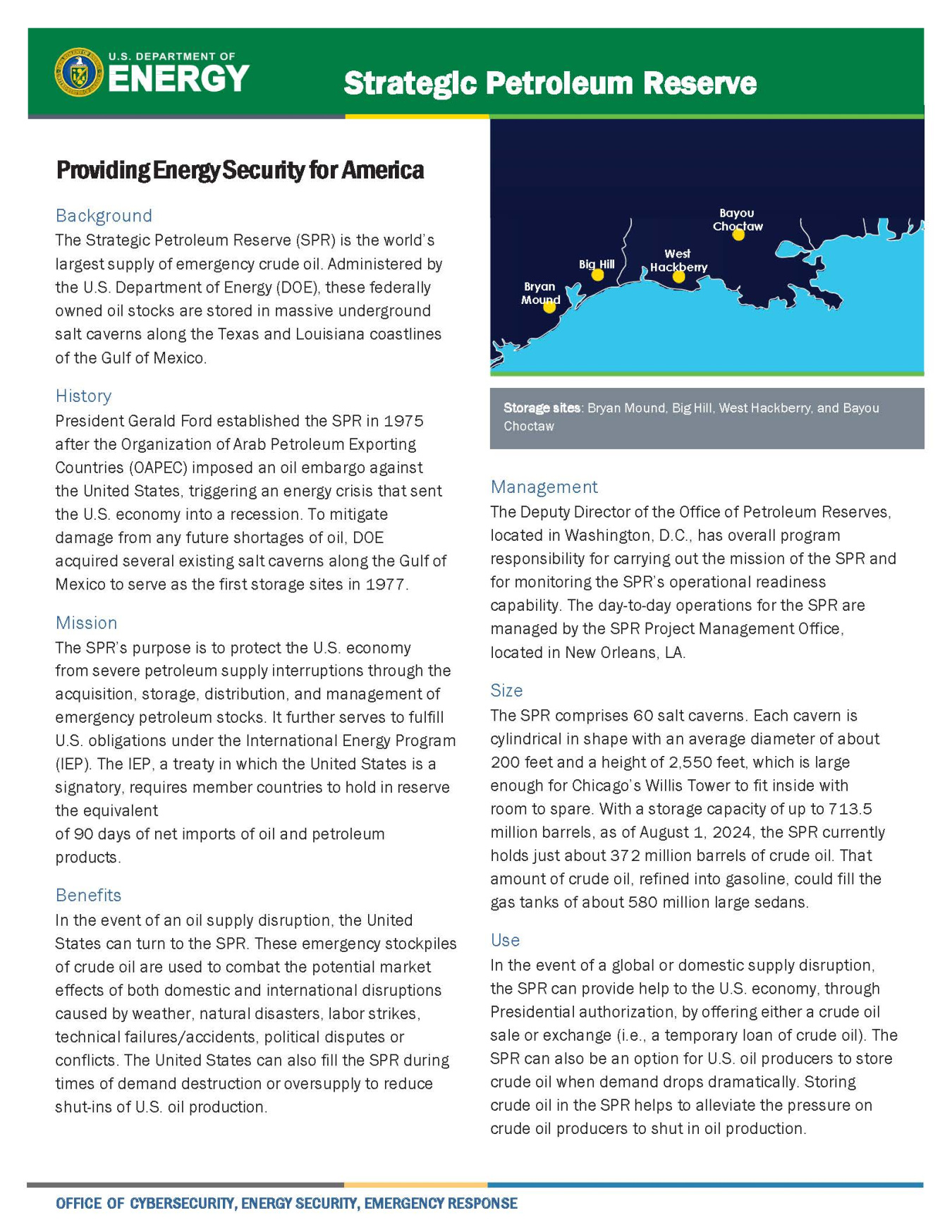
The call for the International Energy Agency (IEA) to release oil reserves following a supply disruption is not a mere political gesture; it is a tactical maneuver within a complex global energy arbitrage system. When a supply shock occurs, the immediate objective is to neutralize the "risk premium" that speculators bake into crude prices before physical shortages even manifest. The Strategic Petroleum Reserve (SPR) and its international counterparts function as a high-pressure valve in the global supply chain, designed to prevent price decoupling from fundamental demand.
The Triad of Energy Reserve Utility
To understand the efficacy of an IEA-coordinated release, one must categorize the intervention into three distinct functional pillars:
- Physical Liquidity Injection: The most direct mechanism. By introducing millions of barrels of sweet or sour crude into the spot market, the IEA physically offsets the volume lost from a disrupted source. This narrows the "bid-ask spread" in global energy markets.
- Psychological Market Dampening: Commodity markets trade on future expectations. An IEA announcement signals to the market that the world's largest economies will not permit an uncapped price spiral. This targets the volatility index rather than just the price floor.
- Refinery Throughput Stabilization: Sudden disruptions often leave specific refinery configurations (complex vs. simple) without their required feedstock. IEA releases are often "targeted" by crude grade to ensure that the downstream production of gasoline and diesel remains uninterrupted at a regional level.
The Cost Function of IEA Inaction
The decision to delay an IEA release is a high-stakes calculation of "opportunity cost vs. strategic depletion." When the Secretary of the Interior calls for a release, the underlying premise is that the cost of an oil price spike—measured in inflationary pressure and decreased industrial output—is higher than the risk of entering a future crisis with diminished reserves. This is a classic "insurance premium" problem: at what point do you use the coverage you have been paying for?
The cost of inaction is not linear. It follows an exponential curve:
- Phase 1: Incremental Price Rise. Manageable within existing corporate margins.
- Phase 2: Marginal Demand Destruction. High-energy-intensity industries begin to scale back production.
- Phase 3: Macroeconomic Contraction. High energy costs translate into a general consumer spending freeze, triggering a recessionary cycle.
By the time Phase 3 is reached, an IEA release is often too late to reverse the structural damage. This explains the urgency in Interior Secretary Burgum's call to act while the market is still in Phase 2.
Mechanical Constraints of the Strategic Petroleum Reserve
A common misconception is that an IEA release is a binary "on/off" switch. In reality, it is a logistical bottleneck. The SPR's maximum drawdown rate is limited by physical infrastructure: pump capacity, pipeline diameters, and terminal availability.
$$Drawdown_{max} = \sum (Pump_{cap} \times Efficiency) - Pipeline_{congestion}$$
The United States, for instance, has a maximum drawdown capacity of roughly 4.4 million barrels per day. However, this is a theoretical peak. If the Gulf Coast refinery systems are already at 95% capacity, those 4.4 million barrels have nowhere to go unless they are exported. This creates a secondary geopolitical friction: should a domestic reserve be used to supply global markets, or should it be hoarded for domestic price stabilization?
The Logic of Synchronized IEA Action
The IEA's power lies in coordination. If the US releases 30 million barrels and Japan, South Korea, and Germany release zero, the US simply subsidizes the global market at its own strategic expense. A synchronized release—where all IEA member nations release a proportional percentage of their 90-day net import requirement—prevents any single nation from bearing the "depletion risk" alone. This is the cornerstone of the IEA’s collective security agreement.
- Uniformity of Signal: A global release is a more powerful psychological tool than a unilateral one.
- Geographic Proximity: Releasing oil from European or Asian reserves puts physical supply closer to where the disruption may have occurred, reducing shipping times and freight costs.
- Grade Optimization: Different IEA members hold different types of crude (e.g., light sweet vs. heavy sour). A coordinated release can "match" the specific grade of oil lost in the disruption, maintaining the chemical balance required for global refinery fleets.
The Friction of Re-stocking and the Terminal Value of Crude
A significant limitation of calling for a release is the "refill requirement." Every barrel released today is a barrel that must be purchased back tomorrow—often at a higher price if the supply disruption is prolonged. This creates a "short position" for the government.
The strategic risk is not just the current price, but the future replacement cost. If the IEA releases 60 million barrels at $85 per barrel and the disruption continues for six months, the cost to refill those reserves could rise to $100 per barrel. This is a net loss for the taxpayer and a degradation of national energy security.
Strategic Play: The Controlled Release Calibration
The most effective strategy for the Interior Secretary to advocate for is not a massive, one-time dump, but a "calibrated release schedule." This involves releasing 1-2 million barrels per day over an extended 30-to-60-day window. This approach serves three tactical goals:
- It provides a steady, predictable supply of liquidity to the market.
- It allows the IEA to monitor the market’s reaction in real-time and adjust the volume of the release as needed.
- It prevents a "glut" that could cause a localized storage crisis while still providing enough downward pressure on the global benchmark.
The objective is to reach a "stabilization equilibrium" where the price of crude reflects its true scarcity without the additional $10-$20 "fear premium" that accompanies sudden geopolitical shocks.
The IEA must now determine the precise "trigger point" for this intervention. If the supply disruption exceeds 7% of global production for more than 14 days, the structural case for an immediate, coordinated release becomes undeniable. At that point, the risk of depletion is secondary to the risk of a global stagflationary spiral triggered by an uncontained energy shock. The move must be decisive, international, and grade-specific to prevent a localized market failure from becoming a global economic contagion.