Tonight, millions of people will crane their necks at the night sky, squinting at a perfectly ordinary chunk of space rock while convinced they are witnessing a rare, blushing cosmic miracle.
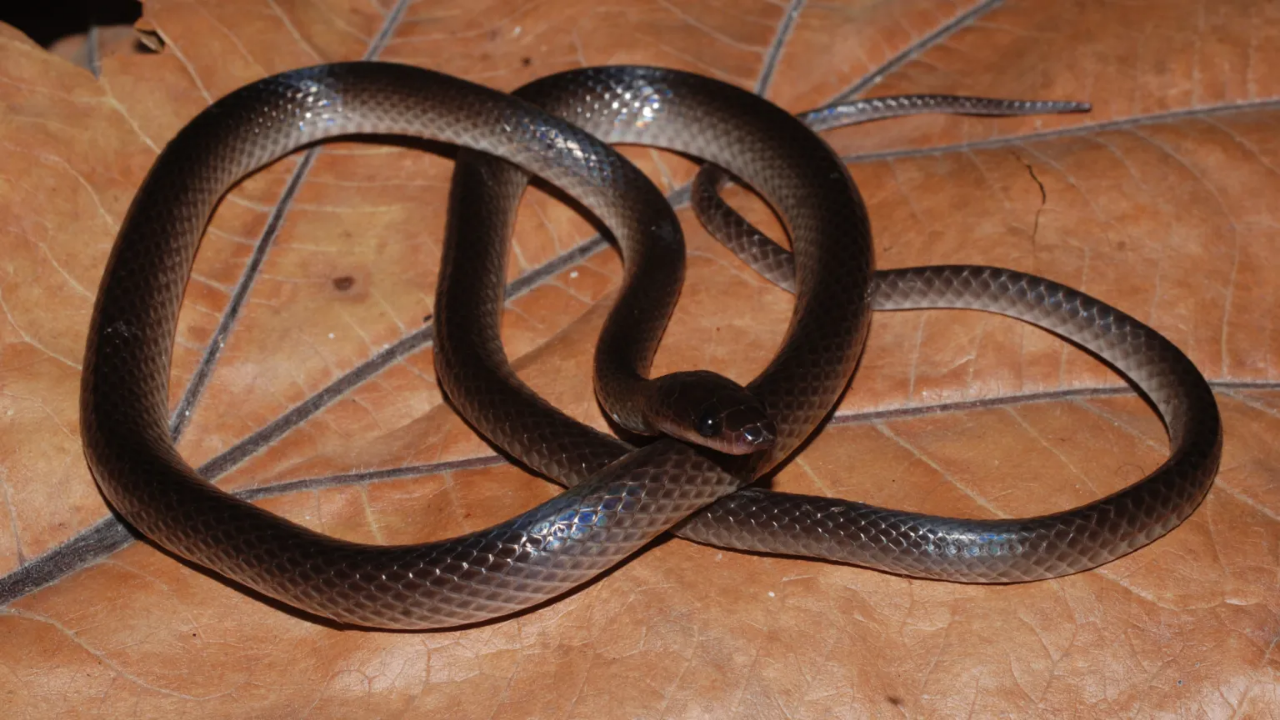
They are being duped. You might also find this related coverage interesting: Why Scientists Named a New Snake Species After Guns N Roses Guitarist Slash.
Every June, digital publishers churn out identical, low-effort guides urging you to run outside and catch the spectacular "Strawberry Moon." They promise a vibrant, pink-hued spectacle. They couple it with vague astrological nonsense about emotional resets and cosmic alignment.
It is a masterclass in clickbait marketing, completely divorced from actual astronomy. The "Strawberry Moon" is not pink. It is not rare. It is an arbitrary cultural label weaponized by algorithmic media outlets to manufacture viral FOMO out of a routine monthly event. As highlighted in latest reports by Scientific American, the implications are notable.
If you want to actually appreciate the night sky, you need to stop falling for the hype cycle.
The Pink Myth: Dismantling the Color Lie
Let’s establish the most basic baseline of reality: the moon does not change its physical composition or surface reflection based on the ripening schedule of North American fruit.
The name originates from the Algonquin tribes, who used the full moon of June as a tracking mechanism for harvesting wild strawberries. It was a calendar system, not a literal description. Somewhere along the line, modern lifestyle media bastardized this practical utility into a visual promise.
Expected: 🍓 (Vibrant Pink/Red)
Reality:  🌕 (Standard Pearly White/Yellow)
The only time a full moon looks remotely red or pink is when it is hanging low on the horizon. This isn't unique to June. It is a fundamental optical phenomenon called Rayleigh scattering. When the moon is low, its reflected light has to pass through a much thicker layer of Earth’s atmosphere to reach your eyes. The atmosphere scatters shorter wavelengths of light (like blue and violet) while letting longer wavelengths (like red and orange) pass through.
You can see a reddish moon in October, January, or a random Tuesday in mid-April if the atmospheric dust and humidity conditions are right. Calling June's lunation a "Strawberry Moon" to imply a unique aesthetic properties is like calling a winter snowfall "Hot Cocoa Snow" just because people like to drink chocolate when it's cold outside.
The Illusion of Scarcity
The media loves to treat full moons like limited-edition sneaker drops. They frame it as a blink-and-you'll-miss-it phenomenon.
The reality? A full moon happens every 29.5 days. It is one of the most predictable, recurring cycles in the known universe.
Furthermore, a full moon is technically an instantaneous moment in time—the exact second when the Moon is directly opposite the Sun in its orbit. To the human eye, however, the moon appears completely full for about three days. If you miss it tonight, it will look virtually identical tomorrow night. The panic-driven narrative that you must drop everything to see it at 11:42 PM is a manufactured crisis designed to drive real-time traffic to ad-heavy websites.
You Are Looking at the Sky Completely Wrong
If you want to actually look at the moon and experience genuine awe, doing it during a heavily publicized full moon is the worst possible strategy.
Ask any amateur astronomer or astrophotographer with a few years of dirt on their tripod. A full moon is flat, washed out, and blindingly bright. Because the sun is shining directly on the lunar surface from our perspective, there are almost no shadows.
Without shadows, you lose all depth perception. The spectacular craters, the towering mountain ranges like the Apennines, and the deep, jagged valleys completely vanish into a harsh, uniform glare. It is the celestial equivalent of blasting a subject with a cheap, direct camera flash.
When to Actually Look
If you want to see the moon in its true, cinematic glory, look at it during its quarter phases (the crescent or gibbous moons).
Focus your eyes or your binoculars along the terminator line—the shifting boundary dividing the illuminated day side from the dark night side. Along this line, the sunlight hits the lunar surface at a shallow angle, casting massive, dramatic shadows that reveal the true, violent topography of the moon. A crescent moon will show you details that a full moon completely obliterates.
| Moon Phase | Visual Quality | Best Features Visible |
|---|---|---|
| Full Moon | Flat, blinding, lacks contrast | Ray systems (like Tycho crater) |
| Quarter / Gibbous | High contrast, dramatic depth | Crater walls, mountain peaks, valleys |
The "People Also Ask" Deception
Search engines are flooded with questions that prove how deeply this misinformation has taken root. Let's correct the record plainly.
- "What time is the Strawberry Moon at its peak?" It doesn't matter. Unless you are calculating tidal variances for maritime navigation, the exact minute of fullness is irrelevant to your visual experience. Just look up when it's dark.
- "Will the Strawberry Moon affect my mood or sleep?" No. Barring the slight psychological effect of having a brighter night sky keeping you awake if your curtains are thin, the moon does not exert a mystical gravitational pull on your brain chemistry. The tides change because the ocean is a massive, fluid body of water spanning thousands of miles. Your body is not a vast ocean.
- "Is the Strawberry Moon a supermoon?" Sometimes it aligns with perigee (the moon's closest approach to Earth), but even when it does, the size difference is practically imperceptible to the naked eye. It’s an increase of about 14% in perceived size, which is easily eclipsed by the "moon illusion"—a psychological trick where your brain perceives the moon as huge when it's next to trees or buildings on the horizon.
Stop Consuming the Hype
The relentless commodification of the night sky serves nobody. It turns genuine scientific appreciation into cheap, disposable content. When people run outside expecting a glowing pink orb and find a standard, bright yellow circle, they don't get inspired by astronomy—they get bored. They feel let down.
Stop waiting for a calendar label to tell you when the sky is interesting. Put down the hype guides, ignore the viral tickers, and buy a cheap pair of 7x50 binoculars. Wait for a random weeknight when the moon is a mere sliver, point your lenses at the terminator line, and look at the actual, rugged reality of space.
Leave the strawberries in the grocery store.