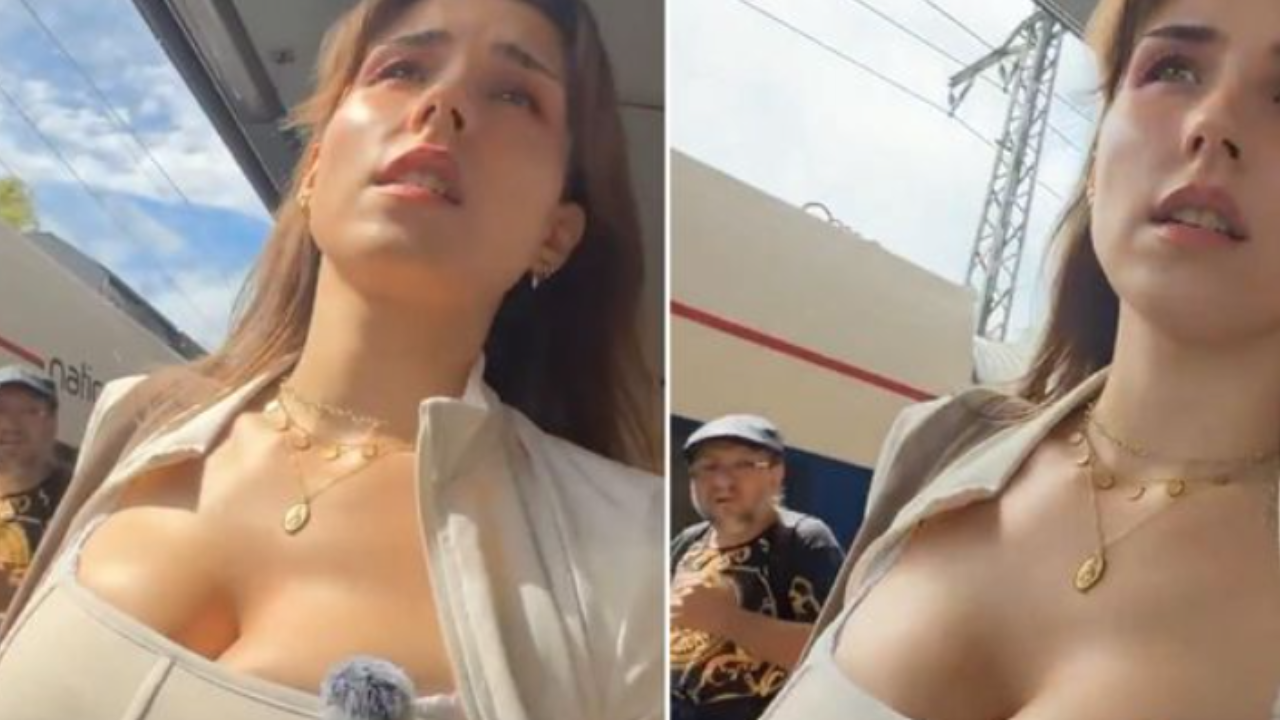
When German Twitch creator ZoeMatthea turned on her camera during a routine trip to Cologne for Gamescom, she did not expect to broadcast an active security threat to hundreds of concurrent viewers. An IRL (In Real Life) stream intended to capture the electric anticipation of Europe's massive annual gaming convention suddenly pivoted into a chilling document of harassment. Midway through her transit through a local train station, a man she immediately recognized—and whom she alleges has stalked her across a grueling two-year window—appeared in her immediate physical vicinity.
The resulting clip, titled bluntly as "Dokumentation stalking," captured the visceral reality of creator vulnerability in the digital age of broadcast media. It lays bare a systemic failure that stretches far beyond a single frightening encounter in a crowded German transit hub. Creator safety mechanisms remain fundamentally broken, leaving mid-tier broadcasters to fend for themselves while platforms and law enforcement agencies struggle to adapt to the physical dangers inherent to live location sharing.
For years, the creator economy has treated physical security as an afterthought. Platforms prioritize hyper-engagement, real-time interactivity, and uninterrupted content delivery above all else. When a streamer steps outside their home office and takes their broadcast into the public sphere, they transform themselves into moving targets. Millions of viewers watch raw footage with zero transmission delay. Anyone with a passing knowledge of local geography, transit lines, or specific architectural landmarks can pinpoint a creator's exact coordinates within minutes.
ZoeMatthea’s ordeal highlights the terrifying limits of institutional protection. According to details shared within the broader European streaming community regarding her legal efforts, local law enforcement previously issued warnings to the individual in question. Yet, subsequent legal filings met a bureaucratic brick wall. Reports detailing the official police response indicate that authorities claimed there was insufficient evidence to definitively establish the legal threshold for criminal stalking. The reasoning? Investigators suggested it could not be definitively proven that the streamer had explicitly and formally communicated a revocation of consent for contact to the alleged harasser.
This evidentiary standard exposes a profound disconnect between legal definitions of harassment and the dynamic reality of online public figures. Creators cannot always stop to formally negotiate boundaries with strangers who materialize in public spaces without escalating a volatile situation. Asking a target of harassment to hand-deliver a legal notice while running an active live stream places an absurd, dangerous burden on the victim. The law demands clear lines of demarcation that are often impossible to draw when dealing with obsessive behavior fueled by parasocial fixation.
The architecture of IRL streaming encourages this vulnerability. Viewers crave authenticity. They want to see the crowded convention floors, the bustling restaurant patios, and the spontaneous transit delays. This demand for unfiltered access strips away traditional safety buffers. When ZoeMatthea noticed the individual at the Cologne transit station, her physical reaction was immediate: she altered her posture, scanned her environment, and attempted to put distance between herself and the threat. Those brief, frantic seconds broadcast live to a modest audience of several hundred people underline the psychological toll carried by creators who never truly know if their community contains a threat.
Platforms like Twitch provide monetization frameworks, chat moderation tools, and community guidelines, but they wash their hands of offline security. Standard advice given to creators usually involves turning off streams, hiding location data, or hiring private security. For a mid-tier streamer with roughly 46,000 followers, hiring private security details for a convention trip is financially unviable. Conventions like Gamescom draw hundreds of thousands of attendees into a dense urban center, creating a logistical nightmare for anyone trying to maintain anonymity while working.
The recurrence of these incidents points to a deeper pathology within digital fandom. The illusion of intimacy fostered by live chat rooms breeds severe boundary distortion. Some viewers lose the capacity to separate the persona on the screen from a living, breathing human being deserving of privacy and safety. When that parasocial delusion transforms into obsession, the digital screen acts as a magnifying glass, focusing dangerous fixations into real-world action.
Addressing this crisis requires a complete overhaul of how the industry approaches physical risk. Broadcasters need specialized security protocols designed for mobile environments. Hardware manufacturers and software developers must look into automated stream-delay options for IRL broadcasts that can mask environmental audio or visual cues in real-time if suspicious behavior is detected. More importantly, law enforcement agencies across Europe and North America must modernize their training protocols to recognize the unique vectors of digital-age harassment. Stalking that originates through online broadcast mediums follows different patterns than traditional surveillance, requiring agile investigative responses that do not penalize the victim for failing to negotiate with an aggressor on camera.
ZoeMatthea's decision to record and preserve the evidence under the cold light of a live broadcast was an act of survival documentation. It forces an uncomfortable conversation onto an industry that prefers to look away. Until platforms take structural responsibility for the physical safety of the people generating their content, and until legal systems catch up to the realities of online celebrity, creators will continue to walk public streets as unprotected targets, broadcasting their own jeopardy for the world to see.


