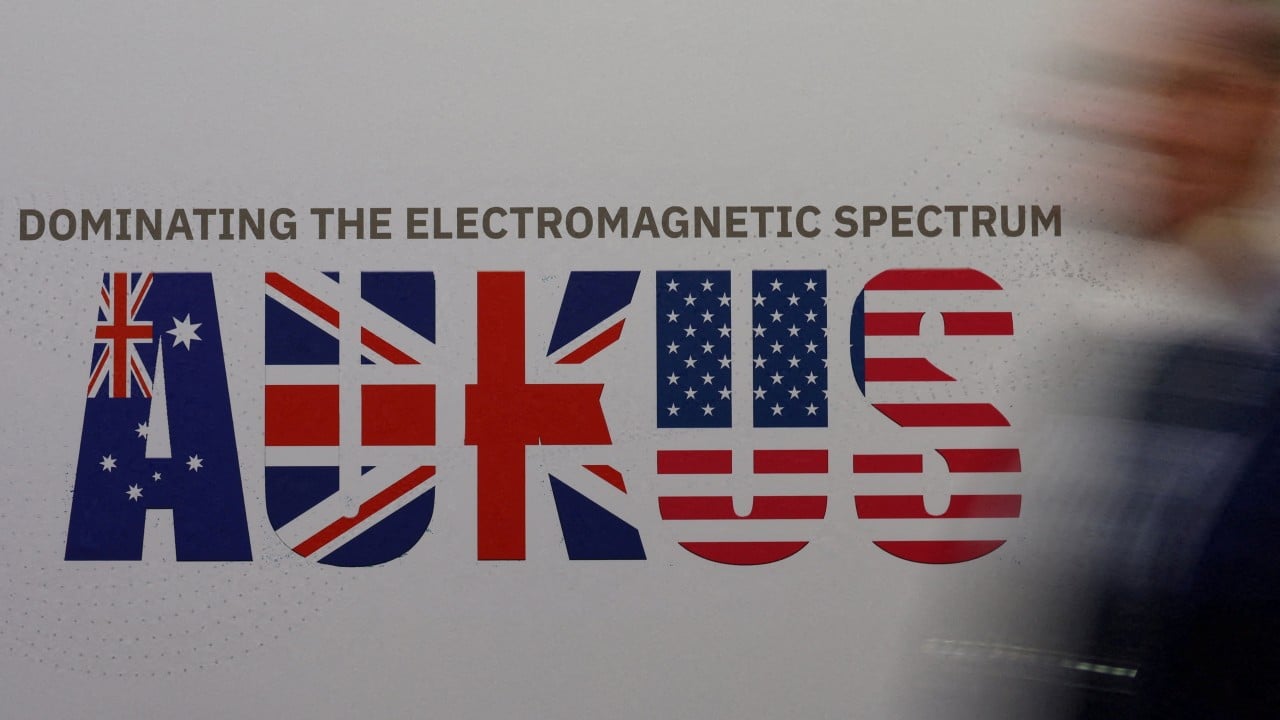
The multi-billion-dollar Aukus defense pact relies on an assumption of industrial output that does not exist in reality. When an independent, crowd-funded public inquiry led by former Australian officials began scrutinizing the agreement, the discourse shifted from diplomatic solidarity to concrete mechanics. At its core, the arrangement forces a middle-power nation to finance foreign shipyard infrastructure while accepting a high-probability capability gap. Analyzing the mechanics of the pact reveals deep structural vulnerabilities in production capacity, fiscal opportunity costs, and strategic autonomy.
The Industrial Bottleneck and Production Reality
The primary mechanism of the Aukus optimal pathway depends on the United States transferring up to three second-hand Virginia-class nuclear-powered submarines to Australia during the 2030s before domestic production of the new SSN-Aukus class begins. This timeline contains a structural impossibility. United States naval shipyards currently face severe backlogs, struggling to meet their own domestic maintenance and construction quotas.
To execute the transfer, a future United States president must legally certify that the sale does not degrade American undersea capabilities. When domestic naval readiness is already strained by a deficit of hulls, the political probability of this certification approaches zero. A state cannot export assets it has not built, and American industrial throughput cannot simultaneously satisfy domestic fleet requirements and export quotas. Retired naval experts and former political leaders have noted that treating these transfers as guaranteed inventory is a strategic miscalculation. The shipyards lack the trained workforce, raw material supply chains, and dry-dock capacity to accelerate production on demand. Pouring capital into foreign industrial bases does not instantly compress the multi-year timelines required to construct nuclear propulsion systems.
The Cost Function and Fiscal Opportunity Cost
Allocating an estimated $368 billion over decades creates severe domestic fiscal friction. Every dollar committed to a capital-intensive defense acquisition program carries an implicit opportunity cost. In economic terms, high-value discretionary defense spending diverts labor, engineering talent, and capital away from domestic productivity drivers, public infrastructure, and technological innovation.
The financial commitment is front-loaded with billions directed toward upgrading shipyards in the United States and the United Kingdom before any sovereign manufacturing capability materializes locally. This creates an asymmetric financial flow. Australia assumes the fiscal risk while external allies retain control over the intellectual property, design iterations, and construction schedules. The transaction resembles a procurement subsidy rather than a sovereign capability acquisition, transferring domestic tax revenue into foreign industrial ecosystems with zero guarantee of final delivery.
Strategic Sovereignty and Force Posture Integration
Aukus alters the structural alignment of Australian defense policy by deepening integration into American force postures. The establishment of Submarine Rotational Force-West at HMAS Stirling in Western Australia brings allied nuclear-powered submarines into domestic facilities on a permanent rotational basis. While administrative definitions avoid classifying this arrangement as a formal foreign base, the operational reality functions identically.
This posture introduces strategic friction regarding regional trade and diplomatic independence. Australia conducts its primary economic export volume through maritime corridors shared with its largest trading partner, China. Tying national defense posture to an external superpower's long-term containment strategy increases exposure to great-power competition without providing an independent deterrent mechanism. A defensive architecture that relies entirely on interoperability with a foreign command structure limits tactical flexibility. If alliance priorities diverge during a regional crisis, a nation whose operational sustainment depends on foreign technicians and parts experiences an immediate loss of sovereign agency.
The Alternative Path and Sunk Cost Fallacy
Defense procurement decisions frequently suffer from the sunk cost fallacy, where prior expenditure prevents rational re-evaluation. The abandonment of the conventional French Attack-class submarine contract in 2021 discarded a localized build program in favor of an unproven nuclear roadmap. Critics within naval architecture fields point out that conventional or alternative low-enriched uranium propulsion models offered domestic construction advantages and shorter delivery horizons without the geopolitical complications of highly enriched naval reactors.
Continuing down the current trajectory without a validated contingency plan guarantees vulnerability. If the United States experiences further shipbuilding delays or political shifts in strategic focus, Australia faces an extended capability gap as its ageing Collins-class fleet reaches end-of-life parameters.
Strategic Execution
Establish a formal, time-bound domestic audit of naval workforce training pipelines to determine the precise threshold at which local sustainment capabilities fail. Concurrently, mandate an open-book review of all milestone payments made to foreign shipyards, tying future financial disbursements strictly to verifiable hull delivery metrics rather than calendar-based promises.