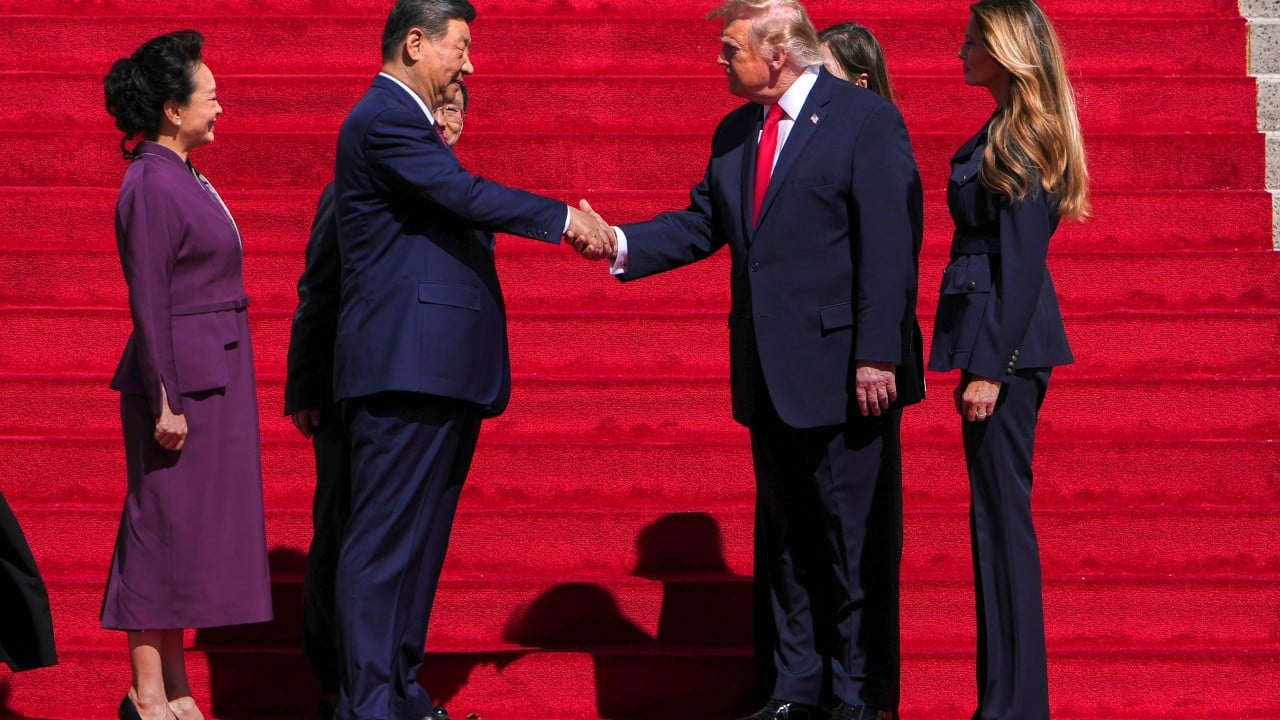
Geopolitical summits are often analyzed through the lens of personal rapport, yet enduring diplomatic outcomes are dictated by structural leverage, structural cost functions, and institutional constraints. As heads of state converge on Shenzhen for the Asia-Pacific Economic Cooperation gathering, the baseline conditions heavily favor Beijing. Evaluating the upcoming bilateral and trilateral engagements requires moving past the superficial optics of handshakes and trade truces to examine the underlying power dynamics.
The Nuclear Asymmetry and Arms Control Stalling
A primary objective driving Washington toward the trilateral table with Beijing and Moscow is the institutionalization of a new framework for nuclear arms reduction. The expiration of bilateral strategic arms agreements between the United States and Russia has left major arsenals unconstrained for the first time in decades. However, the inclusion of China in this equation runs directly into an insurmountable mathematical and strategic barrier.
Beijing operates under a strict deterrence threshold that requires a smaller, highly survivable nuclear force compared to the massive arsenals held by Washington and Moscow. Forcing China into a trilateral arms control architecture imposes an asymmetric disadvantage. If Beijing accepts quantitative caps at its current inventory level, it locks in permanent strategic inferiority.
The structural cost function for China dictates absolute refusal until its overall capabilities approach parity. Consequently, any American push for immediate Chinese disarmament commitments is fundamentally miscalibrated. Beijing can utilize the multilateral forum to project statesmanship while yielding zero substantive concessions on its strategic deterrent, transforming an American diplomatic initiative into an exercise in optics.
Trade Truces and the Rare Earth Bottleneck
Economic statecraft between Washington and Beijing operates on a transactional axis where short-term truces mask deep structural decoupling. While previous high-level meetings yielded temporary agreements on selective tariff treatment and fentanyl cooperation, critical minerals remain an acute point of vulnerability for Western supply chains.
China maintains near-monopolistic control over the refining and processing infrastructure for heavy rare earth elements essential to advanced electronics, defense manufacturing, and the technology stack. When bilateral negotiations stall or export controls tighten, Beijing utilizes administrative chokepoints rather than overt embargoes to modulate supply.
The structural reality of this supply chain asymmetry means that Washington enters the economic discussions with defensive objectives—seeking stability, rare-earth continuity, and artificial intelligence safety guardrails—while Beijing operates from a position of offensive supply-side dominance. Because domestic political pressures in the United States limit the administration's ability to offer permanent tariff relief, trade compromises remain fragile, easily disrupted by legislative pushback or shifting electoral mandates.
Institutional Friction and Domestic Constraints
Diplomatic positioning at Apec is further constrained by domestic institutional divergence. Executive ambitions for sweeping international agreements face immediate friction from legislative bodies. In Washington, any formal trilateral compact or shift in posture regarding regional flashpoints encounters intense bipartisan skepticism from a Congress poised to block concessions on sovereignty and territorial integrity.
Conversely, Beijing operates under centralized decision-making that insulates its negotiating strategy from legislative variance, granting Xi Jinping structural consistency that democratic executives lack. This institutional asymmetry alters how foreign counterparts calculate risk. Regional allies in the Indo-Pacific observe White House overtures with underlying anxiety, calculating that executive promises made in bilateral settings may be neutralized or reversed by subsequent congressional action.
This dynamic weakens the credibility of American deterrence commitments, particularly regarding territorial disputes in the South China Sea and the Taiwan Strait. While Washington seeks assurances against regional coercion, Beijing continues to assert administrative and military pressure along its periphery without altering its baseline calculus, knowing that foreign expressions of concern carry minimal institutional enforcement.
The Trilateral Optic and European Divergence
The introduction of a three-way summit format involving the United States, Russia, and China introduces acute friction within Western alliances. European capitals monitor these developments with apprehension, fearing that bilateral bargaining priorities between Washington and Beijing will sideline allied interests—specifically regarding ongoing conflicts in Europe.
Beijing navigates this diplomatic triangulation with calculated precision. While Washington attempts to steer trilateral discussions toward global security architecture and regional conflicts, Chinese leadership consistently frames major security disputes through the lens of regional autonomy, insisting that European security frameworks remain separate from Asian dynamics. This rhetorical boundary prevents the formation of a unified anti-China front among Western and Asian partners, preserving Beijing's strategic partnership with Moscow while keeping Brussels and Washington structurally misaligned.
Execute strategic engagements by prioritizing bounded, verifiable technical arrangements—such as artificial intelligence crisis communication channels—while abandoning expectations for sweeping grand bargains on nuclear parity or structural supply chain realignment. Focus resources on bolstering allied supply chain redundancy rather than pursuing diplomatic communiques that trade long-term deterrence for short-term photographic compliance.