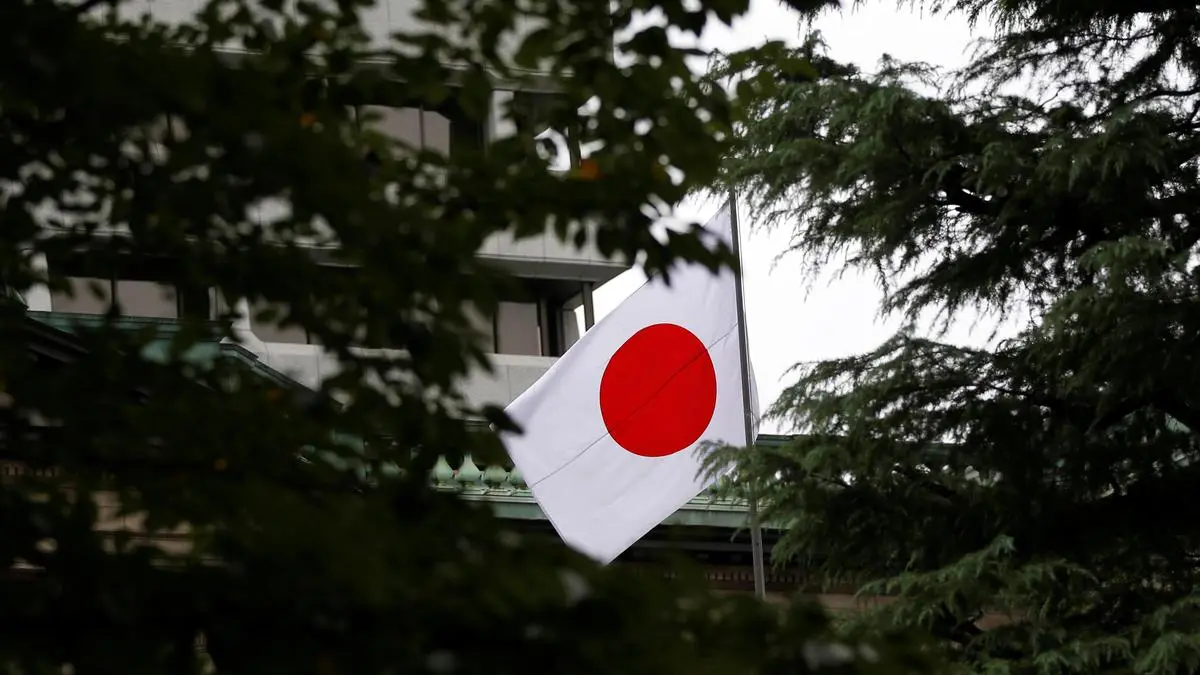
Japan’s decision to permit the export of lethal defense equipment, specifically finished goods like the F-3 combat aircraft developed under the Global Combat Air Programme (GCAP), represents the terminal phase of the "Proactive Contribution to Peace" doctrine. This is not a mere policy tweak; it is a fundamental reconfiguration of Japan's industrial-military complex designed to solve a specific economic bottleneck: the unsustainable unit cost of domestic procurement. By moving beyond the Three Principles on Transfer of Defense Equipment and Technology, Tokyo is attempting to integrate into the global defense supply chain to prevent the total atrophy of its domestic aerospace and maritime engineering sectors.
The Triad of Strategic Drivers
The shift in Japan’s export posture is dictated by three intersecting pressures that rendered the previous pacifist-era restrictions obsolete.
- Amortization of Research and Development Costs: Modern sixth-generation fighter technology requires capital outlays that exceed the fiscal capacity of the Japanese Ministry of Defense (MoD) if the platform is restricted to domestic use. The GCAP project, partnered with the UK and Italy, operates on a burden-sharing model. Without the ability to export the final product to third-party nations, Japan’s share of the R&D costs would stay fixed while its procurement volume remained low, driving the per-unit cost to a level that would cannibalize the rest of the defense budget.
- Interoperability and Geopolitical Alignment: Exporting lethal hardware creates a multi-decadal dependency between the supplier and the buyer. By providing high-end platforms to Southeast Asian partners or European allies, Japan secures long-term maintenance contracts, technical training influence, and strategic alignment that functions as a soft-power multiplier.
- Industrial Base Resuscitation: Between 2003 and 2023, over 100 Japanese companies exited the defense sector. The lack of a profit motive, suppressed by low-volume domestic orders and a ban on international sales, made defense divisions a liability for conglomerates like Mitsubishi Heavy Industries (MHI) and Kawasaki Heavy Industries (KHI). Opening export markets provides the "economies of scale" necessary to keep these production lines viable.
The Mechanism of the F-3 Export Logic
The F-3 fighter serves as the primary case study for this policy shift. To understand why lethal exports became a necessity, one must examine the cost function of advanced aerospace manufacturing.
In traditional manufacturing, the Learning Curve Effect dictates that each doubling of cumulative production volume results in a fixed percentage reduction in unit costs. Under the previous ban, Japan’s production volume was capped by the requirements of the Air Self-Defense Force (ASDF), roughly 100 to 150 units. By entering the export market, Japan expands the potential "Total Addressable Market" (TAM) to 400 or 500 units. This volume expansion reduces the marginal cost of each aircraft, allowing the MoD to procure its own fleet at a lower price point while generating revenue from external sales to offset initial R&D investments.
Regulatory Guardrails and the "Direct Export" Filter
The Japanese Cabinet has not issued a blanket approval for all weapons. The current framework utilizes a two-tier filtration system:
- The Component Tier: Non-lethal components or parts for systems used in "rescue, transport, warning, surveillance, or minesweeping" have broader latitude.
- The Finished Product Tier: International joint development projects (like GCAP) allow for the export of finished lethal platforms to third countries, provided those countries have signed international agreements regarding the peaceful use of defense equipment and are not currently engaged in active conflict.
This distinction is critical. Japan is avoiding the role of a general arms merchant, instead positioning itself as a high-tier systems integrator for allied nations.
Countering the Pacific Pacifism Narrative
Criticism of this policy often centers on Article 9 of the Japanese Constitution. However, from a strategic consulting perspective, the "Pacifist Era" was already structurally compromised by the reality of regional "Anti-Access/Area Denial" (A2/AD) bubbles.
The military balance in the Indo-Pacific has shifted from a qualitative Japanese advantage to a quantitative disadvantage. To maintain a credible deterrent, Japan must possess "Counterstrike Capabilities." A counterstrike capability is functionally useless without a high-tech industrial base to iterate on missile technology and stealth airframes. Therefore, the export of lethal weapons is a defensive survival mechanism disguised as an offensive policy shift. The logic follows:
- Deterrence requires technology.
- Technology requires capital.
- Capital requires scale.
- Scale requires exports.
The Risk of Technology Seepage and Intellectual Property
A primary concern for a high-tech exporter like Japan is the protection of "black box" technologies. When Japan exports a platform like the F-3, it risks the reverse-engineering of its radar-absorbent materials (RAM) or its advanced AESA radar signatures.
To mitigate this, Japan utilizes a "Sovereign Data Link" strategy. While the hardware is exported, the core mission software often remains proprietary or requires frequent cryptographic updates from the Japanese OEM (Original Equipment Manufacturer). This creates a "Kill Switch" or "Performance Cap" that ensures the exported technology cannot be used against Japanese interests or integrated into non-aligned systems.
Economic Impediments to Immediate Success
Despite the policy change, Japan faces significant friction in the global arms market.
- Pricing Disadvantage: Decades of isolation have left Japanese defense firms with uncompetitive cost structures. Unlike US or French firms that have optimized their supply chains for global competition, Japanese firms are starting from a high-cost baseline.
- Lack of Combat Provenance: Global buyers prioritize equipment with "combat-proven" pedigrees. Japanese hardware, having never been used in active theater, will struggle to compete with American or Israeli systems that possess extensive operational data.
- Bureaucratic Lead Times: The requirement for Cabinet-level approval for specific export deals introduces a political risk that may deter potential buyers who require rapid procurement cycles.
The Strategic Path Forward
The success of Japan's new defense posture depends on its ability to move from a "build-to-order" domestic model to a "platform-as-a-service" global model. This requires the MoD and the Ministry of Economy, Trade and Industry (METI) to facilitate three specific actions:
- Consolidation of the Tier 2 and Tier 3 Supply Chain: Japan must encourage mergers among smaller defense component manufacturers to create larger, more efficient entities capable of meeting international volume demands.
- Investment in Maintenance, Repair, and Overhaul (MRO) Hubs: To win export contracts, Japan must establish MRO facilities in partner nations (e.g., Vietnam, Philippines, or Australia) to guarantee the lifecycle of the equipment.
- Cross-Sector Technology Transfer: Encouraging the flow of dual-use technology from Japan’s world-leading robotics and semiconductor sectors into the defense sector to leapfrog current western hardware limitations.
Japan is not merely "ending a ban." It is attempting to solve the fundamental economic paradox of high-end defense manufacturing in the 21st century. The F-3 program is the canary in the coal mine; if it fails to find international buyers, Japan’s domestic defense industry faces a slow, irreversible decline toward obsolescence. The goal is to secure a seat at the table of the "Global Defense Integrated Network," where survival is predicated on being a node in a larger supply chain rather than an isolated island of pacifism.