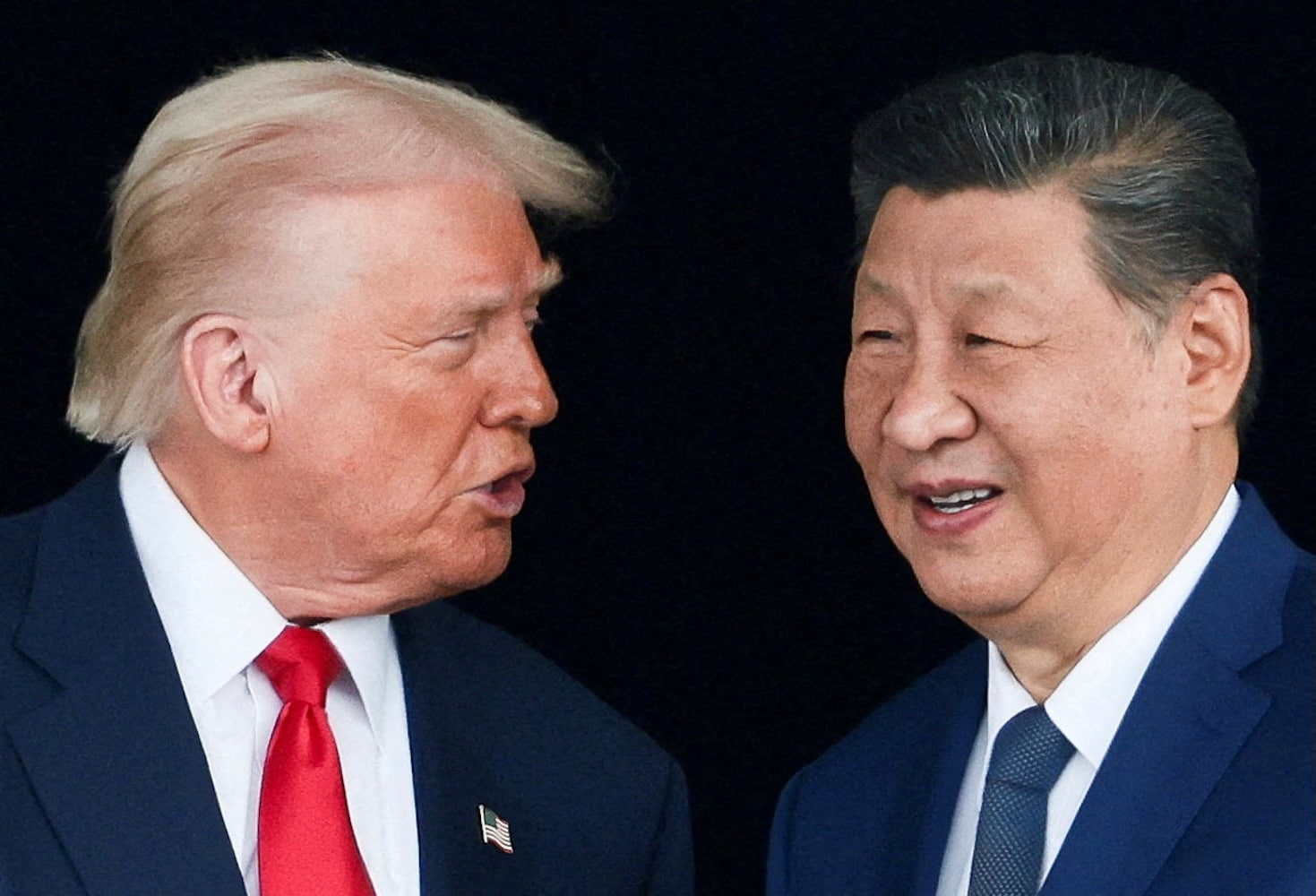
The upcoming May summit represents a collision between two incompatible economic architectures rather than a simple dispute over trade deficits. While superficial analysis focuses on total dollar volumes, the true friction point lies in the technological sovereignty gap and the divergence of state-led versus market-driven industrial policies. The US-China trade relationship is transitioning from a period of interdependent growth toward a phase of strategic containment. To understand the stakes of the summit, one must analyze the three structural pillars defining the current conflict: intellectual property enforcement, agricultural purchase quotas, and the "Great Firewall" of industrial subsidies.
The Asymmetry of Intellectual Property Enforcement
The primary driver of US aggression is the systemic leakage of high-value intangible assets. Current trade frameworks treat Intellectual Property (IP) as a static commodity, but in a digital-first economy, IP is a kinetic advantage. The US objective for the May summit is to force a transition from a "reactive litigation" model to a "proactive compliance" model within Chinese borders.
The failure of previous negotiations stems from a fundamental mismatch in legal definitions. Where US law views IP as a private property right, Chinese administrative practice often treats it as a utility for national development. This creates a bottleneck in any negotiation regarding forced technology transfers. The US seeks structural changes that would prevent the requirement of joint ventures for market access—a mechanism that has historically served as a conduit for technology migration.
Measurement of success in this pillar cannot be found in a signed memorandum. It must be tracked through the Rate of Technology Siphoning, which is a function of:
- The number of administrative audits performed by non-partisan oversight bodies.
- The removal of local-content requirements in high-tech sectors like aerospace and semiconductors.
- The implementation of specialized IP courts with the power to issue injunctions against state-owned enterprises (SOEs).
Agricultural Leverage and the Purchase Quota Illusion
The US has frequently used agricultural purchases as a short-term political lever, particularly for corn and soybeans. However, viewing these purchases as a "win" ignores the commodity volatility risk inherent in managed trade.
When a trade agreement mandates specific purchase volumes (e.g., $50 billion in agricultural goods), it creates an artificial market. This leads to several systemic distortions:
- Supplier Dependency: US farmers may over-invest in specific crops based on political quotas rather than global market demand signals.
- Arbitrage Incentives: Chinese state buyers may fulfill quotas by displacing purchases from other nations (like Brazil), which triggers global price rebalancing and potentially complicates US relations with other trading partners.
- The Elasticity Gap: Agriculture is a low-margin, high-volume sector. While it helps the US trade deficit on paper, it does nothing to address the core issue of high-value manufacturing and services where the US holds a comparative advantage but faces significant barriers.
The May summit’s focus on these quotas is a tactical distraction. Real progress would involve the removal of non-tariff barriers, such as opaque sanitary and phytosanitary (SPS) standards, which are often used as "soft" protectionist tools to throttle imports without violating the letter of a trade agreement.
The Subsidy Feedback Loop and Industrial Policy
The most difficult challenge facing negotiators is the role of the Chinese state in financing its domestic industries. The "Made in China 2025" initiative is not a mere roadmap; it is a capital allocation strategy that creates a non-market competitive advantage for Chinese firms.
The US identifies these subsidies as a violation of the spirit of the WTO, but proving the exact flow of capital is difficult due to the opacity of Chinese state-owned banks. The cost function of Chinese manufacturing is artificially lowered through:
- Sub-market Interest Rates: SOEs receive credit at rates that do not reflect their actual risk profile.
- Land-use Grants: Local governments provide physical infrastructure at zero or near-zero cost to favored industries.
- Direct R&D Injections: State funds are funneled into "strategic emerging industries," effectively socializing the risk of innovation while privatizing the gains.
A "masterclass" agreement would not just demand an end to subsidies—which is politically untenable for Beijing—but would instead establish a Symmetric Tariff Counter-Mechanism. This would allow the US to automatically adjust tariff levels based on the proven delta between a Chinese firm's production cost and a global market-clearing price. Without this automaticity, any agreement reached in May will require constant, friction-heavy renegotiation.
The Digital Iron Curtain and Data Sovereignty
A critical but under-analyzed component of the May summit is the treatment of cross-border data flows. The US and China are currently building two distinct digital ecosystems. China’s "Cybersecurity Law" requires data localization, meaning any data collected on Chinese citizens must stay on Chinese servers. This acts as a massive barrier for US service firms (finance, cloud computing, and social media) that rely on centralized global data processing.
The US strategy is to frame data localization as a trade barrier. If a firm cannot move its data, it cannot optimize its algorithms or leverage its global scale. This creates a Data Protectionist Moat. At the summit, the US will likely push for "Equivalency Agreements" that allow for data transfer under strict privacy standards. However, the probability of a breakthrough here is low because both nations view data as a core component of national security, not just an economic asset.
Currency Valuation as a Strategic Buffer
The valuation of the Yuan (RMB) remains the ultimate shock absorber in the trade war. When the US applies a 25% tariff, the Chinese central bank can partially offset the impact by allowing the Yuan to depreciate. This maintains the competitiveness of Chinese exports but risks capital flight and domestic inflation.
The US demands "transparency" in currency intervention, but this is a vague goal. A more rigorous approach would involve a Currency-Tariff Indexing system. If the Yuan depreciates beyond a certain corridor (e.g., more than 3% in a quarter), tariffs should automatically escalate to neutralize the competitive gain. This removes the incentive for "competitive devaluation" and forces the negotiation back to structural economic reforms.
Strategic Reconfiguration of Supply Chains
Regardless of the May summit's outcome, the era of "Chimerica"—the deep integration of the US and Chinese economies—is ending. Rational firms are already moving toward a "China Plus One" strategy. This involves maintaining a presence in China for the Chinese domestic market while shifting export-oriented manufacturing to Southeast Asia, Mexico, or the US.
The success of the May summit should not be measured by whether it "stops" the trade war, but by whether it provides a Predictable De-escalation Path. Businesses do not fear tariffs as much as they fear uncertainty. A clear schedule of tariff removals linked to verifiable milestones would allow for a more orderly reconfiguration of global supply chains.
The Tactical Play for the May Summit
The US delegation must abandon the pursuit of a "Grand Bargain" that attempts to solve every issue at once. History shows that all-encompassing agreements with China are rarely implemented in full. Instead, the strategy should shift to a Modular Enforcement Framework:
- Phase 1: Verifiable Tangibles. Execute the agricultural and energy purchase agreements immediately to build political capital.
- Phase 2: Administrative Reciprocity. Demand the elimination of "Window Guidance" (informal government pressure) on foreign firms within 180 days.
- Phase 3: The Long-term Structural Pivot. Establish a permanent bilateral commission with the authority to audit the financials of firms receiving state support in "strategic" sectors.
If the summit concludes with only a promise for more purchases, it is a strategic failure. The real victory lies in the creation of an enforcement mechanism that operates independently of political cycles. The US must prepare for a scenario where "agreement" is merely a pause in a multi-decadal struggle for technological and economic primacy. Firms must proceed with the assumption that while the rhetoric may soften in May, the structural divergence is permanent.