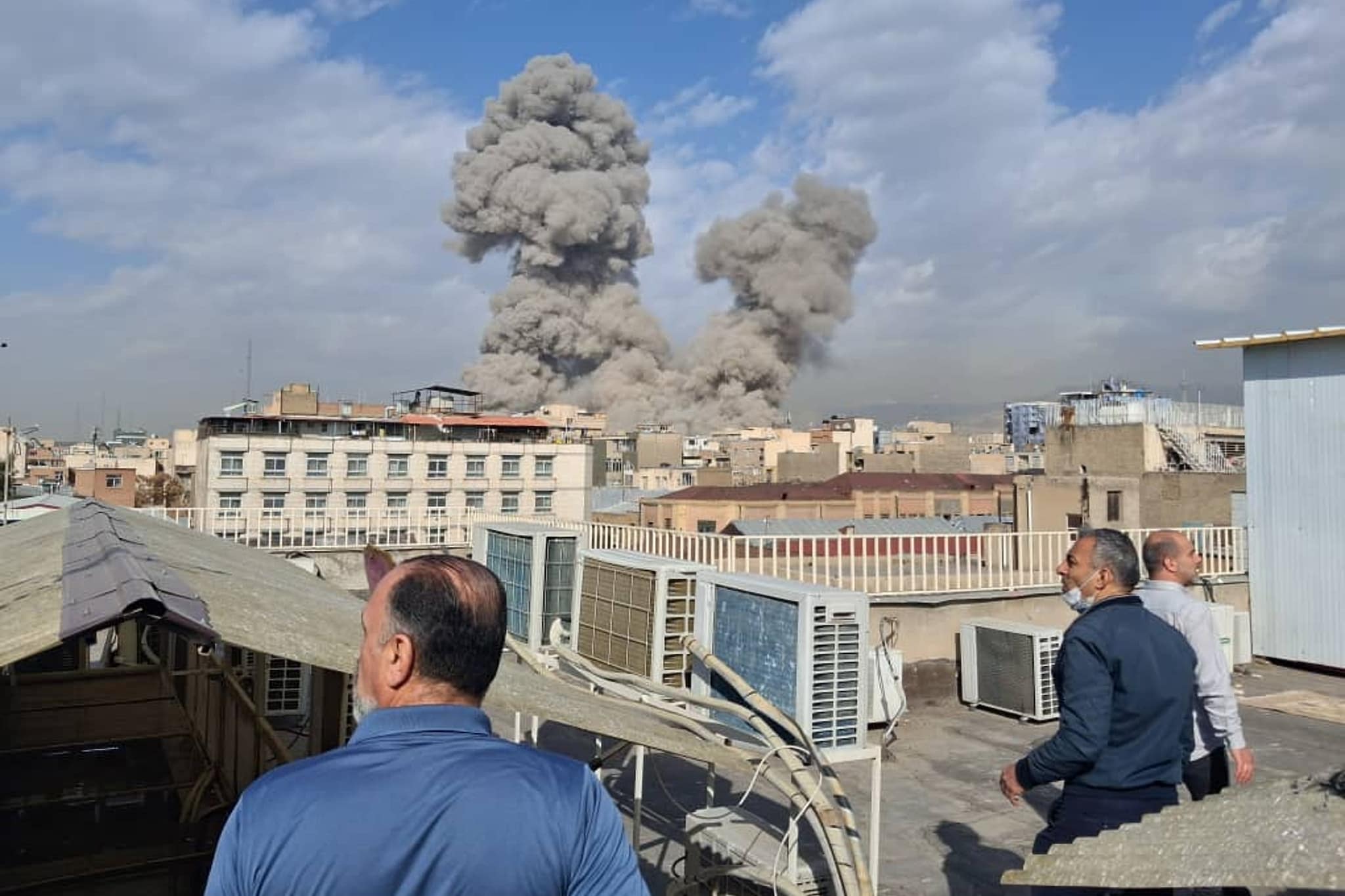
The removal of high-value targets within the Iranian military hierarchy does not merely represent a loss of personnel; it constitutes a forced architectural shift in regional power projection. When US and Israeli kinetic operations successfully track and eliminate tier-one commanders, they are attacking the informal, trust-based networks that hold the "Axis of Resistance" together. This is a deliberate dismantling of the human capital required to synchronize asymmetric warfare across multiple borders.
The Architecture of Command Attrition
The efficacy of recent strikes against Iranian leadership relies on the degradation of three critical operational pillars:
- Institutional Memory and Tactical Lore: High-ranking officers in the Islamic Revolutionary Guard Corps (IRGC) often possess decades of specific, localized knowledge regarding proxy groups in Lebanon, Iraq, and Yemen. This expertise is not easily codified or transferred via training manuals. It is inherent to the individual.
- The Interpersonal Trust Quotient: Regional proxies do not operate as standard corporate subsidiaries. They function through personal allegiances. When a commander who has spent twenty years building rapport with a militia leader is eliminated, the replacement enters a "trust deficit" phase. This creates a friction point that slows down decision-making cycles.
- Logistical Synchronicity: Coordination between drone shipments, financial transfers, and localized rocket fire requires a central hub. Kinetic strikes aim to shatter this hub, forcing the network into a reactive, defensive posture.
Quantifying the Vacuum
Evaluating the impact of these strikes requires looking past the immediate headline and focusing on the replacement lag. In a centralized, bureaucratic military, a replacement is seated within hours. In the IRGC’s Quds Force, the replacement must re-establish legitimacy among diverse, often fractious, non-state actors.
The loss of personnel like those targeted in Damascus or Tehran induces a "latency period." During this window, the ability of the proxy network to execute complex, multi-domain operations (e.g., simultaneous maritime disruption in the Red Sea and rocket fire from Southern Lebanon) is significantly compromised. This is not a permanent shutdown, but a degradation of the system's "operating frequency."
The Intelligence Breach Paradox
The success of these strikes reveals a fundamental vulnerability in Iranian internal security: the compromise of the signal-to-noise ratio. For a strike to occur, the adversary must possess real-time, actionable intelligence. This suggests one of two failure points:
- Signal Intelligence (SIGINT) Dominance: The adversary has mapped the digital and radio footprint of the command structure to such a degree that physical movement is synonymous with a target lock.
- Human Intelligence (HUMINT) Penetration: The "circle of trust" has been breached by internal actors or compromised subordinates.
This creates a psychological feedback loop. Surving leaders must now divert resources from offensive planning to internal "purity tests." Every failed security protocol forces a hardening of communication methods, which paradoxically makes the command structure slower and less responsive. The cost of security becomes a tax on operational efficiency.
Technical Specifications of Kinetic Delivery
The precision of recent strikes indicates a maturation of "low-collateral, high-certainty" weaponry. The use of specialized munitions—designed to penetrate specific rooms of a building or hit moving vehicles without leveling city blocks—signals a shift in the Rules of Engagement (ROE).
Israel and the US are utilizing a combination of high-altitude long-endurance (HALE) drones and satellite-linked targeting arrays. This creates a "persistent stare" capability. The technical reality is that Iranian commanders are operating under a sky where the sensor-to-shooter timeline has been compressed to minutes.
The Kinetic Chain
- Detection: Multi-spectral imaging identifies a signature (vehicle, frequency, or biometric).
- Validation: Cross-referencing with ground-based HUMINT or intercepted communications.
- Delivery: Launch of a precision-guided munition (PGM) with a circular error probable (CEP) of less than three meters.
- Assessment: Real-time battle damage assessment (BDA) to confirm the target is neutralized.
Structural Vulnerabilities in the Replacement Cycle
The IRGC's "Next-Man-Up" philosophy faces a demographic bottleneck. The current generation of top-tier leaders emerged from the Iran-Iraq War era. They share a cohesive ideological framework. The incoming generation, while technically proficient, lacks the same battlefield-forged authority.
When a "decimated" leadership circle is replaced, the new cadre often lacks the "strategic patience" of their predecessors. This leads to one of two outcomes: a period of paralysis while the new leaders find their footing, or a period of reckless escalation as they attempt to prove their mettle. From a strategy perspective, the latter is often easier to predict and counter.
Economic and Resource Constraints
Eliminating a leader also disrupts the financial conduits they manage. In the Iranian model, commanders often function as "shadow CEOs," overseeing illicit oil sales, smuggling routes, and money laundering operations that fund the proxies.
- Disruption of Cash Flow: New commanders must re-identify and secure these "dark" revenue streams.
- Asset Freezes: Information recovered during or after a strike often leads to the identification of front companies, compounding the kinetic loss with a financial one.
The Asymmetric Counter-Response
Analysis of this attrition must account for the Iranian doctrine of "Strategic Depth." While the command circle has been hit, the infrastructure (tunnels, missile silos, drone factories) remains largely intact. The Iranian strategy will likely pivot from high-profile command-led operations to decentralized, autonomous "cell" actions.
This shift moves the conflict from a "chess match" of elite commanders to a "war of attrition" involving low-cost drones and improvised munitions. The objective for Iran is to make the cost of maintaining the strike campaign higher than the perceived benefit of leadership removal.
The Failure of Conventional Deterrence
The persistent nature of these strikes suggests that traditional deterrence has failed or has been redefined. Usually, killing a high-ranking general is considered an act of war. In the current gray-zone conflict, it has become a "routine" regulatory action to manage regional risk. This normalization of high-value targeting changes the risk calculus for every state actor in the region.
The Strategic Play for Regional Hegemony
The decapitation of leadership layers forces the Iranian state into a period of introspection and internal restructuring. To maintain its position, Tehran must solve the "transparency problem"—the fact that its top operatives are visible to enemy sensors.
The immediate strategic move is not a direct retaliatory strike, which would invite further kinetic degradation of the IRGC's core infrastructure. Instead, expect a "darkening" of the network: a total moratorium on high-level travel, a shift to hard-wired communication lines that cannot be intercepted by SIGINT, and an increased reliance on local proxy autonomy.
For the US and Israel, the challenge shifts from "finding the target" to "finding the new network." Once the old guard is removed, the intelligence community must start the multi-year process of mapping the new relationships and signatures of the successors. The "masterclass" in this strategy is not the strike itself, but the ability to maintain a high-tempo pressure that prevents the new leadership from ever achieving operational equilibrium.
The current trajectory indicates that the traditional "shadow war" has entered a high-definition phase. Success is no longer measured by territory gained, but by the "mean time between failures" (MTBF) of the opponent's command and control apparatus. If the strike frequency exceeds the replacement rate of qualified personnel, the Axis of Resistance will eventually devolve from a coordinated regional force into a collection of localized, disconnected insurgencies.